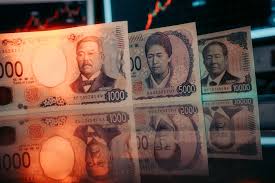
Japan’s yen strengthened against the US dollar on Thursday, prompting speculation that Japanese authorities could intervene in the foreign exchange market to support the country’s weakened currency.
The abrupt move caught traders off guard, although there was no immediate confirmation of what triggered the rally or whether government officials had entered the market. Market participants suggested the gains may have been fuelled by reports of a possible rate check by Japanese authorities, although the advance was more modest than during previous intervention episodes.
The dollar briefly fell as much as 0.9% to 161.115 yen before recovering some ground to trade around 161.58 yen, down about 0.6% on the day.
Japan’s Ministry of Finance declined to comment on the currency’s movement, leaving investors to speculate over whether officials had taken action behind the scenes.
Derek Halpenny, Head of Research for Global Markets EMEA at MUFG in London, said markets remained on edge ahead of key US jobs data and reduced trading volumes before the US Independence Day holiday.
According to Reuters, Japanese officials are reportedly moving away from publicly signalling possible intervention. Instead, authorities are said to be pursuing a more targeted strategy designed to unsettle speculators and increase the risks of betting against the yen.
Officials are also believed to be avoiding any indication of a specific exchange-rate level that would automatically trigger intervention, making it more difficult for traders to anticipate government action.
Bart Wakabayashi, Branch Manager at State Street in Tokyo, said the initial market reaction appeared consistent with official activity, although subsequent trading suggested the move may have been driven more by speculation surrounding a possible rate check than by confirmed intervention.
A rate check involves government officials contacting financial institutions to obtain buying and selling quotes for the yen and is widely regarded by traders as a possible precursor to direct market intervention. However, there has been no confirmation that such inquiries took place.
The yen weakened beyond the 162 per dollar mark earlier this week, touching its lowest level in four decades as Japan’s relatively low interest rates continued to weigh on the currency. It has fallen by about 3% against the dollar since the beginning of the year.
Recent efforts to strengthen the yen have delivered only limited support. A widely anticipated interest rate increase by the Bank of Japan in June, alongside easing geopolitical tensions following a temporary ceasefire between the United States and Iran, failed to provide lasting momentum. More than $70 billion spent on currency intervention in April and May has also been largely offset by persistent dollar strength.
The yen has surrendered nearly all of the gains recorded after Japan’s previous interventions as expectations that the US Federal Reserve could keep interest rates elevated continue to support the dollar, while the Bank of Japan is expected to maintain its gradual approach to monetary policy tightening.
Takeshi Ishida, a strategist at Kansai Mirai Bank in Osaka, said that if Thursday’s move had indeed been driven by official intervention, its impact appeared relatively modest compared with previous operations.
Goodness Anunobi