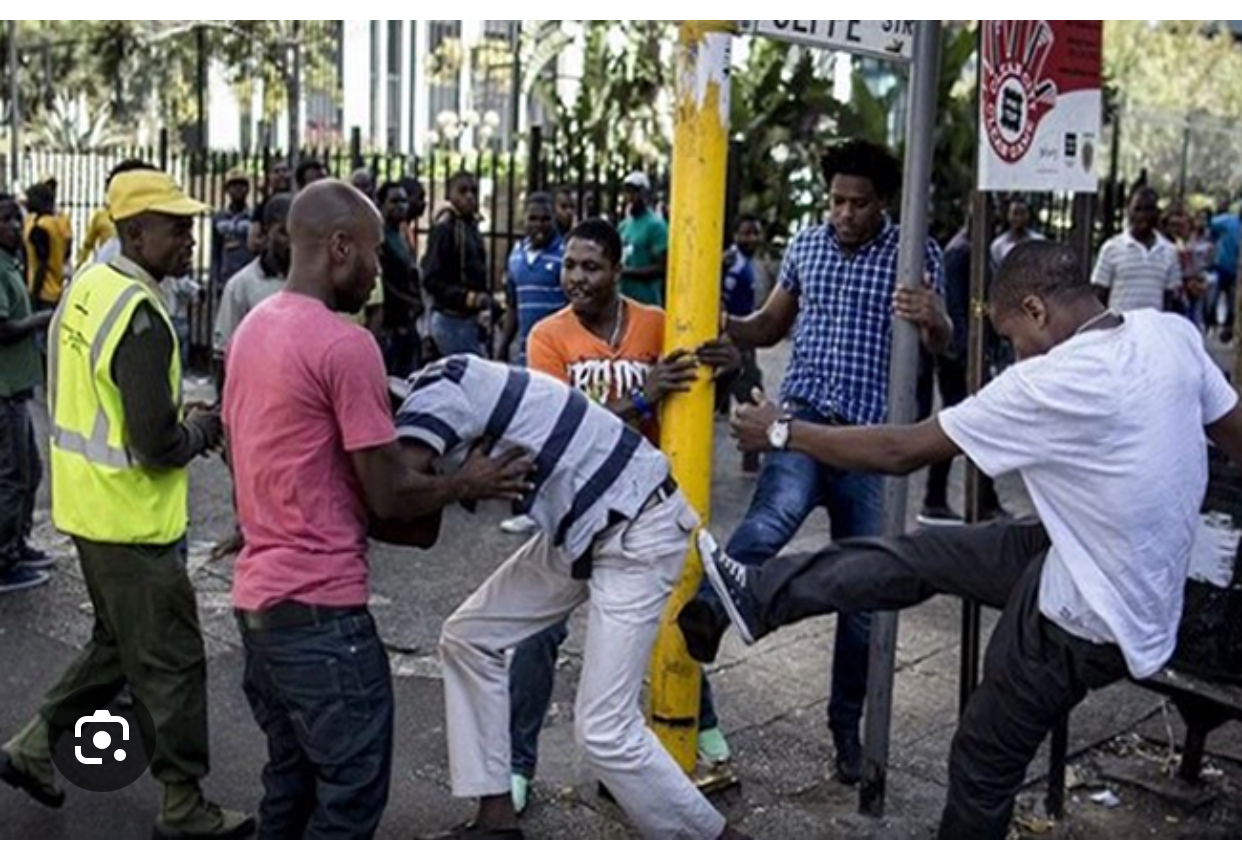
Two Nigerians have been killed in renewed xenophobic violence in South Africa, sparking fear within the Nigerian diaspora and prompting urgent diplomatic engagement by the Federal Government.
The Nigerian Consulate General in Johannesburg confirmed that Amaramiro Emmanuel and Ekpenyong Andrew died in separate incidents linked to rising tensions targeting foreign nationals in parts of the country.
In a statement on Monday, Consul-General, Ninikanwa Okey-Uche, said Emmanuel reportedly died from injuries sustained after being beaten by personnel of the South African National Defence Force on April 20. Andrew was allegedly arrested on April 19 in Booysens, Pretoria, following an altercation with members of the Tshwane Metro Police, with his body later discovered at the Pretoria Central Mortuary.
The consulate said both incidents, involving security personnel, have deeply unsettled the Nigerian community and diplomatic missions. It confirmed that cases have been opened with the South African Police Service, while the Independent Police Investigative Directorate has been urged to conduct a thorough and impartial investigation.
“We call on South African authorities to investigate and ensure justice is served. No matter the allegations, due process must be followed and everyone is entitled to a fair hearing”, Okey-Uche said.
The mission added that it is engaging relevant authorities and providing support to the victims’ families, while also cautioning against the profiling of Nigerians as criminals. Nigerians in South Africa have been urged to remain calm and law-abiding as investigations continue.
The killings come amid growing reports of hostility against foreign nationals, with viral videos showing intimidation and threats during anti-immigrant demonstrations. In one incident, a Nigerian trader was confronted by a group who demanded that he leave the country, despite explaining his long stay and business activities.
In another development, an Ethiopian national was shot dead in central Johannesburg in what authorities described as a suspected targeted attack. CCTV footage showed the victim being approached and shot at close range, with investigations ongoing and no arrests made.
The South African Police Service has condemned acts of intimidation against foreigners, saying such actions contradict the country’s constitutional values of dignity, equality, and human rights.
Reacting to the rising tensions, the Nigerian Citizens Association in South Africa (NICASA) warned of increasing harassment and called for stronger diplomatic intervention. Its president, Frank Onyekwelu, urged Nigerian authorities to act decisively, describing the situation as alarming and calling for accountability for abusive practices.
He stressed that Nigerians in South Africa are largely law-abiding and contributing members of society, urging calm while diplomatic efforts continue.
The Nigerians in Diaspora Commission also issued a safety advisory, warning citizens to avoid volatile areas, monitor developments, and, where necessary, temporarily close businesses amid ongoing unrest in some regions including Durban and KwaZulu-Natal.
Nigeria’s Acting Ambassador to South Africa, Alexander Ajayi, said the situation remains under control, describing the incidents as isolated rather than a coordinated attack, while assuring that both governments are working to ensure the safety of citizens.
South African President Cyril Ramaphosa, in a Freedom Day address, urged foreign nationals to respect local laws and traditions while reaffirming his country’s commitment to human rights and international norms.
“To those who are here legally, respect us as South Africans, respect our laws, respect our conventions and traditions, as you would want us to respect yours”, he said.
Meanwhile, the Federal Government of Nigeria has formally called on South Africa to protect the lives and property of Nigerians and other foreign nationals. In a statement by the Ministry of Foreign Affairs, Nigeria urged stronger action to prevent further attacks, noting the historical ties and cooperation between both countries.
It reaffirmed Nigeria’s commitment to continued diplomatic engagement and expressed confidence that bilateral relations with South Africa would remain strong despite the latest tensions.