For generations, including this one, young men have been handed a flawed script that equates nonchalance with strength, and dominance with leadership.
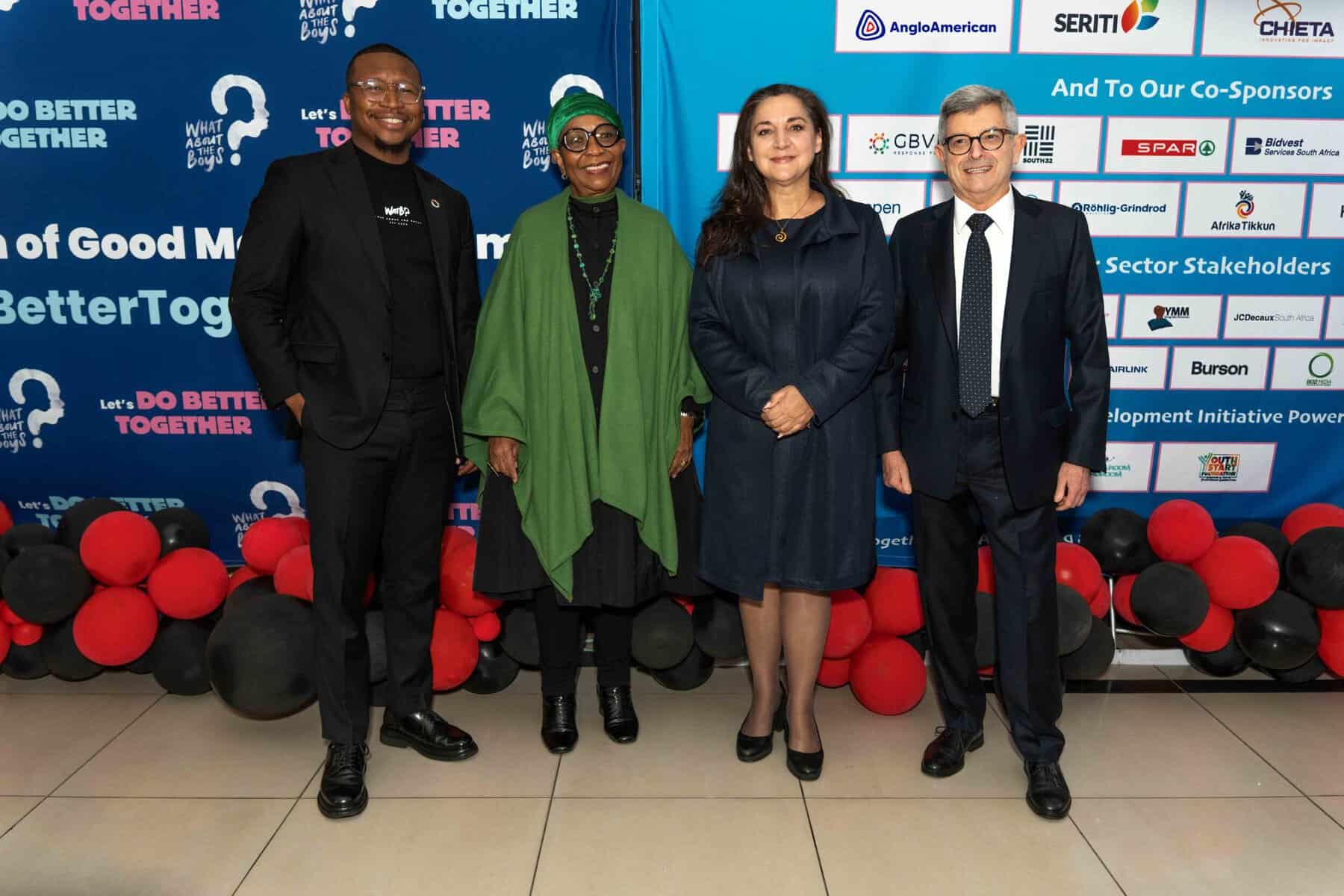
To intercept gender-based violence (GBV) before it takes root, the ‘What About the Boys’ initiative, spearheaded by Primestars and The YouthStart Foundation, is fundamentally rewriting these societal expectations.
While its initial roll-out focused strictly on male pupils, the newly launched second phase purposefully integrates young women into the conversation.
“You cannot ask a boy to unlearn dominance without also inviting a girl to unlearn silence,” said Sweet.
Martin Sweet, chairperson of Primestars, explained that the organisation pivoted toward early intervention after recognising the growing societal challenges affecting young men.
“Boys are in trouble. We realised that if we want to address gender-based violence, we need to focus on prevention,” Sweet said. “We teach boys that crying is weakness, that toughness is strength, and that control equals leadership. We wanted to change those scripts.”

Debut
The initiative’s debut proved that targeted behavioural intervention works, particularly within under-resourced township and rural schools.
According to the organisers, Phase 1 reached more than 60 000 boys across 180 schools in all nine provinces, particularly in township and rural areas, and independent evaluations recorded a 67% reduction in bullying behaviours.
Cinema as a mirror to hidden realities
The foundation of this campaign is its use of relatable storytelling. Launched at Ster-Kinekor in Rosebank during Child Protection Month, the project’s latest educational film dives into the messy realities of modern teenage life, tackling substance abuse, emotional suppression, and the nuances of consent.

Cast members emphasise that the scripts reflect the genuine, often hidden traumas of South African youth.
By portraying boy characters who turn to substance dependency because they lack the vocabulary for pain, the film gives viewers permission to vocalise their struggles. Statutory rape illustrated through grooming, where an older man paid a minor money while manipulating her into believing they were in a genuine relationship.
Student participants noted that the curriculum provides a rare safe space to discuss issues usually swept under the rug, challenging the idea that aggression is the only acceptable male emotional outlet.
Support from advocates
The Programme has drawn strong praise from human rights advocates who monitor systemic violence. Nomhle Soni from Sonke Gender Justice highlighted the raw honesty of the film’s subject matter.
“It was a true reflection of what the young ones experience during high school, and even primary school, especially when it comes to teenage pregnancy and boys being forced into manhood before they’re ready. No parent says, ‘I’m going to give birth to a child that’s going to be a rapist.’ Growth is where something goes wrong.”
Soni appreciated the transparency in showing how sexual pressures and family issues manifest as destructive school behaviours.
“Let them play, let them be children,” she added. “But as parents, we must ensure the boy child grows up knowing his role in society-not as a monster, but as an ally who can help dismantle GBV and femicide.”
Deputy Minister of Higher Education and Training, Nomusa Dube-Ncube, said, “The number of boys in higher education is disturbingly decreasing. It makes you ask what are the implications of an uneducated boy.”
Dube-Ncube emplored that the film should show boys that violence ends with them and positive masculinity finds them.
From classroom to workplace
The necessity of this intervention becomes even clearer as young men and women transition into adulthood and enter the workforce, where unaddressed behaviours can manifest as corporate misconduct.
Nozipho January-Bardill, Independent Ambassador for the Living with Dignity Hub at Anglo American, shared that the film’s climax deeply resonated with her, particularly regarding legal and social accountability.
“The part where Lerato’s boyfriend and Ryan’s stepfather got arrested stood out,” January-Bardill said. “This shows the reality of what happens when both girls and boys speak up and actively work together. These kinds of social ills can be addressed and prevented for future generations.”
January-Bardill highlighted how the Hub’s mission mirrors the preventive spirit of the school Programme by fostering accountability in the workplace.
Launched in 2022, the Living with Dignity Hub provides victim-centred support (legal, medical, and psychosocial) while driving systemic change. Through leadership advocacy and stronger reporting channels, employees feel confident to speak up. Moving forward, the Hub is expanding its framework to assist external institutions in rooting out abuse across the country.