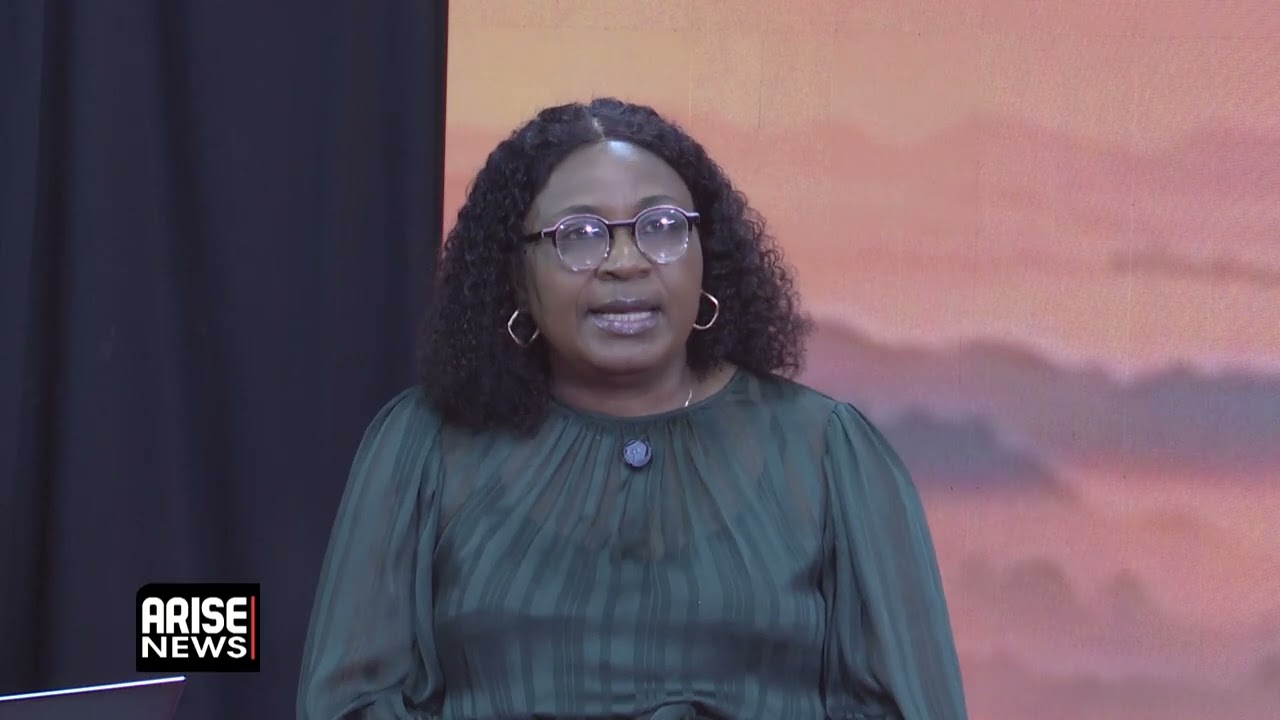
The director, Voter Education and Publicity, Independent National Electoral Commission, (INEC), Victoria Eta-Messi, has said the commission is intensifying efforts to curb vote trading ahead of the August 15 Osun State governorship election, amid a tense pre-election atmosphere and concerns over voter desperation.
Speaking in an interview with ARISE NEWS on Monday, Eta-Messi highlighted the commission’s efforts to sensitise voters, engage critical stakeholders and collaborate with sister agencies to discourage vote trading ahead of the election.
“Osun is tense. I don’t think it’s what citizens were expecting. There is a lot of desperation in the land. With regards to the vote trading, INEC is doing a lot, and we’re not resting on our oars. We’re engaging. During the Honorable Chairman’s readiness visit, he met with traditional rulers and sent a message to them to speak to their wards and their subjects. We have spoken to Osun mothers to speak to their children, because at the end of the day, it is the youth, basically, most of the time, that engage or are tools or victims of vote trading,” she said.
She added that the commission had conducted integrity tests on its technological devices and a mock accreditation exercise, while engaging transport unions and security agencies to ensure the timely and safe deployment of personnel and election materials to polling units.
“For us, we have done several layers of engagements with critical stakeholders. Recently, the Honorable Chairman of the Commission was in Osun State with his management team and other senior commission members to further engage with traditional rulers. They were there for the signing of the Peace Accord, where all the political parties participated. There was rigor integrity tests conducted on our technological devices.
“The mock accreditation was also conducted on the last day of the readiness visit, basically just to be sure. And then there was engagement and meetings with members of the Transport Unions, who play a critical role with regards to ensuring that men and materials are taken to the polling units on time so that elections can commence as at when due. We had meetings with the security architecture in the state—the ICCES—which plays a critical role with regards to ensuring that men and materials again are safe. Like I mentioned earlier, Osun is actually tense at the moment, and so a lot relies on the shoulders of the security personnel, particularly the police, which is the lead agency, to ensure that citizens of Osun State feel safe to turn out to vote on election day,” she said.
Outlining the safeguards INEC has put in place to ensure security on election day, Eta-Messi said the Inter-Agency Consultative Committee on Election Security (ICCES) had conducted risk mapping to identify volatile areas and guide the deployment of security personnel to areas requiring greater protection.
“Let me start with the ICCES, that’s the Inter-Agency Consultative Committee on Election Security. They are doing a lot. You have the Commission and the Nigeria Police Force as lead agencies under the ICCES structure. The NSA is the co-chair at the national level, but at the state level, you have the Resident Electoral Commissioner and the Commissioner of Police.
“They have done a lot of security planning and coordination, risk mapping, noting again that Osun, like I mentioned earlier, is tense, and the environment is volatile. Some areas are volatile, so those areas have been mapped, and that would guide planning, coordination, and deployment of security to those areas that actually require more protection to ensure that citizens do not feel threatened when they turn out to vote. So you have the risk mapping, and you have the deployment which is guided by the outcome of the risk mapping that has been done, so that citizens will feel safe to turn out, participate, and exercise their democratic franchise,” she assured.
Addressing concerns over PVC collection ahead of the elections, Eta-Messi said the commission extended the collection deadline to the Registration Area level following the low collection rate recorded in the state, to make it easier for eligible voters to collect their cards.
She added that the commission would have a clearer picture of the total number of PVCs collected in the next few days, stressing that the data would be available before the election and would guide the management of results, particularly in determining the margin of lead and whether a rerun may be required.
“Collection of PVCs ended last week. Recall that Osun is the first state where we’re going to deploy or introduce the use of the downloadable PVCs, and that ended. The deadline for the printing of those who qualify… because the law provides that you must have applied if you have a damaged, defaced, or lost PVC, and you require another one, you must have applied to the Commission 90 days before the election. So those who applied had the leverage of printing out their downloadable copies of the PVC.
“That was why during the readiness visit, the Chairman extended the date for collection. Taking into consideration the fact that there were also people eligible to print out the downloadable copy—that ended midnight of yesterday—at the end of the day, all of those will be computed together for us to have a clearer picture. It was because of the dismal percentage that it was extended, and taken to the Registration Area (RA) level. The complaint has always been that collection at the LGA level is a challenge to citizens at the grassroots to come out to the local government to pick up their PVCs.
“So the extension was given at the RA level so that they do not need to go far to pick up their cards. In the next couple of days, I think we’ll have a clearer picture as to the true percentage of PVCs that have been collected, because it is that data that would guide the management of results at the end of the day when we’re looking at margin of lead, if there is need for a rerun. It will be important that we have the exact number of PVCs collected. We can’t have it after the election. We need the statistics before the election, because that will guide us in the management of our results. So it can’t be after the election; it’s before the election,” she stressed.
On reports of stolen PVCs in Ife Central and Odo-Otin Local Government Areas, Eta-Messi reiterated the cards could not be used to vote because BVAS accreditation requires facial or biometric verification, adding that replacement cards had been issued to affected voters in Ife Central and Odo Otin.
“You cannot use a stolen PVC. Recall that accreditation using the BVAS requires your facial or biometric capture. So whether you come with my PVC or not, you’re just wasting your time. The most you can do is to frustrate the owner of that card. What the Commission has now done for those whose cards were carted away in those two local government areas—Ife Central and Odo Otin—the Commission has printed replacement cards for them to use, and those cards have been noted.
“So if you come with a stolen card, those cards have already been noted at the back end, and whoever came with them or comes with them will just be wasting his time and is liable to be arrested by the police, because we know those cards that were carted away. The cards have been replaced. So even if you brought it and we’re not taking any action, you cannot vote with somebody else’s card. So it’s just a waste of time,” she maintained.
Responding to concerns over possible violence at polling units in the gubernatorial election in Pain State, the INEC executive said the commission had identified potential flashpoints and was working with security agencies to deploy adequate personnel to vulnerable areas.
“The volatile or vulnerable areas, like I mentioned earlier, have already been mapped, and there will be more security deployed to those areas. There are potential flashpoints, and so the Commission is aware of that. The Commission has drawn up its plan with the security architecture to ensure that adequate security is deployed. The military is on ground to give the back-end and outer-ring support in areas where we suspect that there may be outbreak of violence.
“Basically, plans have been put in place to protect people in those areas which have been mapped out to ensure that their lives and properties of the Commission are safe, and that people feel safe to come out to vote.
“So there will be adequate security in those areas where there are potential fear of outbreak of violence. The security will be on ground to do their job. You mentioned earlier that INEC is not the police, and that is true. We cannot arrest,” she concluded.
Favour Odima