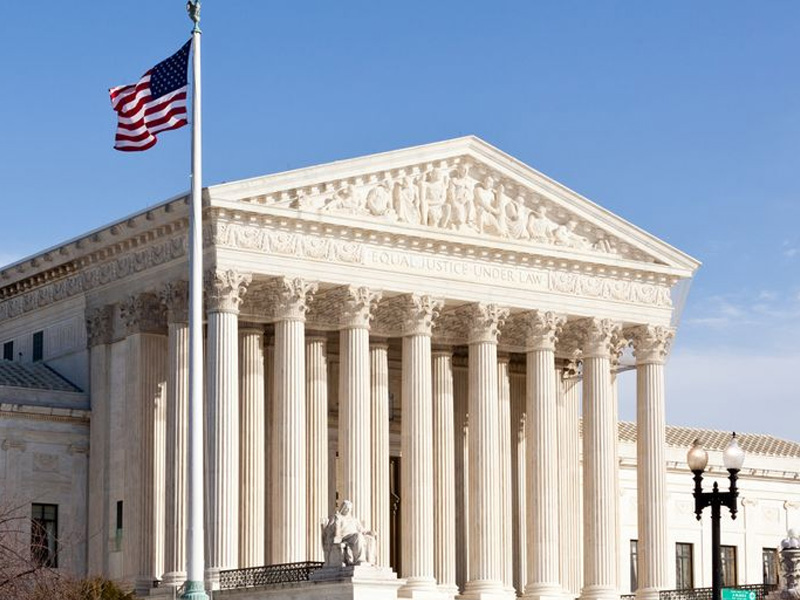
The Supreme Court of the United States has agreed to consider whether state bans on semiautomatic rifles, commonly referred to as assault weapons, violate the Second Amendment, setting up a landmark legal battle that could reshape gun laws across America.
The justices announced on Tuesday that they would hear appeals challenging restrictions on AR-15 style rifles and similar semiautomatic firearms in Connecticut and the Cook County area of Chicago. Similar restrictions currently exist in about a dozen states, including jurisdictions covering major cities such as New York City, Los Angeles and Washington.
The case marks the latest major gun dispute to reach the nation’s highest court since its landmark 2022 ruling significantly expanded Second Amendment protections and triggered challenges to firearm regulations nationwide.
Arguments are expected to be heard during the court’s next term in the autumn.
The Connecticut law was enacted following the 2012 mass shooting at Sandy Hook Elementary School, where a gunman used an AR-15 style rifle to kill 26 children and educators. State attorneys argue that such firearms can be restricted because they closely resemble military grade weapons and have become the weapon of choice in many mass shootings.
“Historical tradition allows states to respond to and prevent emerging and unprecedented societal harms by banning the weapons causing them,” they wrote.
Gun rights groups, however, contend that banning semiautomatic rifles infringes on constitutional protections because millions of Americans legally own the firearms.
“Rifles and magazines are ‘bearable arms’ and are therefore manifestly ‘Arms’ covered by the plain text of the Constitution,” attorneys for the National Association for Gun Rights wrote.
The ban in Cook County was first introduced in 1993 and remains one of the longest standing restrictions of its kind in the country.
“If the Second Amendment does not protect the most popular rifles in the country, it is hard to see how it protects any firearms at all,” the challengers argued.
Attorneys representing the county defended the restrictions, saying “the trauma that assault weapon massacres have inflicted on the public at large has been staggering,” and maintained that the measures are constitutional.
The Supreme Court recently reinforced Second Amendment protections in separate rulings striking down gun carrying restrictions in Hawaii and a broad federal ban on firearm ownership by marijuana users, while upholding some limitations including restrictions affecting people subject to domestic violence restraining orders.
Faridah Abdulkadiri