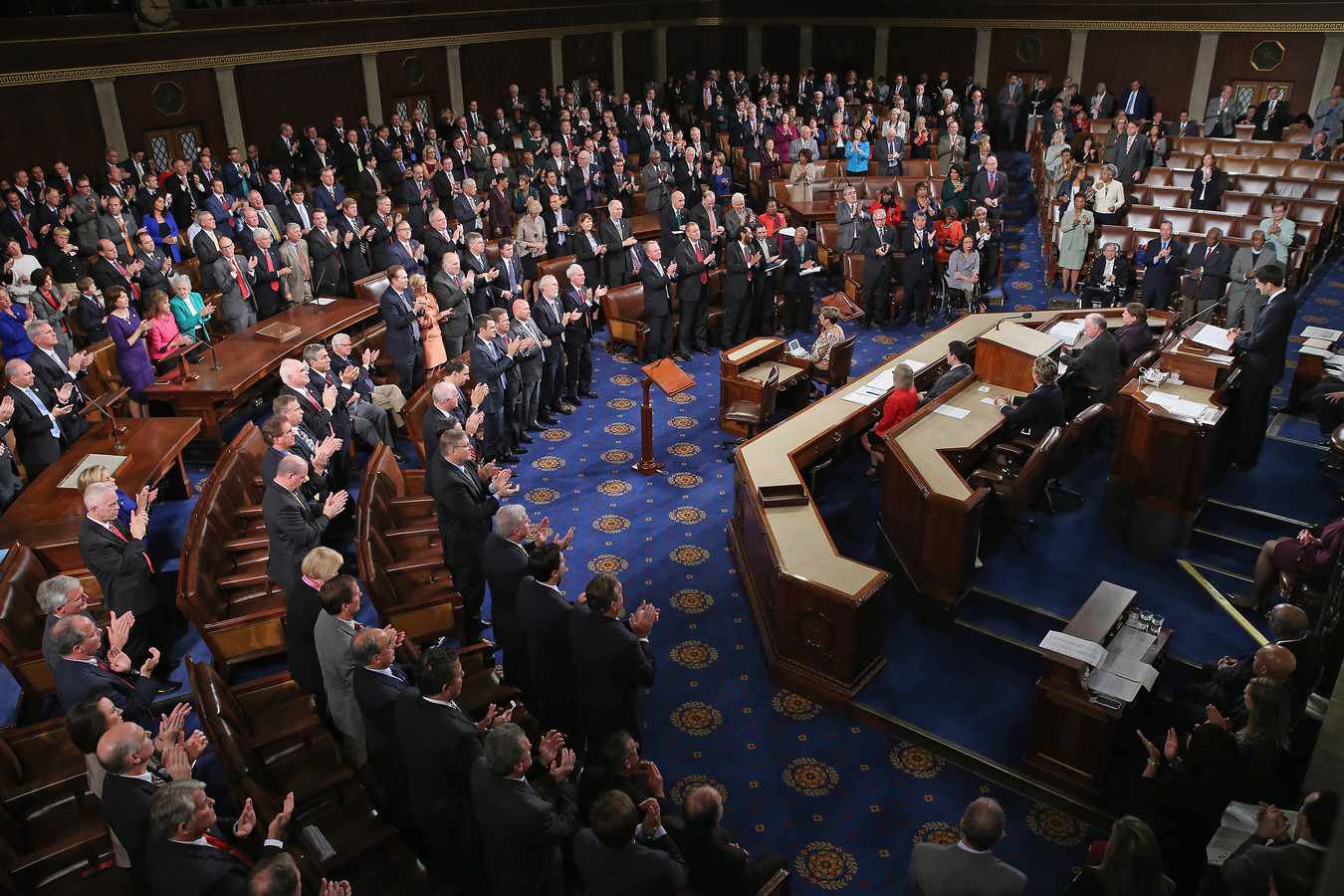
The US House of Representatives has voted to limit President Donald Trump’s authority to carry out further military action in Iran, in a rare bipartisan rebuke over the ongoing conflict.
Lawmakers passed the measure by 215 votes to 208, with four Republicans joining Democrats in backing the resolution. It marks the fourth attempt by the House to rein in presidential war powers since the conflict began in February.
The resolution now moves to the Republican-controlled Senate, where its future remains uncertain even if it reaches a full vote. A similar measure advanced in May but has yet to be debated on the floor.
The vote highlights growing divisions within Trump’s Republican Party over the handling of the war and the scope of executive military authority.
Republican Representative Brian Fitzpatrick, one of those who backed the measure, defended his decision, saying Congress must retain its constitutional role.
“Congress alone declares war, that’s something certainly we need to be protective of,” he said, adding he was prepared to accept any political consequences of his vote.
Democrats described the vote as a significant political signal against what they called an “illegal and costly war” in Iran.
Representative Gregory Meeks said the outcome reflected mounting concern among lawmakers and constituents about prolonged military engagement in the Middle East.
“The passage of this measure today signals a significant turning point,” Meeks said, adding that growing numbers of Republicans were responding to public opposition to another open-ended war.
The conflict escalated after US and Israeli strikes on Iran in February triggered retaliatory attacks across the region, including against US allies in the Gulf. Tehran has also responded with strikes on strategic locations, further intensifying regional tensions.
Despite the ceasefire agreement reached in April, hostilities have continued intermittently, with both sides accusing each other of renewed attacks.
Ahead of the vote, Trump insisted negotiations to end the war were progressing and could be concluded soon, suggesting a possible deal was close.
“We’ve actually gotten along with them very well,” he said, adding that discussions were “very close to signing a paper.”
Erizia Rubyjeana