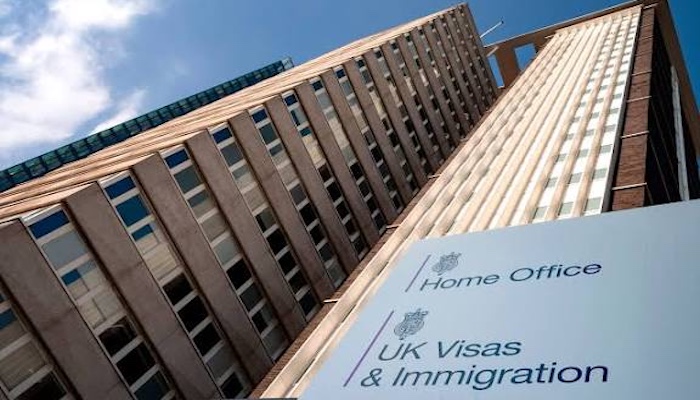
Asylum seekers in the United Kingdom could soon be required to repay up to £10,000 (about $13,222) in government-funded accommodation and living support before becoming eligible for permanent settlement, under new immigration reforms aimed at reducing the cost of the asylum system and ensuring financially stable refugees contribute to the support they received.
The proposal, announced on Monday as part of the UK government’s latest immigration reform package, would require adult asylum recipients who later become financially capable to repay some of the public funds spent on their accommodation and subsistence while their asylum claims were being processed.
Unveiling the measures, Interior Minister Shabana Mahmood said the reforms were designed to balance the UK’s humanitarian obligations with fairness to taxpayers.
“Receiving asylum support is a right, but it is also a responsibility. Once people can contribute and repay the generosity of the British people, we expect them to do so,” Mahmood said.
She explained that only adults who are financially able to make repayments would be affected, adding that safeguards would be introduced to prevent repayments from causing financial hardship.
The government also clarified that the policy would not be applied retrospectively, while children would be exempt from the repayment requirement.
The proposal comes as the UK faces mounting pressure on its asylum system. According to Home Office data, 93,525 asylum applications were lodged between April 2025 and March 2026, representing a 12% increase compared with the previous 12-month period.
The rise in applications has added to pressure on public finances, with the government legally required to provide accommodation and basic living support for asylum seekers who cannot support themselves while awaiting decisions on their claims.
As of March 2026, 93,653 asylum seekers were living in government-funded accommodation across the UK. Of that number, 20,885 people—approximately 22%—were housed in hotels due to insufficient capacity in longer-term accommodation such as shared housing and converted former military sites.
Government figures show that temporary asylum accommodation costs an average of £23.25 per person per night, while hotel accommodation costs about £144 per person per night, excluding weekly subsistence payments. Overall, asylum accommodation and support cost the government an estimated £4 billion over the past year.
The repayment proposal forms part of a broader effort by the UK government to tighten immigration controls amid growing political pressure over illegal migration, border security and the rising cost of supporting asylum seekers.
Official statistics indicate that 813,000 people immigrated to the UK between January and December 2025, a 20% increase compared with the previous year.
Enforcement activity has also intensified. Between April 2025 and March 2026, UK authorities carried out 39,007 returns and deportations as part of efforts to remove individuals without legal permission to remain in the country.
The latest proposal follows a series of recent immigration reforms introduced by the government.
Earlier in June, ministers announced plans to prevent universities from sponsoring international students where concerns exist over visa abuse linked to asylum claims. Under the reforms, higher education institutions will be subject to a new traffic-light rating system from summer 2027, while some enforcement measures have already taken effect.
The government has also modernised its visa administration process. In February 2026, it announced the replacement of physical visa stickers for Nigerian travellers with fully digital eVisas, meaning all newly issued UK visitor visas for Nigerians are now issued electronically.
In addition, visa application fees were increased from April 8, 2026. Under the revised fee structure, the cost of a standard six-month visitor visa rose from £127 to £135, while two-year visas increased from £475 to £506. Five-year visas now cost £961, up from £903, while 10-year visas rose from £1,059 to £1,128, as part of the government’s wider strategy to reform and strengthen the UK’s immigration system.
Boluwatife Enome