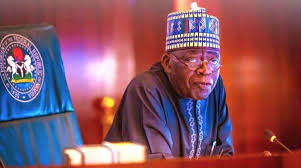
Amid ongoing debate over proposed changes to Nigeria’s education system, President Bola Tinubu has transmitted a bill to the National Assembly seeking to reform the country’s secondary education structure.
The proposed legislation, sent to the Senate on Thursday, is intended to provide a legal framework for reorganising secondary education in Nigeria.
Senate President, Godswill Akpabio, read the president’s letter during plenary, although it did not outline the specific provisions of the bill or the policy changes being proposed.
The move comes days after Minister of Education Tunji Alausa unveiled plans to replace the current 6-3-3-4 education system with a 12-year uninterrupted basic education model. He argued that the existing structure has contributed to the loss of about 20 million pupils between primary and secondary school.
However, President Tinubu’s letter did not explicitly state that the bill seeks to abolish the distinction between Junior Secondary School (JSS) and Senior Secondary School (SSS). Instead, the president said the legislation is aimed at strengthening the “administration and governance of public senior secondary education in Nigeria.”
Tinubu noted that the Federal Executive Council approved the amendment bill at its April 30 meeting, after which the Federal Ministry of Justice vetted and finalised it in line with constitutional and legislative drafting requirements. He urged the National Assembly to consider and pass the National Secondary Education Commission Amendment Bill 2026 in the national interest.
Following the presentation, Akpabio referred the bill to the Senate Committee on Rules and Business for legislative processing and directed the committee to report back within one week.
Nigeria currently operates the 6-3-3-4 education system, comprising six years of primary education, three years of Junior Secondary School, three years of Senior Secondary School and four years of tertiary education.
According to the Minister of Education, the proposed 12-year model is intended to simplify educational progression, reduce dropout rates and ensure every child completes 12 years of uninterrupted basic education before advancing to higher education or vocational training.