President says massive road project linking Nigeria to Benin Republic and Ghana will boost regional trade while supporting local cement manufacturers…..
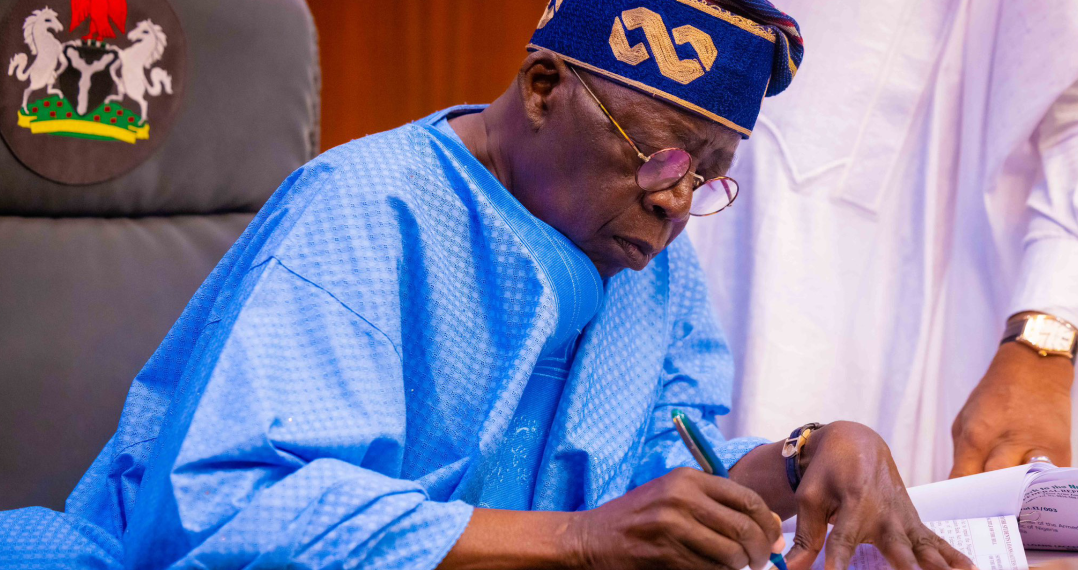
President Bola Tinubu has revealed fresh details about the ongoing 1,000-kilometre Sokoto-Badagry superhighway project, saying the Federal Government deliberately chose concrete pavement over asphalt to ensure durability and promote local industries.
Speaking at the 2026 Africa CEO Forum in Kigali, Rwanda, Tinubu said the highway is expected to strengthen regional trade and connectivity by linking parts of Nigeria to neighbouring West African countries, including the Benin Republic and Ghana.
The President explained that the decision to construct the road with concrete was made at the planning stage of the project as part of efforts to reduce dependence on imported materials and support indigenous manufacturers.
According to him, the government opted against importing bitumen for asphalt construction and instead partnered with major Nigerian cement producers to supply materials for the massive infrastructure project.
“Let me give you an example. In Nigeria, we’re constructing a 1000km Sokoto-Badagry road that’s going to link Benin Republic and even Ghana when it’s completed,” Tinubu said during the forum.
“When we were about to start construction, I called Dangote and BUA Abdul Samad and told them that since they’re cement producers, I’m not going to import bitumen.
“I’m going to build a concrete road that’ll last longer.”
Tinubu added that cement supplied by companies owned by Aliko Dangote and Abdul Samad Rabiu is currently being used for the construction of the highway.
The President said the project reflects his administration’s broader economic strategy of supporting local production while delivering long-lasting infrastructure capable of driving growth across the country.
According to him, improving transportation networks remains critical to unlocking regional trade opportunities and deepening economic integration within West Africa.
The Sokoto-Badagry superhighway is one of the Federal Government’s flagship infrastructure projects designed to connect Nigeria’s north-west and south-west economic corridors.
The proposed route stretches from Illela in Sokoto State to Badagry in Lagos State, passing through Kebbi, Niger, Kwara, Oyo and Ogun states.
The project is also expected to improve the movement of goods, reduce travel time and support agricultural and industrial activities along the corridor.
In April, President Tinubu requested approval from the National Assembly for a $516.3 million foreign loan to support the construction of sections of the superhighway.
Minister of Works, David Umahi, had earlier defended the government’s preference for concrete roads, arguing that they are more durable and cost-effective in the long run.
According to Umahi, concrete pavements can last for more than 50 years, compared to asphalt roads which typically require major repairs after about 15 years.
The Africa CEO Forum, where Tinubu made the remarks, is one of the continent’s biggest gatherings of business leaders, investors and heads of state focused on economic growth, investment and regional integration across Africa.