President defends subsidy removal and FX reforms while promising economic growth, improved power supply, and stronger security ahead of 2027 election…..
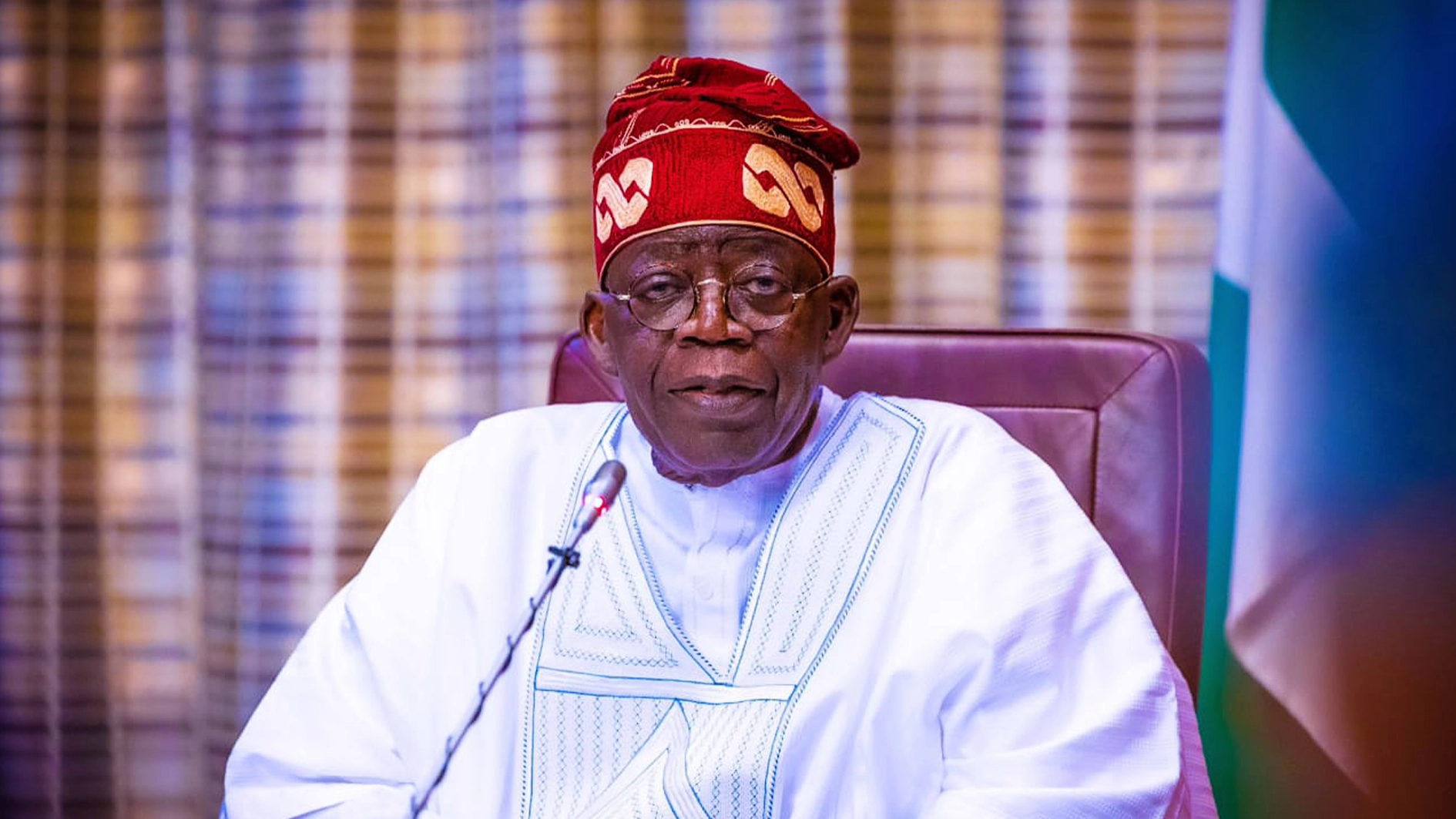
President Bola Tinubu has admitted that many Nigerians are still facing severe economic hardship despite the series of reforms introduced by his administration over the last three years.
The President made the remarks on Sunday while delivering his acceptance speech after emerging as the presidential candidate of the All Progressives Congress (APC) for the 2027 elections.
Tinubu acknowledged the frustration among citizens over rising living costs but insisted that the difficult economic decisions taken by his government were necessary to stabilise the country’s economy and prevent deeper financial crises.
“Yet, challenges remain. Many Nigerians still struggle with rising costs and economic adjustment. We do not dismiss these concerns; we understand them and govern not in comfort, but in reality, with honesty and action,” the President stated.
His comments come at a time when millions of Nigerians continue to battle rising food prices, transportation costs, electricity tariffs, and inflationary pressure across several sectors of the economy.
Recent data released by the National Bureau of Statistics showed that Nigeria’s headline inflation rose to 15.69% in April 2026 from 15.38% recorded in March, while food inflation climbed even higher to 16.06%, worsening pressure on household incomes.
Despite the hardship, Tinubu defended key economic policies implemented under his administration, including the removal of fuel subsidies and reforms in the foreign exchange market.
According to him, the country had for years operated under “wasteful fuel subsidies, unstable exchange rates, and weak infrastructure,” adding that current reforms are beginning to produce positive economic results.
The President said the naira is gradually strengthening, foreign reserves are improving, and investor confidence is returning despite global economic uncertainties and geopolitical tensions linked to the Middle East crisis and the Iran conflict.
Tinubu also highlighted what he described as achievements in the power sector, revealing that his administration has delivered 2.5 million electricity meters under the Presidential Metering Initiative in an effort to reduce estimated billing and close the metering gap.
He further disclosed that the Federal Government introduced a N4 trillion bond programme to settle long-standing debts owed to power generation and gas companies.
According to the President, electricity generation has at some points reached 6,000 megawatts under his administration, representing a significant increase compared to what was obtainable in 2023.
“Our strategy is focused on redesigning the power sector into a bankable, investable, and capable sector that delivers power to homes and industries,” Tinubu said.
The President also pointed to ongoing infrastructure projects across the country, including roads, housing, airports, seaports, irrigation systems, transportation networks, and digital connectivity projects.
He specifically mentioned the coastal superhighway project and the Sokoto-Badagry road corridor as part of the government’s long-term infrastructure development plan.
On security, Tinubu admitted that insecurity remains a serious concern in several parts of the country and promised continued investment in security operations, intelligence gathering, surveillance technology, and modern equipment for security agencies.
He also renewed calls for constitutional amendments to allow the creation of state police, describing the issue as a national emergency requiring urgent attention.
The President maintained that his administration’s work remains unfinished and promised to continue pursuing economic expansion, industrialisation, energy security, food sufficiency, and democratic consolidation if re-elected in 2027.
“With another four years of disciplined focus and national cooperation, we will firmly place Nigeria on an irreversible path of economic expansion, industrialisation, energy security, infrastructure development, food sufficiency, and democratic consolidation,” he said.
Tinubu concluded by urging Nigerians to embrace unity and political cooperation across ethnic and regional lines as the country navigates its economic and security challenges.