South Africa’s mining towns are living on borrowed time. Experts warn that thousands of abandoned shafts, compounded by illegal zama zama operations, are destabilising land and raising the risk of sinkholes, tremors and even earthquakes.
With acid water eating away underground pillars and millions of tons of rock removed illegally, communities from the West Rand in Gauteng to Mpumalanga face a looming disaster unless government accelerates rehabilitation and mine‑water management.
Acid water eroding underground pillars
Mining expert David van Wyk said the situation needed urgent attention because there would be a disaster.
The problem starts when shafts left behind by mining firms are filled with water during heavy rainstorms, Van Wyk said.
“The abandoned mines, which are a crime, no longer pump out the water from the abandoned tunnels. The water interacts with iron pyrites, sulphur and copper and mixed with oxygen becomes acidic,” he said.
The acidic water eats away the conglomerate and the dolomitic substructure, which then causes the sinkholes, Van Wyk said.
“You can also expect more systemic activity [tremors and earthquakes] as the eastern, central and western voids fill up with water.”
The sheer weight of the water, combined with the acid water eating away the pillars in the underground chambers, will cause collapses, which will translate into tremors and quakes.
Geologists say Merafong, Khutsong, Springs and Barberton face subsidence
“These might occur along the Main Reef Road to the south of Nigel through to Orkney. Abandoned mines cause this.”
Van Wyk said other worse affected areas include the West Rand’s Merafong, Khutsong, Randfontein, Thulani and Doornkop in Soweto. While in Ekurhuleni the affected areas are Springs, Benoni and Boksburg.
Council for Geoscience spokesperson Mahlatse Mononela said the country was facing a disaster.
“We are aware of inherent land stability risks associated with legacy mines and are working on mitigation, rehabilitation and reclamation plans with affected stakeholders,” said Mononela.
“We have conducted stability studies and developing a long-term mine water management strategy that will examine factors such as the impact of groundwater rewatering, seismicity and subsidence/sinkholes.”
Re-water occurs due to the cessation of groundwater pumping that has the potential to cause seismicity and stability problems, and this is characteristic of old mining regions, Mononela said.
Explosives reactivate faults, causing tremors in the Witwatersrand basin
Geologist Xolane Mhlanga said other areas most affected by seismic events include the deep-seated gold mines in the Witwatersrand basin, and the greenstone belt associated gold mines in Mpumalanga areas such as Barberton mines, Pilgrim’s Rest, Sabie, Songimvelo Nature Reserve (Tjakastad areas), Makhonjwa Mountains, forests and farms around the city such as Elandshoek, Ngodwane and Sudwala.
Confidence Muzerengi, a mining and environmental geology researcher, said in terms of energy, a mining tremor was like a mini-earthquake, releasing a thousand to a million times less energy than a major quake.
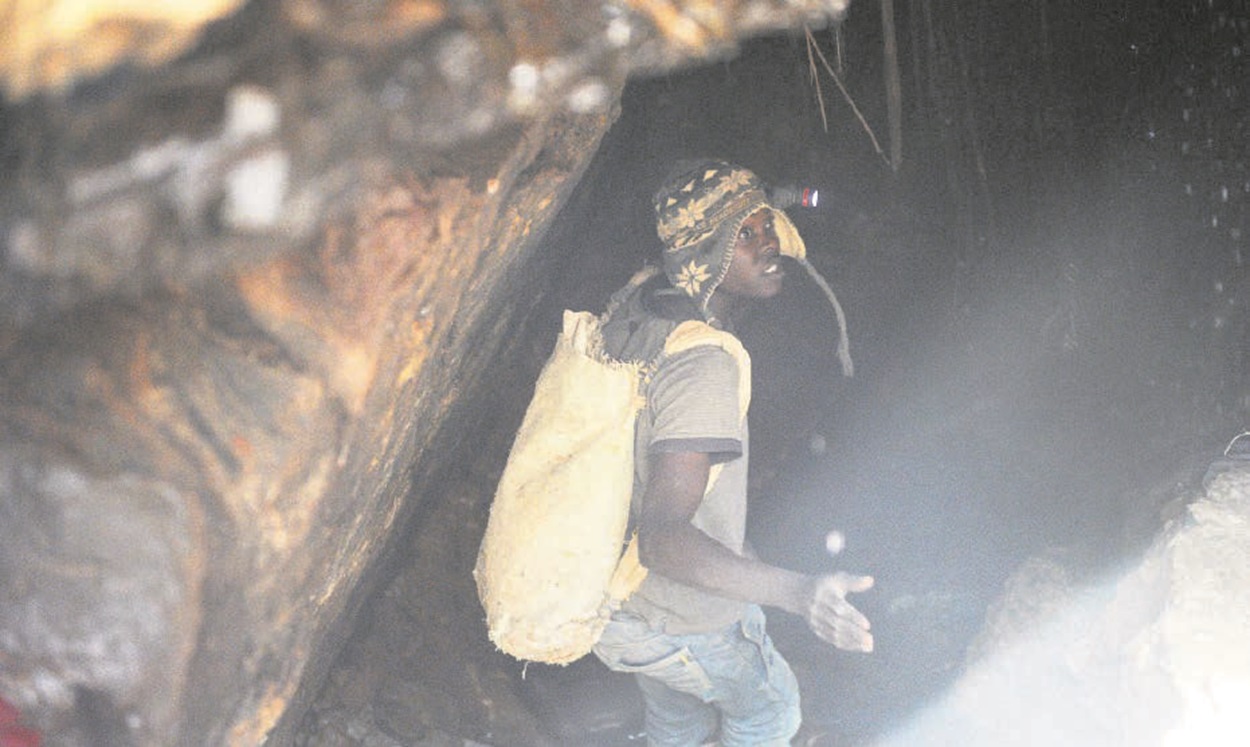
Muzerengi said another thing that might contribute to possible tremors was illegal mining practices, which usually require the use of explosives. This was prevalent in abandoned mines, he said.
“Reactivation of rock faults and damage of pillars can result in mining-related tremors and earthquakes.” Muzerengi said.
A solution to the problem was to control blasting and infilling as well as closing the shafts in abandoned mines.
Attorney Dimakatso Sefatsa said South Africa has an estimated 6 100 abandoned mines, including at least 400 coal mines.
6 100 abandoned mines with inadequate rehabilitation
Sefatsa said the growing number reflected inadequate rehabilitation during and after mining.
“While we cannot confirm whether abandoned mines cause earthquakes, delayed government action has serious consequences,” she said.
“Each year of postponed rehabilitation exposes communities to polluted water, unsafe land, and ongoing social, economic and environmental harm.”
The department of mineral resources and energy had not responded to questions at the time of going to press.