It may be all systems go for the 31-member impeachment committee under newly elected chair Makashule Gana of Rise Mzansi, but their work risks being rendered futile.
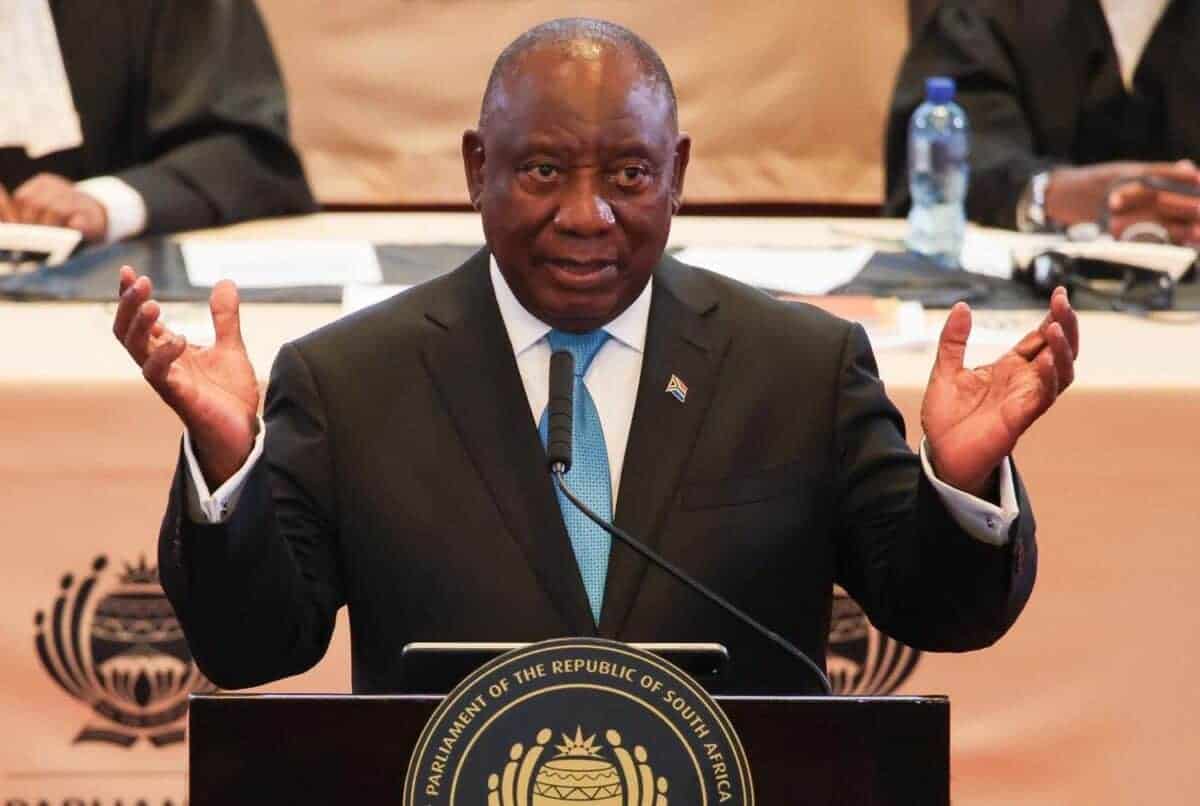
President Cyril Ramaphosa’s decision to challenge the Section 89 panel report on the Phala Phala theft has effectively stalled the process, shifting the battle from parliament to the courts.
Far from a mere legal manoeuvre, Ramaphosa’s move is a calculated political strategy – aimed at preserving power, managing perception and shielding both his Presidency and the ANC from a potentially damaging crisis.
By asking the Western Cape High Court in Cape Town to review and set aside the report, he asserts his constitutional right to judicial review.
Legally, the argument carries weight. Every citizen, including the president, has the right to challenge findings they believe are unfair or procedurally flawed.
However, the political implications of his decision extend far beyond the courtroom. The immediate objective is political survival.
An impeachment inquiry would represent the most serious threat to Ramaphosa’s leadership since he assumed office.
Even if removal from office remained unlikely, the existence of a formal inquiry would weaken his authority in the ANC and government.
Politics is often shaped by perception as much as reality. A president facing impeachment appears vulnerable, and vulnerability creates opportunities for political rivals.
By taking the matter to court, Ramaphosa shifts the battle from parliament – where politics and public spectacle dominate – to the legal arena, where procedure, technical arguments and lengthy timelines can slow political momentum.
The strategy is a reminder of the Stalingrad defence employed by former president Jacob Zuma, who frequently used litigation and procedural challenges to delay accountability.
While Ramaphosa’s approach remains firmly within constitutional channels, the political effect is similar: buying time and reducing immediate pressure.
A second objective is protecting ANC unity. The governing party remains deeply divided by internal factions and competing interests.
An impeachment inquiry would not only place Ramaphosa under scrutiny, but would also expose these divisions. Opponents could use the process to weaken his leadership, while allies would be forced to defend conduct that many South Africans already view with suspicion.
Delaying the process allows the ANC time to manage internal tensions and avoid a damaging public display of infighting. Perhaps most importantly, Ramaphosa is fighting to protect the image that brought him to power.
He positioned himself as the reformist leader who would restore integrity and rebuild trust after the state capture era. The Phala Phala scandal threatens that carefully cultivated identity.
Questions surrounding large sums of foreign currency, transparency and accountability create a contradiction between Ramaphosa’s reformist message and the realities of executive power. The Phala Phala row is no longer just a legal matter.
It has become a contest over power, credibility and public trust. Whether Ramaphosa’s strategy is viewed as a legitimate defence of constitutional rights or a sophisticated exercise in political survival will depend on how South Africans judge both the process and the principles at stake.
Ramaphosa is most likely to survive. The ANC has historically protected sitting presidents when power is at stake and impeachment requires overwhelming support that opposition parties alone cannot secure.
Yet, survival comes at a cost. Each delay risks weakening public trust and reinforcing cynicism about whether powerful politicians are treated differently from ordinary citizens.
Ramaphosa promised South Africans a “new dawn” built on ethical leadership and institutional renewal. Phala Phala now risks becoming the moment when many conclude the system itself has not fundamentally changed – only the style of politics has.
That may be the most damaging outcome of all: a reformist president surviving, but at the expense of credibility, trust and the very renewal he pledged to deliver.