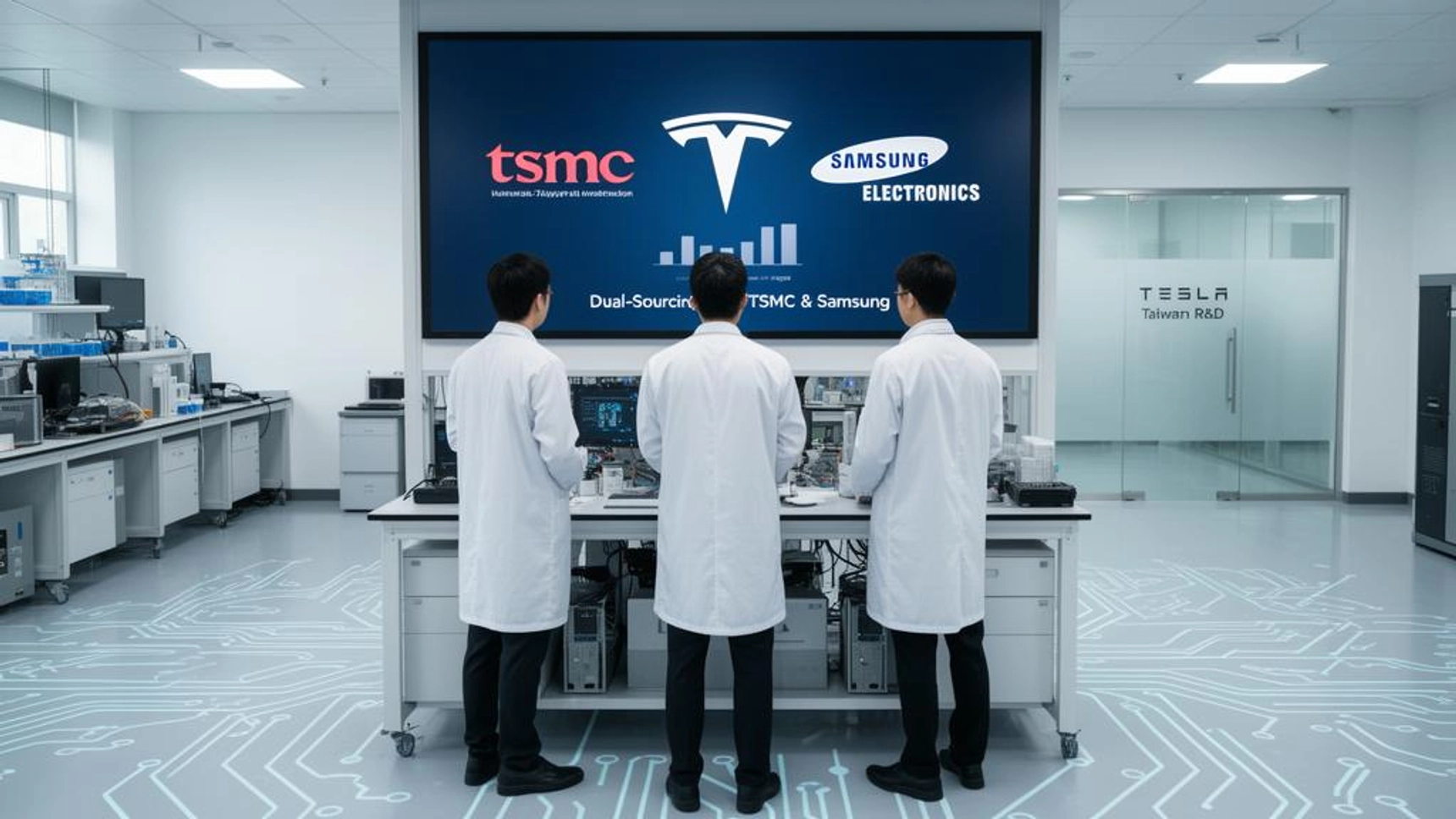
Tesla has begun recruiting semiconductor engineers in Taiwan for its ambitious “Terafab” project, signalling a deeper strategic push into advanced chip manufacturing as global competition for artificial intelligence infrastructure intensifies.
According to job postings published by the company, Tesla is seeking candidates for at least nine engineering roles, each requiring a minimum of five years’ experience in cutting-edge semiconductor processes. The hiring drive underscores Taiwan’s critical role in the global chip ecosystem, anchored by TSMC, the world’s largest contract chipmaker and a global hub for specialised semiconductor talent.
The Terafab initiative, unveiled by Tesla Chief Executive Officer Elon Musk, is described as a “vertically integrated semiconductor factory” designed to consolidate multiple stages of chip production within a single complex. These include logic and memory fabrication, advanced packaging, testing, and lithography mask production an approach aimed at tightening control over supply chains and boosting efficiency.
The job listings highlight Tesla’s focus on next-generation semiconductor technologies, with several roles requiring expertise in manufacturing nodes below 7 nanometres and familiarity with emerging 2-nanometre-class processes. These are areas where Taiwan’s semiconductor industry maintains a competitive edge.
In addition, Tesla is targeting engineers skilled in advanced packaging techniques such as CoWoS and SoIC technologies pioneered by TSMC indicating the company’s intent to tap into the island’s innovation ecosystem.
The roles span critical front-end fabrication disciplines, including lithography, etching, thin film deposition, and chemical mechanical planarisation, as well as yield optimisation and process integration. This breadth reflects the scale and technical ambition of the Terafab project.
According to the postings, the proposed facility will support a wide range of applications, from edge artificial intelligence processors to space-grade chips for satellite systems and high-bandwidth memory solutions required for data-intensive computing environments.
Tesla has not issued an official response to inquiries regarding the recruitment drive. However, the move comes amid a global surge in demand for AI chips, which has intensified pressure on existing fabrication capacity, particularly at leading foundries such as TSMC.
Reacting to questions about the project, TSMC cautioned that semiconductor manufacturing remains a highly complex and time-intensive process. The company noted that building a new fabrication plant typically takes between two and three years, emphasising that “there are no shortcuts” in the industry.
Erizia Rubyjeana