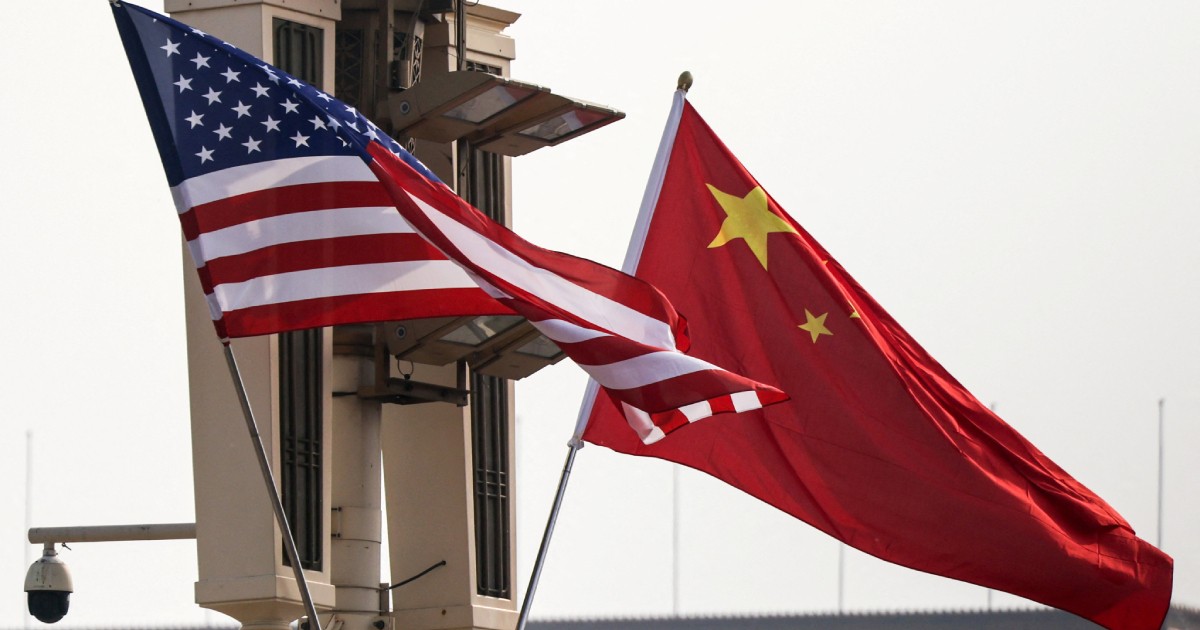
A conflict between the United States and China over Taiwan could escalate into a nuclear confrontation, a leading international defence research institute has warned.
The International Institute for Strategic Studies said both countries would likely target each other’s military command and communications systems in any major conflict involving Taiwan.
“Conflict with China would risk escalation, potentially to a nuclear level, given the strategic importance of Taiwan to Beijing.”
The warning was contained in a strategic assessment released ahead of the Shangri-La Dialogue, Asia’s largest annual defence summit taking place in Singapore this weekend.
The report said the world was approaching a new nuclear arms race centred on the Asia-Pacific region.
“Regional states and those with strategic interests are expanding their nuclear arsenals, while non-nuclear weapons states pursue long-range conventional-strike capabilities.”
The IISS assessment warned that both Washington and Beijing lacked clear safeguards to prevent military escalation in the event of conflict.
“There is currently little public evidence to suggest that both militaries understand the necessary guard rails to prevent, or rules of engagement that would restrict, both sides potentially targeting each other’s key command, control, communications, computers, intelligence, surveillance and reconnaissance nodes.”
It added: “The prospect of nuclear escalation will thus continue to loom large in a major U.S.-China conflict.”
Taiwan and wider regional security concerns are expected to dominate discussions at the Shangri-La Dialogue, which brings together defence ministers, military chiefs, diplomats and security analysts from around the world.
The conference follows a recent summit in Beijing between Chinese President Xi Jinping and US President Donald Trump.
The meeting reportedly triggered concerns in Taiwan about Washington’s long-term commitment to supporting the self-governed island.
China claims Taiwan as part of its territory and has repeatedly said it reserves the right to use force to bring the island under its control, although it says it prefers “peaceful reunification”.
Taiwan’s government rejects Beijing’s sovereignty claims.
The report also noted growing concerns over the absence of sustained nuclear risk-reduction discussions between China and the United States.
IISS senior fellow Daniel Salisbury said communication channels between both powers remained weak compared with Cold War-era talks between Washington and the former Soviet Union.
“That culture of discussion is just not there at the moment so there’s far less to build on in that relationship.”
The study highlighted concerns about the rapid expansion of China’s nuclear capabilities.
A recent Pentagon report said China could possess 1,000 nuclear warheads by 2030.
According to the Federation of American Scientists, Russia currently has about 4,400 active nuclear warheads, the United States has 3,700, while China possesses an estimated 620.
Erizia Rubyjeana