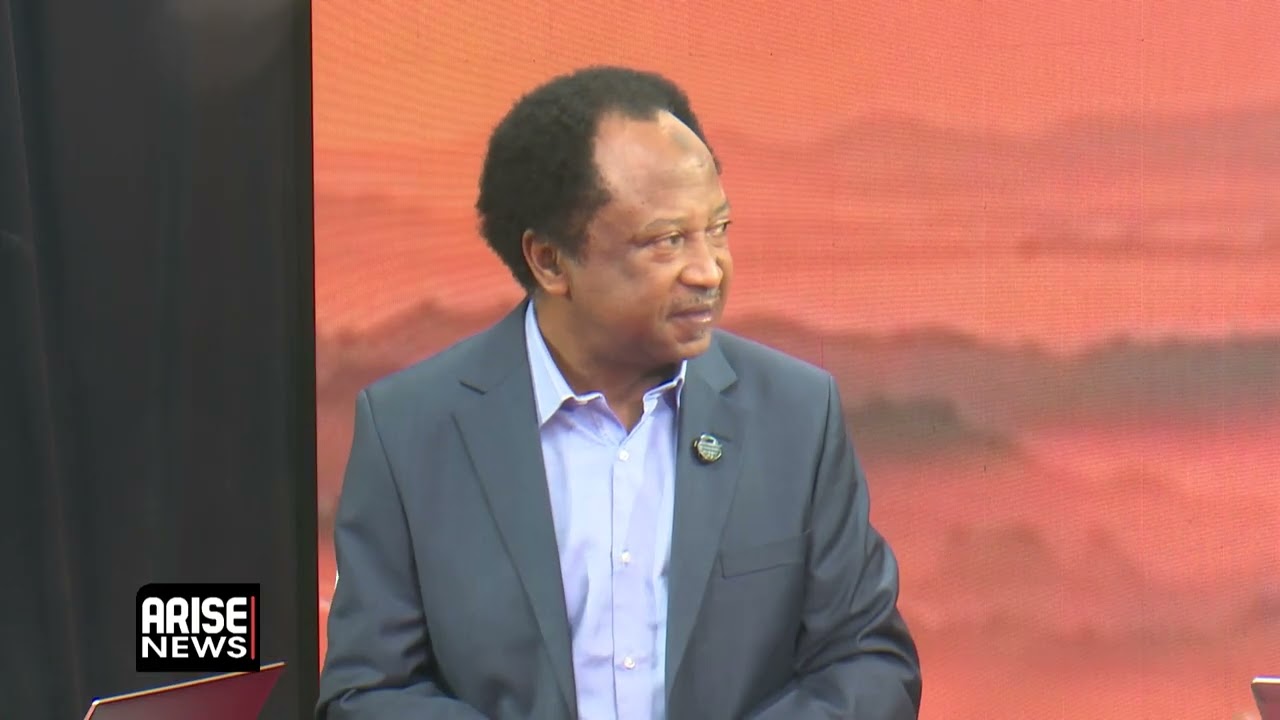
The former senator representing Kaduna Central, and candidate for the senate to represent the Kaduna Central Senatorial District, under the All Progressives Congress (APC), Senator Shehu Sani, has defended the conduct of the Kaduna Central senatorial primaries, dismissing allegations of rigging and insisting that aspirants who lost should accept defeat.
Speaking during an interview with ARISE NEWS on Wednesday, the former lawmaker said complaints arising from the exercise should be channelled through the party’s appeal process instead of being taken to the public.
“When elections or primaries take place, there are bound to be winners and losers. We cannot all win, and we cannot all lose. It was expected that those who win should be humble and recess themselves for the general elections ahead, which are coming in January. Those who were defeated are expected to be good sportsmen by accepting the fact that they participated and contested in the election, and they lost,” he stated.
Adding, he said: “But what we have seen in these primaries is that those who lost, instead of going through the party process of submitting their petitions to the appeal committee, went public.”
Responding to claims by aspirants Usman Zailani and Yerima Shettima that no election was held in Kaduna Central, Shehu Sani insisted the primaries were conducted across all 81 wards in line with party guidelines.
“Primary elections took place in line with the party’s directives, principles, and instructions. There were primary elections in all the 81 wards of Kaduna Central,” he maintained.
He argued that Zailani’s defeat was due to weak grassroots support and internal disagreements with party structures, not alleged interference by Governor Uba Sani.
“For Usman Zailani— he has been in the Kaduna House of Assembly for 20 years. Why did he fail? Why did he lose? He didn’t lose because Uba Sani doesn’t like his face or because the election was rigged. There are factors that led to that.
“First of all, in the last quarter of last year, there were congresses that took place. Leaders from the ward, local government, and state levels emerged. Zailani never recognized them. He attempted to set up his own exco. You cannot win primary elections if you are at malice with your ward level.
“Zailani lost. Shettima withdrew before the elections. That is simple. In line with the party directives, primaries are to take place at the ward level. He never participated; he never had the mobilization for him to win the elections. He has been winning elections for 20 years as a member of the House of Assembly, and within that period, he only had six wards. Now he tried his luck with 81 wards, and he lost,” he explained.
The former senator also maintained that losing elections is part of politics, noting that both he and the Kaduna governor had previously lost elections before later returning to public office.
“I was a Senator from 2015 to 2019, and within my own political history, I lost twice and I won. Uba Sani, the Governor of Kaduna State, contested twice in 2003 and 2011, lost the election, and became Senator in 2019. So, if you cannot accept the fact that you can contest and lose an election, you don’t appear to be a good politician. Zailani contested and lost,” he stressed.
Addressing aggrieved aspirants, Sani said losing primaries was not unique to Kaduna, noting that several senators, ministers, and former governors also lost across the country. He urged aggrieved aspirants to accept the outcome or seek redress through the party’s appeal committee
“It is not simply about Kaduna State. There are seven Senators—about 40 of them contested elections in the primaries and lost. There are over 50-something members of the House of Reps who contested elections and lost. There was even a former Governor in Gombe State, in the person of Dankwambo, who was governor for eight years and also a Senator about four times; he contested the election and lost. There were three serving ministers who resigned their positions—that of power, that of housing, that of foreign affairs—contested, and lost.
“You cannot say that until you win before the process is right. If you do your homework, you are well-aligned with the party, you mobilize your people, you will win the election. But we cannot be held back or bring the roof down because you lose an election. They should be good sportsmen. They should accept the outcomes of the primaries, and if they don’t, they should go to an appeal committee. Their issue will be addressed,” he said.
Dismissing claims that Usman Zailani’s political experience guaranteed victory, Sen. Sani said popularity in six wards could not secure support across Kaduna Central’s 81 wards. He added that he defeated Zailani even in his strongholds and argued the APC would have struggled in the general election if Zailani had emerged.
“You can be popular for 100 years in three wards, and then when you try to test your popularity with 81 wards, you lose elections. That is simply what happened. He was known in his own six wards. I even defeated him in his wards! And his local government was even taken over by the PDP.
“If Zailani had taken the ticket, the APC would lose the election because we lost the election in 2023 in his own ward,” he noted.
Reacting to claims that Governor Uba Sani influenced the primaries, Sen. Sani said the governor only attempted to unite aspirants through consensus and never publicly endorsed any candidate.
“Governor Sani tried to bring all the aspirants together to achieve a consensus as a leader. He resisted the temptation of raising the hands of anyone. And if anybody has any clip of where Uba Sani said, ‘Vote for this person, don’t vote for that person,’ make it open. You can see what happened in other states where governors would say, ‘She is my candidate, vote for her. He is my candidate, vote for him.’ Uba Sani refused to do that,” he emphasised.
He, however, revealed that efforts were made to reach out to other aspirants before the primaries, but they chose to contest believing they would win.
“I can tell you even before the elections, we tried to reach out to them. But in their own thinking, they thought they would win.”
He added that after the election, he supports reconciliation and unity within the party, but noted that some aggrieved candidates have instead resorted to protests rather than using the party’s appeal process.
“But now, instead of working within the party machinery, some of them have taken to protests, which of course they have the right to do, but the party says go to an appeal,” he explained.
On whether internal disputes among aspirants could affect the party’s chances in the general election, Shehu Sani said they would not, insisting that victory was already assured. He added that while the party welcomes support from all contestants, only those willing to cooperate after losing primaries would be accommodated.
“It’s not going to affect anything because they thought we would not win, and then we won. We need their support if they are prepared to give us their support. And if they are not prepared to give us their support, well, that’s left for them. But we are going to win the election. Tinubu will win Kaduna State with a landslide. Uba Sani will win Kaduna State with a landslide. I will win my own senatorial seat.
“Anyone who wants to work for the party is welcome. But anyone who wants to undermine the party or subvert the party because he lost the election, we are also prepared for him,” he maintained.
Addressing concerns of possible defections, Sani said everyone has the right to belong to any political party, adding that the APC will continue to persuade and convince members to remain and work together, noting that while defections are not welcomed, the party is prepared to win elections even if some members choose to leave.
“Everyone has a right to belong to any political party or association they want to. Whatever we try to do is to persuade you, to convince you, and to see how we can bring you to our fold. It is all up to you to decide whether you should work with us. But if you don’t want to work with us, we have to find a way to win our election. We don’t want anybody to defect from our party, but if they insist on defecting, we are also prepared for that,” he said.
On the issue of banditry and insecurity in Kaduna Central, Sen. Sani said it would be unrealistic for any politician to claim they can completely eliminate such problems upon assuming office.
“It would be an exaggeration for any person—simply because they want to be elected into office—to make claims of addressing problems that have been defying solutions from the top down. To tell you, or to sit here and tell you because I want to be elected into office, that by the time I am elected I will crush all bandits and all terrorists… that is going to be a lie,” he stated.
He noted that while significant progress has been made in securing key routes like the Kaduna–Birnin Gwari and Kaduna–Abuja roads, insecurity still exists in parts of the state and must be addressed collectively.
“Before the coming of Governor El-Rufai, there were three hotspots in Kaduna: about two areas in Southern Kaduna, and then in Kaduna Central, which is the Birnin Gwari axis. El-Rufai came to office and unfolded his own approach, and it’s working.
“The Kaduna-Birnin Gwari road used to be one of the most dangerous roads in this country; you had no less than 10 to 15 cases of kidnapping a day. Today, people can drive to Birnin Gwari. I would even invite you to go to Birnin Gwari; you don’t need to fear anything. The Kaduna-Abuja road, too, has been well-secured.
“Nobody in their right mind would say that because parts of our state are secured, the whole of Nigeria is secured. We have banditry, we have terrorism. But these are things that, apparently, are stepping up now because of the upcoming elections. For what reason, I don’t know.
“But I know very well that each time an election is coming close, bandits keep attacking and kidnapping, and terrorists keep attacking and kidnapping, hoping that that will achieve a certain political end. I don’t know the reason for that, so Nigerians have to be conscious of it,” he urged.
He added that, if elected, his role as senator would be to complement the efforts of the state and federal governments through legislative support rather than making exaggerated promises.
“As a senator, if elected into office, my own effort, commitment, input, and intervention will complement what the state government and the federal government are doing from the legislative side. That’s what I can say.”
Favour Odima