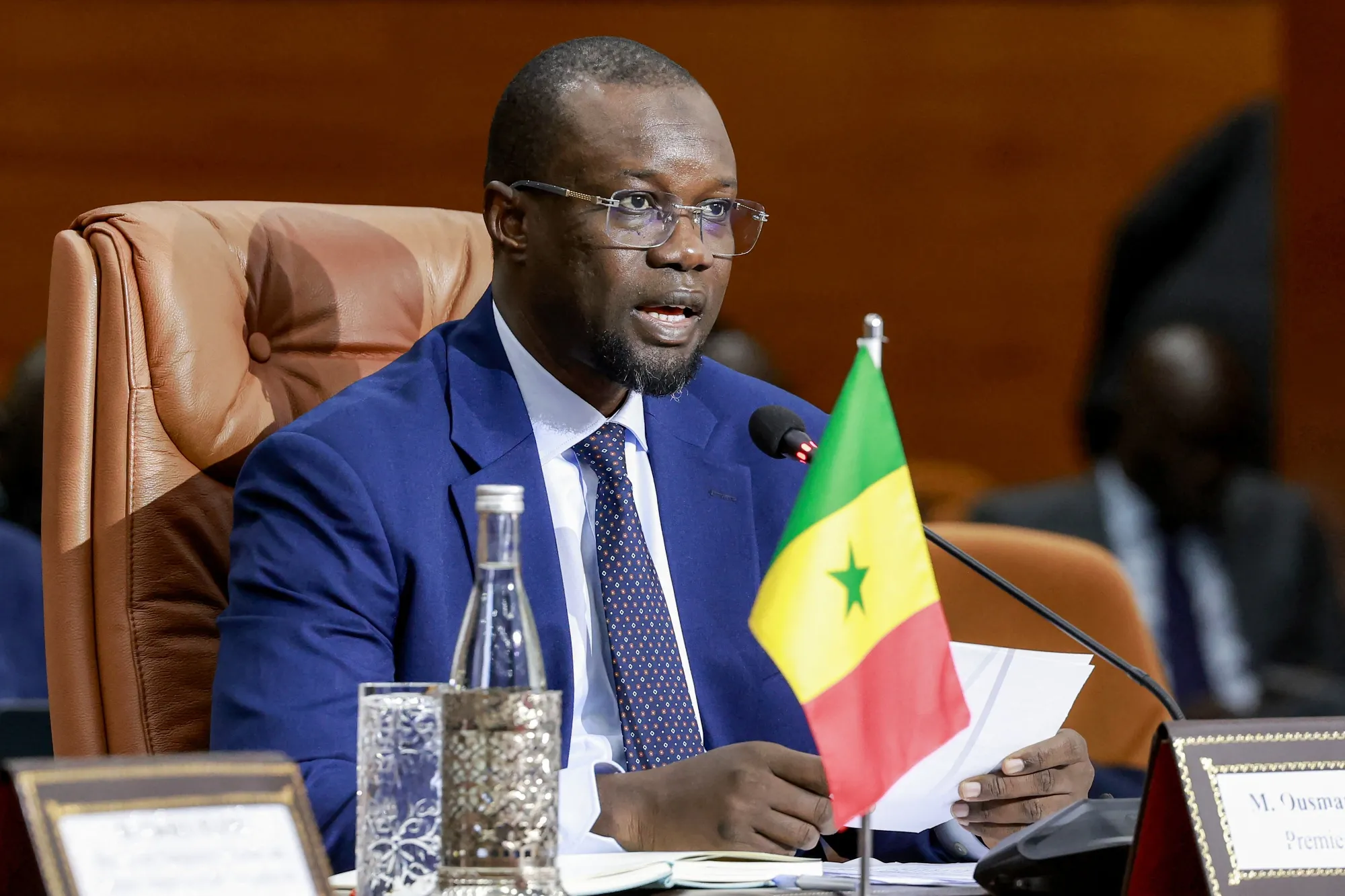
Senegal’s National Assembly on Tuesday voted to reinstate former Prime Minister Ousmane Sonko as a lawmaker and elect him speaker of parliament, days after President Bassirou Diomaye Faye removed him from office in a growing power struggle between the two former allies.
The vote marks a dramatic political comeback for Sonko and deepens the rift at the top of Senegal’s leadership, less than 2 years after both men swept to power on promises of reform and economic recovery.
President Faye on Friday dismissed Sonko and dissolved the government after months of tensions between the pair. A day later, Faye appointed senior economist and former regional central bank official Ahmadou Al Aminou as the country’s new prime minister.
Sonko’s elevation to speaker gives him control of parliament, where the governing Pastef party holds a commanding majority with 130 seats in the 165-member assembly.
Senegal has been facing mounting economic pressure, with public debt estimated at 132 percent of GDP. After taking office in 2024, Faye and Sonko accused former president Macky Sall’s administration of concealing part of the country’s debt, prompting the suspension of a $1.8 billion IMF aid programme agreed in 2023.
Faye’s rise to the presidency was largely driven by Sonko, who had been barred from contesting the 2024 presidential election because of a defamation conviction.
The relationship between the two leaders has since deteriorated over disagreements on how to tackle Senegal’s economic problems. Faye favours talks with the IMF on a new support programme, while Sonko has pushed for a domestic and sovereigntist approach.
Sonko, elected as a lawmaker during the November 2024 legislative elections, had requested the suspension of his parliamentary mandate after Faye appointed him prime minister following the presidential poll victory.
His return to parliament followed the resignation on Sunday of speaker El Malick Ndiaye, a close Sonko ally, clearing the path for his election as head of the legislature.
The opposition condemned the move, with opposition coalition leader Aissata Tall Sall describing it as an “institutional coup” prepared under “pressure that the majority wants to impose”.
Faridah Abdulkadiri