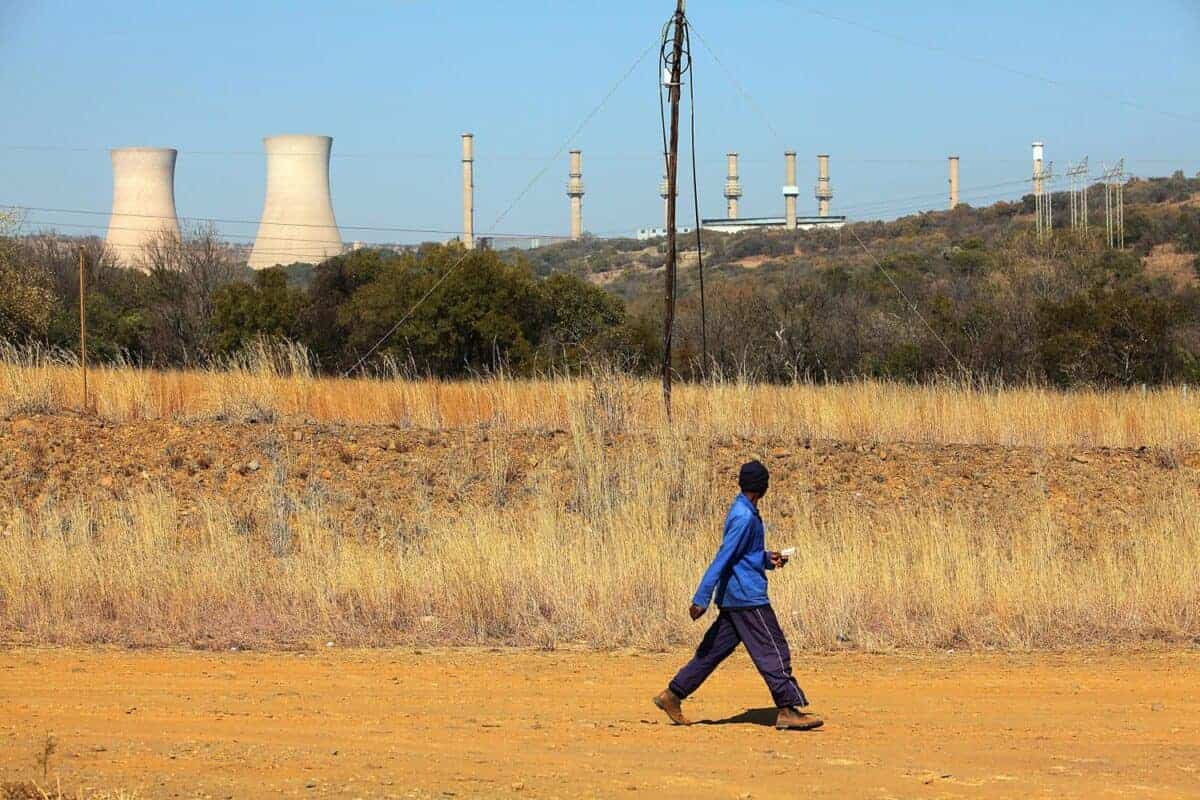
PELINDABA, SOUTH AFRICA JULY 10: A man walks past Pelindaba Nuclear Research Centre, west of Pretoria, South Africa, on July 10, 2012. The centre was used by the apartheid government to research and build nuclear weapons in the 1970s. It is now used to manufacture medical isotopes. (Photo by Gallo Images / The Times / Alon Skuy)
Radioactive isotopes often have a half-life of thousands of years… and it seems almost as long that our state power utility, Eskom, has been toying with the idea of erecting a second Koeberg nuclear reactor and power plant along some of our most sensitive coastlines.
For decades, Eskom has been looking at Thyspunt near St Francis Bay, or at Bantamsklip in the Western Cape, to site what will be a 5.5 gigawatt plant.
In the case of Thyspunt, local activists had been hopeful that the whole idea had gone away, especially given that such a megaproject would be open to more scrutiny after the looting of the state capture years – and for the fact that our coal-fired grid, backed by the explosive growth of renewable energy, seems to be far more stable than in the load shedding days.
However, it seems the scheme is very much alive, with new proposed feasibility and environmental studies.
Opponents point out that many of their concerns remain unresolved – including impacts on squid spawning grounds, marine ecosystems, cultural heritage sites, tourism and local communities that dominated the previous environmental assessments.
A nuclear facility at Thyspunt, they warn, would turn the area into one of the largest construction sites in the southern hemisphere and place significant pressure on local infrastructure and ecosystems.
It could also mortally damage the local fishing and tourism economy, negating the advantage of temporary jobs in the construction phase.
We are yet to be convinced that there are sufficient safeguards against corruption and looting, especially given the immense cost overruns and delays to the flagship Kusile and Medupi coal-fired plants.
Yet, nuclear does have its supporters because it is cleaner than coal: ask those struck down by respiratory disease on the Highveld about that.
There needs to be a thorough independent assessment of this whole idea.