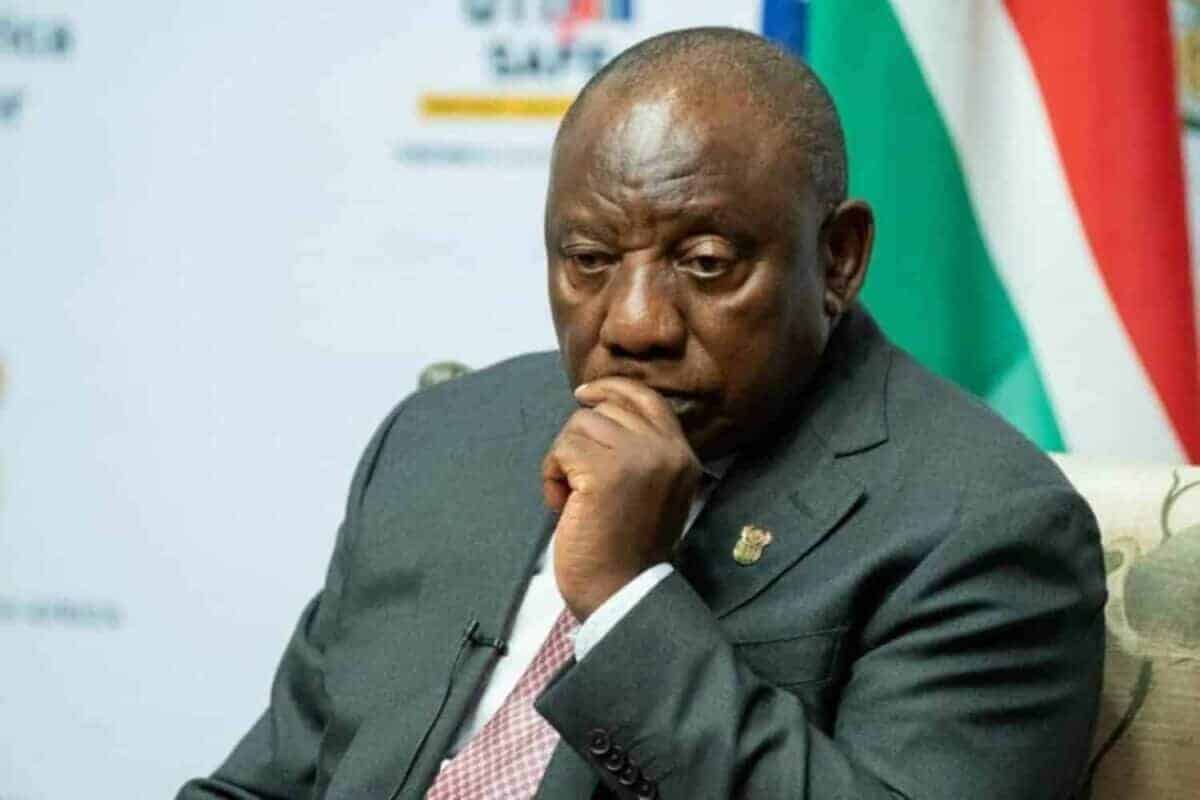
As the 31‑member impeachment committee prepares to deliberate on President Cyril Ramaphosa’s fate in the Phala Phala farm saga, a fresh battle has erupted over proposals by the DA and ANC that only “fit and proper” MPs be allowed to serve – a move that could bar several members from the inquiry.
Ramaphosa now faces the possibility of being removed from office as MPs have taken the unprecedented step of setting up a committee that will recommend whether or not he should be impeached.
Ignoring calls
Last week, Ramaphosa ignored calls from opposition parties to come clean and address the Phala Phala Farm saga, despite facing the prospect of an impeachment inquiry.
The president had initially remained silent on the pending impeachment proceedings, even as several MPs questioned him about it.
‘Fit and proper MP’s’
With the impeachment looming against Ramaphosa, proposals by the DA and ANC on Thursday at a meeting of the National Assembly’s sub-committee on rules said the rules governing the operations of the committee should state that only “fit and proper” MPs could serve on the body.
“The requirement for this committee to serve or function with integrity and a higher ethical standard is important… the impeachment committee consists of fit and proper assembly members that the speaker may determine, provided that all parties in the assembly must be represented,” DA parliamentary leader George Michalakis argued:
ANC MP Mikateko Mahlaule backed the proposal, noting that courts had already defined what “fit and proper” means, the Sunday Times reported.
MK party
However, former President Jacob Zuma’s MK Party fiercely opposed the move, claiming it was aimed at sidelining its leader, John Hlophe, who was impeached as Western Cape judge president in 2024.
“This is precisely where the ‘fit and proper’ proposal begins to unravel… who decides whether an MP is fit and proper? The speaker? The chief whips? The rules committee? Parliament’s legal services? A court? If there is no clearly defined decision-maker and procedure, the requirement becomes arbitrary and susceptible to political manipulation,” MK representative Mzwanele Manyi warned.
Advocate Andrew Breitenbach SC advised that the matter may require an independent legal opinion, stressing: “A political decision would have to be taken.”
Deadline
The subcommittee faces a tight deadline, with proposals due before the full rules committee on Tuesday and the National Assembly on Thursday.
Other proposed rules include appointing a senior counsel as evidence leader, supported by a team of lawyers, with Ramaphosa expected to appear and his legal team allowed to cross‑examine witnesses.
Impeachment committee
Impeachment Committee chairperson, Makashule Gana, says the committee will begin its work without delay.
Ramaphosa has asked the Western Cape High Court to set aside the report that triggered the committee
The Western Cape High Court will hear Ramaphosa’s bid to overturn the Section 89 independent panel’s report on the Phala Phala matter from 2 to 4 September.
No stopping
Gana said the committee’s work can only be stopped by a court order.
“The work of the committee will continue until such time that a competent court tells us otherwise. So, the only institution that can stop this committee from doing its work is a court of law, other than that there’s no, there’s no one that can stop the committee from doing its work.
“At some point in the future, the court says, you can’t continue, then we’ll stop working, but anything else, we’ll continue doing our work,” Gana told eNCA.
Section 89 report
The report, which Ramaphosa is challenging, forms the basis of the National Assembly’s (NA) impeachment process.
It was submitted to the Speaker by the Section 89 Independent Panel, which was being led by former Chief Justice, Sandile Ncobo.
In November 2022, the panel released a report in which it concluded that there was prima facie evidence that Ramaphosa should answer questions about the alleged theft of approximately $580 000 (about R9.6 million) from his Phala Phala game farm in Limpopo in February 2020.
Judicial review
However, in December 2022, the National Assembly voted against referring the report to an impeachment committee.
Ramaphosa revived a judicial review of the section 89 independent panel report that found he had a case to answer, after the Constitutional Court (ConCourt) ruled in favour of the EFF and the African Transformation Movement (ATM).
‘Misunderstanding’
Ramaphosa stated that the independent panel misunderstood its mandate in at least four respects.
This includes misconstruing the inquiry it was meant to conduct. The president is also arguing that Ncobo and his team drew conclusions based on hearsay and that the panel had no evidence beyond what he himself submitted.
The president wants the report’s recommendations declared unlawful and set aside, challenging the panel’s findings that there was prima facie evidence of a serious violation of the constitution and law, as well as serious misconduct.
The apex court sent the report on the Phala Phala scandal back to parliament, paving the way for an impeachment process against Ramaphosa to proceed.