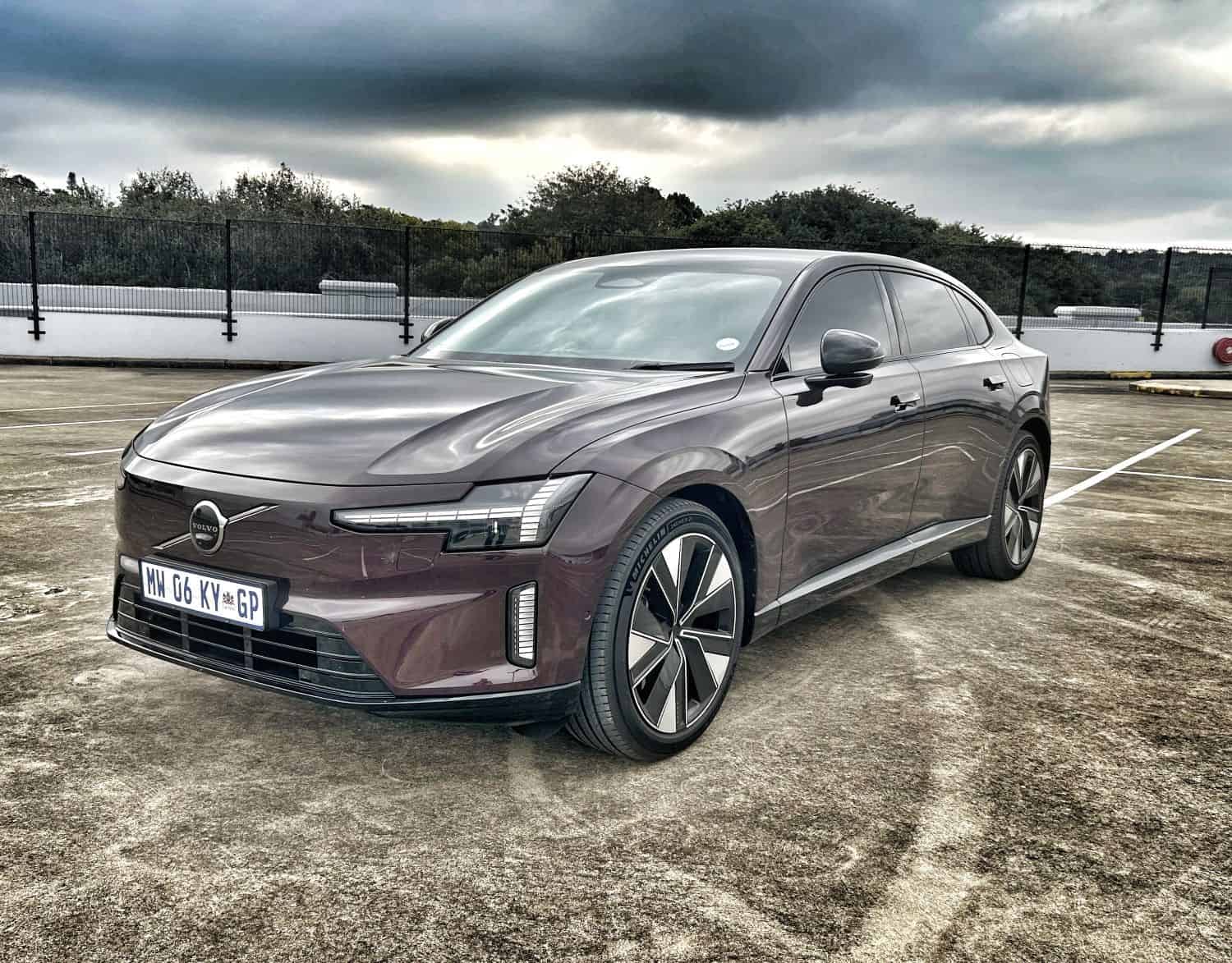
Volvo’s re-entry into the ever-shrinking sedan segment with the all-electric ES90 can be viewed as either brave or stupid. Whichever one the history books eventually condemn it to, for now it just feels right that a carmaker with such rich heritage in the segment should boast a modern-day sedan.
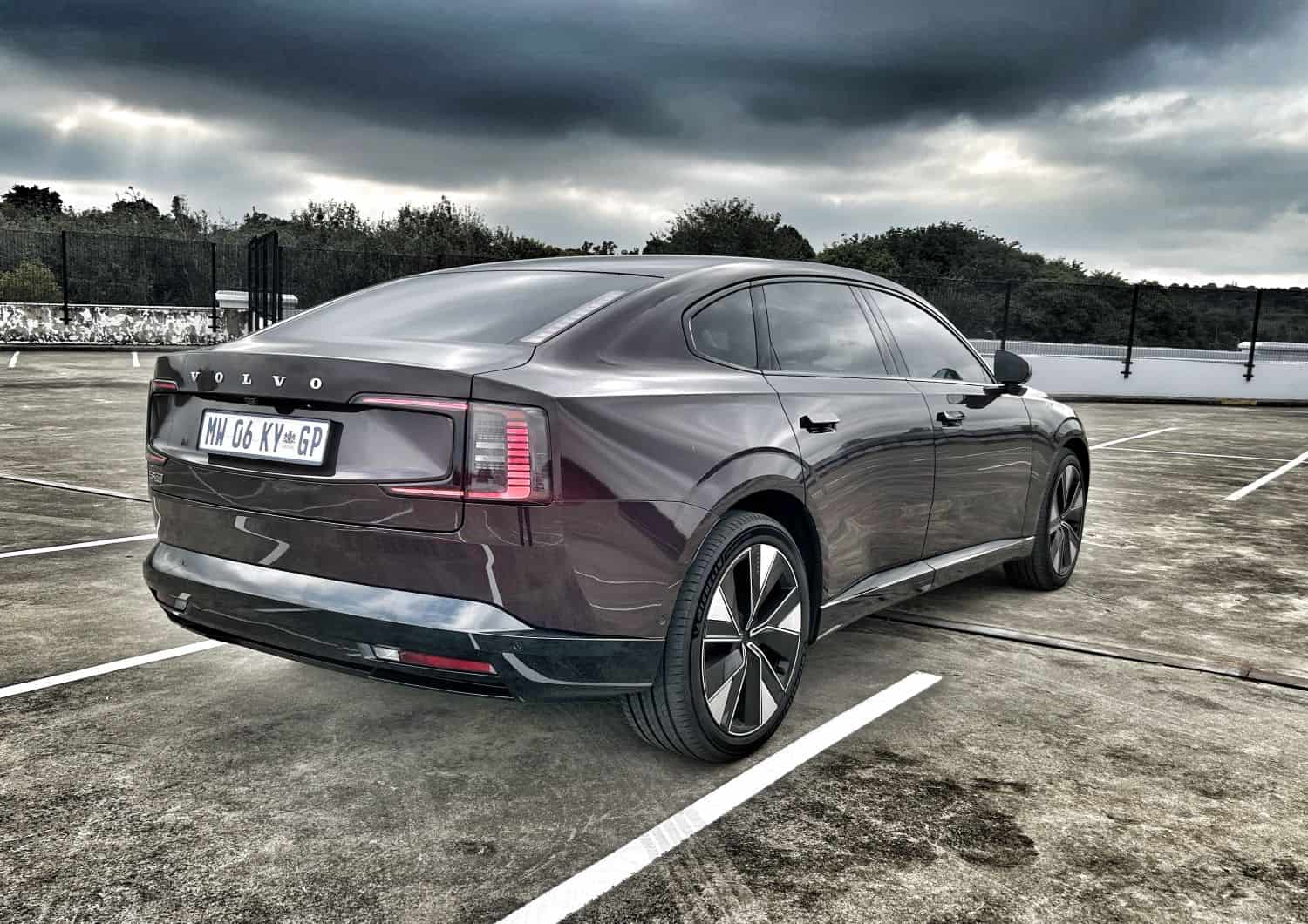
Like the S90, which was quietly discontinued four years ago, the ES90 offers everything a D-segment sedan should. A stunning design which has been described as fastback-like or cross-sedan, effortless performance, luxurious comfort, acres of spaces and all the latest technology. And needless to say, being a Volvo, unparalleled levels of safety.
SUVs can also offer all of the above. But what they can’t match is a proper sedan’s drivability. A lower centre of gravity and sleeker aerodynamics just make a sedan so much more dynamic, something The Citizen Motoring rediscovered spending a week in the flagship R1 795 000 Volvo ES90 Ultra.
Plenty of power
The fact that the ES90 is the first local rear-wheel drive Volvo sedan in decades, makes it even more enticing. Not that long sleek rear-wheel driven sedans are made to be throw into corners. Yet few things behind a steering wheel are more rewarding than that.
The ES90 features a 92kWh battery pack hooked up to a rear-mounted single electric motor that produces 245kW of power and 480Nm of torque. It might not sound overwhelming for a car weighing over 2.4 tons, but clamed 0 to 100m/h sprint time of 6.7 means that it is definitely no slouch. With typical instant torque on tap from the electric motor, the ES90 feels a lot quicker off the mark.
Apart from an Off-Road option, which sees the air suspension raise the ground clearance from 178mm to 203mm, the car does not offer any driving modes. Instead, it offers a choice between soft and firm steering feel and a choice between soft and firm suspension feel. Set both of these to firm and along with the power on tap and you pretty much have a Sport driving mode like any other car would offer.
Volvo ES90 easy on the ‘juice’
Set both back to soft feel and opt for the one-pedal driving mode which allows the car to start braking when you lift off the accelerator in order to recuperate power and you are all set for a civilised school run.
In terms of consumption, we averaged 16kWh/100km during our week in the ES90. This should result in a very generous range of almost 600km. The cost per kilometre is also quite impressive. If you work on pre-paid domestic electricity rate of R4/kWh, it will only cost you R64 per 100km.
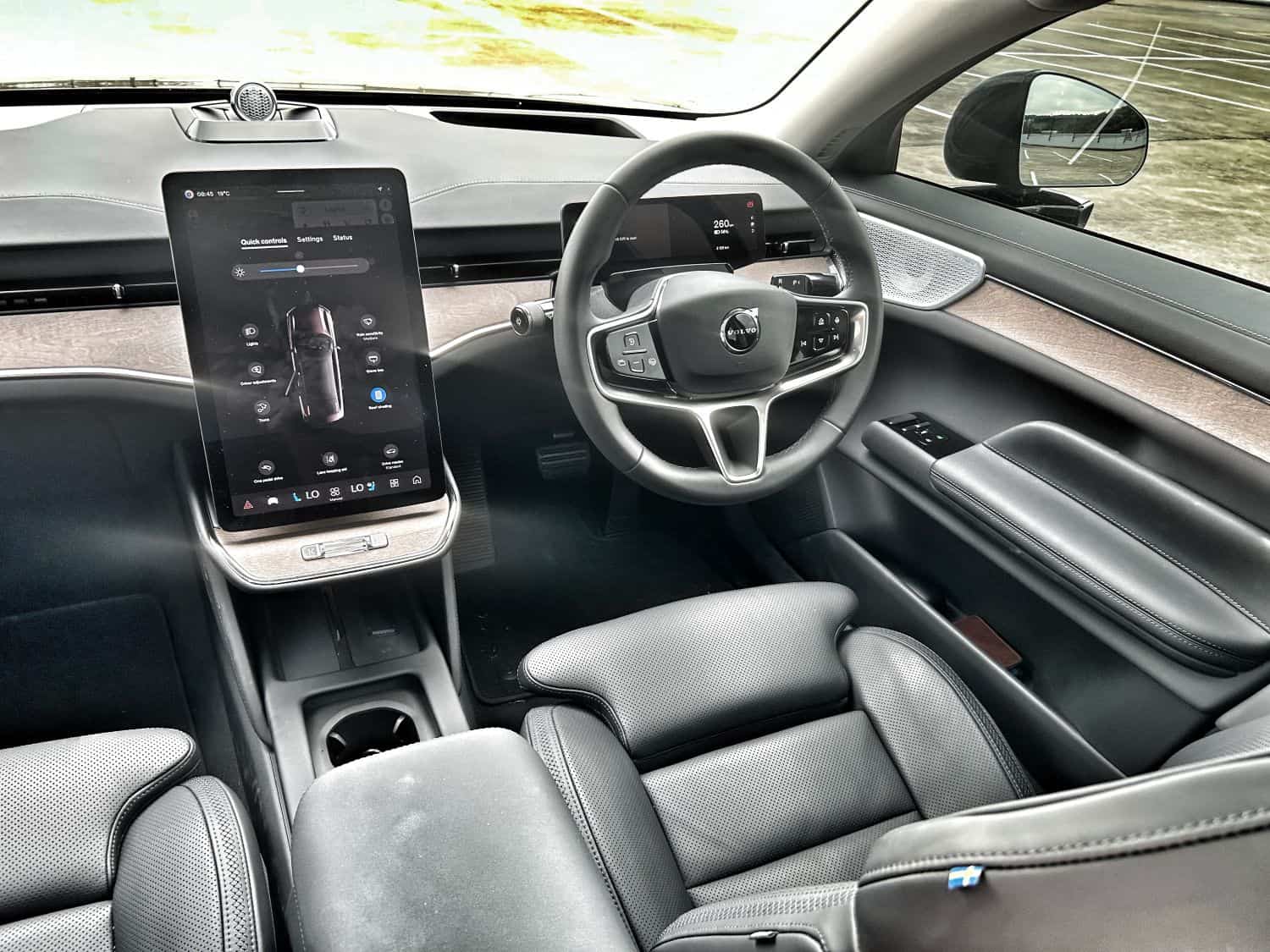
The classy sedan is a luxury lounge inside. Plush minimalistic finishing from top to bottom including leather seats for the first time, a 14.5-inch infotainment system which controls almost everything, a 25-speaker Bowers & Wilkens sound system, massaging front seats and heated, ventilated and reclining rear seats alloys all occupants a taste of business class travel over land.
Panoramic roof too bright
One thing we struggles adapting to was the panoramic roof with Polymer Dispersed Liquid Crystal (PDLC) technology. Without the optional blind, the glass panel darkens as the PDLC turns from clear to opaque. We felt that the opaque setting still allowed too much bright light into the cabin during daytime.
Safety is sorted by all the passive and active systems known to mankind.
Electric cars are often criticised for having no soul. The Volvo ES90 is so good that it can be forgiven for the one it doesn’t have. The sound from an internal combustion engine. The sedan is dead, long live the sedan.