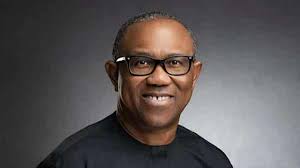
Presidential candidate of the Nigeria Democratic Congress (NDC) in the 2027 general election, Mr. Peter Obi, on Friday, accused the federal government of mismanaging Nigeria’s education sector, insisting that the country’s worsening learning outcomes require a fundamental overhaul of governance rather than mere policy adjustments.
Reacting to the federal government’s recent admission that the separation of junior and senior secondary schools had failed to improve educational outcomes, Obi said the education crisis reflected years of poor leadership, inadequate funding and weak implementation of policies.
In a statement posted on his X account, Obi argued that the government’s acknowledgement of the policy failure underscored deeper structural problems in the sector.
He cited recent examination results as evidence of the declining standard of education, noting that only 38.32 per cent of candidates passed both English Language and Mathematics in the 2024 West African Senior School Certificate Examination (WASSCE), while only 32 per cent reportedly passed the computer-based WASSCE in 2025.
According to him, the consistently poor performance recorded in major public examinations over the past two years demonstrates the urgent need for comprehensive reforms.
Obi described the situation as tragic, stressing that education remains the most critical investment for developing human capital and driving sustainable economic growth.
He maintained that Nigeria could not overcome economic stagnation without prioritising education, healthcare and job creation, adding that countries that had successfully transformed their economies invested heavily in quality education, teacher development and improved learning infrastructure.
The former Anambra State governor criticised the federal government’s budgetary allocation to education, saying the sector received only N3.52 trillion in the 2026 budget, representing 6.17 per cent of total expenditure, a decline from 7.87 per cent in 2025 and significantly below the 15 to 20 per cent benchmark recommended by UNESCO.
According to him, the declining allocation reflects the government’s failure to appreciate education as a strategic driver of national development and long-term economic prosperity.
Obi also lamented reports that Nigeria failed to sponsor students to international Science, Technology, Engineering and Mathematics (STEM) and Mathematics Olympiads because of inadequate funding.
He described the development as unfortunate, arguing that it was unacceptable for the government to finance participation in what he called less productive international engagements while neglecting talented students capable of projecting the country’s image globally.
He insisted that the real problem confronting Nigeria’s education system was not the structure of junior and senior secondary education but the lack of political will to adequately fund, supervise and deliver quality education.
Drawing from his experience as governor of Anambra State, Obi said committed leadership could transform the sector through strategic investment and effective management.
He recalled that his administration provided computers, laptops, generators, internet connectivity and other learning facilities to schools across the state, saying the initiative earned international recognition after HP Africa reportedly acknowledged Anambra as the subnational government with the highest procurement of laptops for schoolchildren in Africa.
Obi urged the federal government to deliberately channel greater investment into education, healthcare and job creation, warning that continued neglect of critical sectors would have grave consequences for future generations.
He reiterated his belief that national development depends on leaders making the right policy choices, insisting that Nigeria’s future could only be secured through sustained investment in its people.
Sunday Aborisade