Industry players warn new funding proposal could deter investment, raise operating costs and weaken Nigeria’s competitiveness…..
Oil industry operators and petroleum regulators have kicked against a proposal that would require oil and gas producing companies to contribute three per cent of their annual budgets to fund the South-South Development Commission (SSDC), warning that the measure could discourage investment and erode the competitiveness of Nigeria’s petroleum sector.
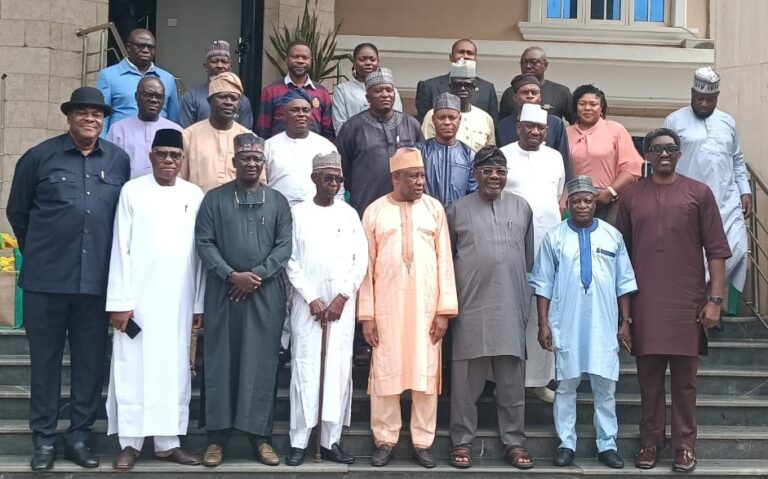
The objections were raised on Wednesday during a resumed public hearing organised by the House of Representatives Committee on the South-South Development Commission, which is considering a bill to amend the South-South Development Commission (Establishment) Act, 2025.
The amendment seeks to strengthen the commission’s funding framework by introducing additional sources of revenue, including mandatory contributions from oil-producing companies operating in the region.
Chairman of the committee, Julius Pondi, said the hearing was reconvened to allow key stakeholders who missed the initial session on July 8 due to the Nigerian Oil and Gas Conference to present their views.
According to the Delta lawmaker, the proposed amendment is intended to provide the commission with sustainable funding to address long-standing developmental challenges across the South-South, including poor infrastructure, environmental degradation and unemployment.
He urged participants to offer practical recommendations on the proposed funding model, its sustainability and its potential impact on both government and industry.
While stakeholders broadly supported efforts to strengthen the commission’s financial base, they expressed reservations over the proposed three per cent levy.
Representing the Nigerian Upstream Petroleum Regulatory Commission (NUPRC), the Head of Regulations and Statutory Compliance, Kingsley Chikwendu, said the commission supports a predictable funding structure for the SSDC but questioned the provision requiring operators to contribute a percentage of their total annual budgets.
He argued that the bill does not define what constitutes a company’s “total annual budget,” creating uncertainty over how the levy would be calculated and implemented.
Chikwendu also noted that the proposal fails to clarify key issues such as the basis for assessment, remittance timelines, deductibility of payments, treatment of joint venture operations and companies operating across multiple regions.
According to him, the levy could become another mandatory expense payable irrespective of a company’s profitability or production levels.
He reminded lawmakers that upstream operators are already subject to multiple statutory financial obligations, including petroleum taxes, royalties, contributions to the Niger Delta Development Commission, Host Community Development Trust Funds under the Petroleum Industry Act (PIA), Nigerian Content Development Fund payments, environmental remediation costs and abandonment fund contributions.
The NUPRC urged the committee to carefully assess the likely impact of the proposal on investment decisions, production costs and the overall competitiveness of Nigeria’s upstream oil and gas industry.
The Nigerian Midstream and Downstream Petroleum Regulatory Authority (NMDPRA) also expressed concern over the proposal.
Speaking on behalf of the authority, Senior Manager Ahmed Laido said any additional financial obligation should be consistent with the fiscal framework established under the Petroleum Industry Act, 2021.
He stressed that new funding mechanisms should promote regulatory certainty, strengthen investor confidence and support the Federal Government’s ease-of-doing-business agenda rather than create additional burdens for investors.
The strongest opposition came from the Oil Producers Trade Section (OPTS) of the Lagos Chamber of Commerce and Industry.
Its Chairman, Bala Wudiri, argued that oil companies already make substantial statutory contributions under existing laws and warned against introducing another compulsory levy.
He said an additional three per cent contribution would increase the financial burden on operators, duplicate existing obligations and reduce Nigeria’s attractiveness as an investment destination.
Wudiri urged lawmakers to adopt a funding model that would adequately finance the South-South Development Commission without discouraging investment in the country’s oil and gas industry.
Despite their objections to the levy, stakeholders unanimously supported the commission’s mandate of accelerating development across the South-South region.
Many participants agreed that the commission requires adequate funding to deliver critical infrastructure and development projects but maintained that any financing arrangement should avoid increasing the cost of doing business or undermining investment in the petroleum sector.
The House Committee is expected to review memoranda submitted by stakeholders before presenting its recommendations to the House of Representatives for further legislative consideration.