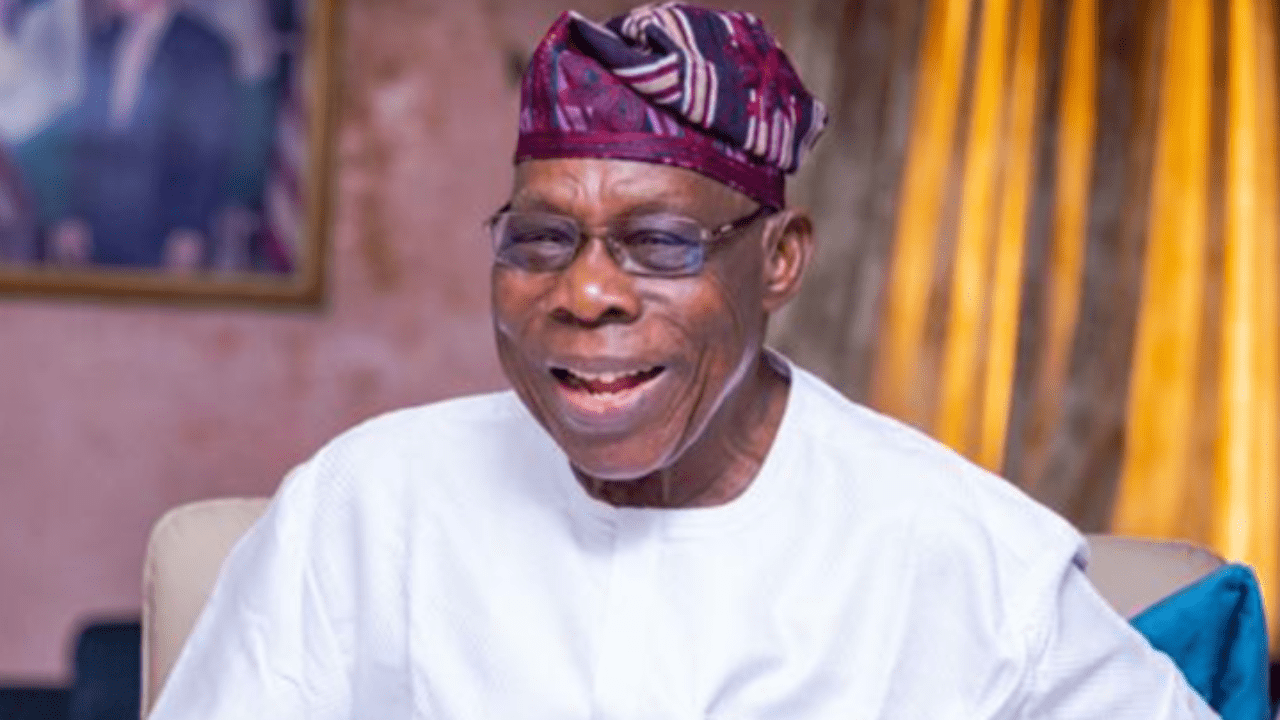
Former president reveals why Shell rejected takeover bid, blames corruption, poor maintenance, and policy reversals…..
Former President Olusegun Obasanjo has reignited the long-running debate over Nigeria’s struggling refineries, declaring that the country’s state-owned facilities are unlikely to ever function effectively.
Speaking during a televised interview on Sony Irabor Live on Saturday, Obasanjo maintained that repeated government control and systemic inefficiencies have doomed the refineries in Port Harcourt, Warri, and Kaduna to failure despite ongoing efforts by the Nigerian National Petroleum Company Limited to secure technical partners.
Drawing from his time in office, the former president pointed to the success of the Nigeria Liquefied Natural Gas project as evidence that public-private partnerships can work when structured properly, noting that private sector majority ownership helped shield it from government interference.
He contrasted this with Nigeria’s refineries, which he said have suffered years of neglect and mismanagement. According to him, attempts to attract global operators including Shell were unsuccessful for multiple reasons.
Obasanjo disclosed that Shell declined both equity participation and operational control after assessing the refineries. He said the company cited limited profitability in downstream operations, the relatively small capacity of Nigeria’s refineries compared to global standards, and persistent maintenance issues.
More critically, he added, concerns about corruption and operational inefficiencies discouraged serious investment.
The former president also revisited a controversial deal involving billionaire industrialist Aliko Dangote, who had offered $750 million to acquire a 51 percent stake in two of the refineries during his administration. Obasanjo described the offer as a rare opportunity, which was accepted at the time.
However, the agreement was later reversed under his successor, Umaru Musa Yar’Adua, a move Obasanjo attributed to pressure from within the national oil company. He argued that the reversal ultimately cost Nigeria a viable path to reforming its refining sector.
He further claimed that billions of dollars have since been spent on the refineries with little to show for it, estimating total expenditure at around $16 billion just shy of the cost of building the privately owned Dangote Refinery, now regarded as Africa’s largest.
Obasanjo’s comments come as the NNPC continues its search for technical partners, with a June 2026 target set to finalise the process. The current Group Chief Executive Officer, Bayo Ojulari, has acknowledged that even after rehabilitation efforts, the refineries have struggled to meet global standards and remain commercially uncompetitive.
The challenges have only strengthened the position of privately driven alternatives, including Dangote’s refinery, which was built following the collapse of the earlier acquisition deal.
As debate intensifies, Obasanjo’s blunt assessment adds fresh pressure on policymakers, raising a critical question: can Nigeria’s refineries still be salvaged, or is it time to abandon them altogether?