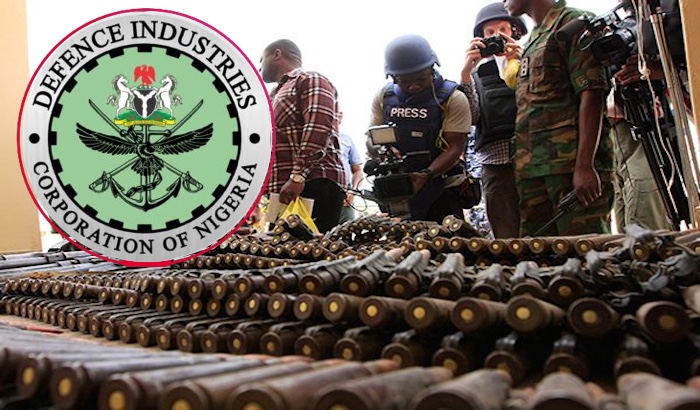
Nigeria’s push for greater self-reliance in defence production received a boost on Tuesday as DICON Gray Insignia Ltd (DGI), a strategic partner of the Defence Industries Corporation of Nigeria (DICON), unveiled an indigenous tactical shotgun platform aimed at supporting state-led security initiatives across the country.
The announcement comes amid growing investments by state governments in forest guards, vigilante services, civilian protection units and other community-based security structures established to complement the efforts of conventional security agencies in tackling insecurity.
In a statement issued to journalists on Tuesday and signed by its Managing Director and Chief Executive Officer, Bem Ibrahim Garba, the company said the platform was developed specifically to address the operational realities confronting security personnel working in rural communities, forests, agricultural zones and critical infrastructure corridors.
According to the statement, the initiative represents another milestone in efforts to strengthen Nigeria’s indigenous defence manufacturing capacity while reducing dependence on imported security equipment.
DGI said the platform is intended to support government-approved security formations, including Civilian Joint Task Forces (CJTFs), forest guards, community protection units, critical infrastructure protection teams and other state-backed security organisations.
The company noted that the increasing role of community-based security structures in safeguarding lives and property has heightened the need for equipment that is reliable, sustainable and supported locally.
“Security effectiveness is not simply about equipment. It is about providing a complete capability that includes training, maintenance support, responsible deployment and long-term sustainability,” the statement said.
Beyond equipment supply, DGI disclosed that it has developed a comprehensive training and capacity-building programme designed to improve professionalism, operational readiness and accountability among security personnel.
The training package includes weapons handling and safety, tactical marksmanship, armourer training, instructor development, leadership courses, protective security operations and range management.
According to the company, the programmes will be delivered by former military, intelligence and security professionals with extensive operational experience.
Industry stakeholders have long argued that Nigeria’s vast security requirements present an opportunity to deepen local defence production, create skilled jobs and retain critical technical expertise within the country.
Analysts say indigenous manufacturing can also help address recurring challenges associated with imported security equipment, including procurement delays, maintenance bottlenecks and foreign exchange constraints.
The collaboration between DGI and DICON is viewed as part of broader efforts to strengthen Nigeria’s defence-industrial base through partnerships that combine government support with private-sector innovation and technical expertise.
As states continue to expand investments in community security initiatives, access to locally manufactured and locally supported equipment is increasingly being seen as a critical component of sustainable security planning.
The company said it is engaging state governments, policymakers and security stakeholders across the country to demonstrate how indigenous defence solutions can contribute to improved security outcomes while supporting local industrial growth.
For observers, the unveiling underscores a growing shift in Nigeria’s security strategy, one that seeks not only to confront immediate threats but also to build the domestic industrial capacity needed to sustain long-term national security objectives.
With security concerns remaining high across several parts of the country, the emergence of locally developed defence solutions is expected to intensify discussions about the role indigenous manufacturers can play in strengthening Nigeria’s security architecture and reducing reliance on foreign suppliers.
Michael Olugbode