Federal Government targets stronger intellectual property protection, startup growth and research commercialisation as WIPO establishes its first Sub-Saharan Africa office in Abuja……
The Federal Government has intensified efforts to transform Nigeria’s intellectual property landscape into a major driver of economic growth, following a renewed partnership with the World Intellectual Property Organization (WIPO) aimed at converting innovation, research and creativity into tangible wealth.
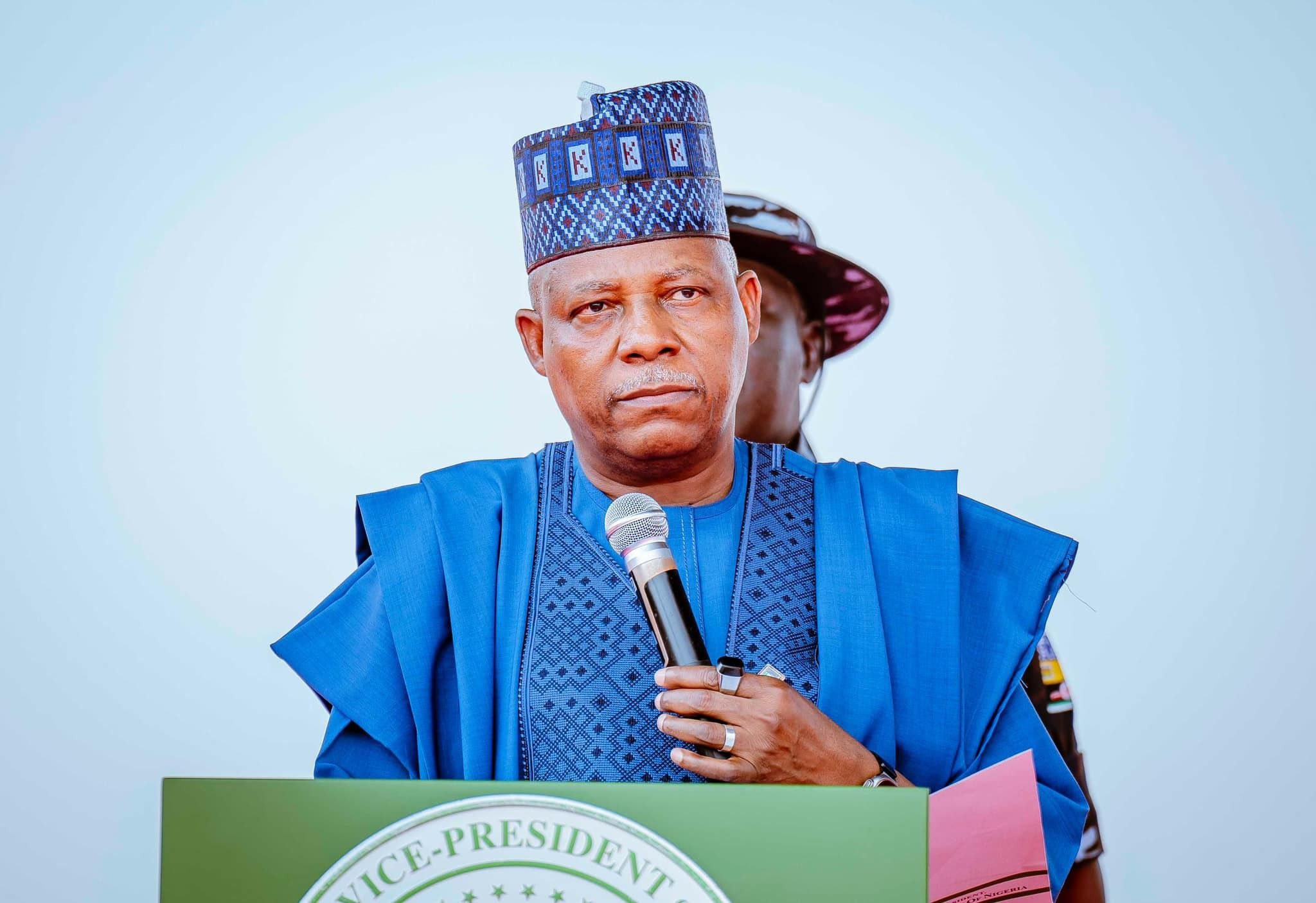
Vice President Kashim Shettima said the collaboration reflects Nigeria’s determination to build an economy where ideas are protected, innovation is rewarded and intellectual assets become valuable contributors to national prosperity.
Speaking during a meeting with a WIPO delegation led by Director-General Daren Tang at the Presidential Villa in Abuja, Shettima said nations that will dominate the future are those capable of creating, protecting and commercialising intellectual assets.
“We believe that the future belongs to nations that understand the dignity of the mind and the economy of ideas,” the Vice President said.
The renewed partnership is expected to focus on commercialising research outputs from Nigerian universities, strengthening support for the creative industry, improving intellectual property protection frameworks and expanding technical cooperation between Nigeria and the global intellectual property body.
Shettima said the administration of President Bola Tinubu is pursuing policies designed to unlock productivity, attract investment and create sustainable economic opportunities through innovation-driven growth.
According to him, modern economies derive much of their value from technology, data, brands, culture, knowledge and innovation, making intellectual property a critical component of national development.
He noted that Nigeria’s goal is to establish an intellectual property system that benefits inventors, entrepreneurs, researchers, artists, investors and technology professionals alike.
A major highlight of the engagement is WIPO’s decision to establish an office in Abuja, making it the organisation’s first office in Sub-Saharan Africa and one of only seven such offices globally.
The Vice President described the development as a strong vote of confidence in Nigeria’s growing role within the global innovation ecosystem.
He also recalled that the Federal Executive Council approved the National Intellectual Property Policy and Strategy in November 2025, providing the country with its first comprehensive framework for the development, protection, management and commercialisation of intellectual property assets.
To strengthen implementation, Shettima directed the Ministries of Justice, Industry, Trade and Investment, and Culture, Arts and Creative Economy to develop a roadmap for deeper engagement with WIPO and the effective execution of intellectual property reforms.
On his part, WIPO Director-General Daren Tang said the organisation remains committed to supporting Nigeria’s economic transformation and innovation agenda.
Tang, who described the visit as his first to Nigeria, said the opening of the Abuja office and the launch of Nigeria’s National Intellectual Property Policy and Strategy represent significant milestones in the country’s innovation journey.
According to him, the establishment of the office underscores the importance WIPO places on Nigeria as a leading innovation hub in Africa.
He praised Nigerian entrepreneurs, innovators and creators for their growing impact on the global stage, noting that they are increasingly becoming examples of how intellectual property can drive economic development across emerging markets.
Tang also highlighted the rapid growth of Nigeria’s startup ecosystem, revealing that more than 3,000 startups, including seven unicorn companies, have attracted substantial investment and demonstrated the increasing value of intellectual property-driven enterprises.
He expressed confidence that Nigeria’s intellectual property reforms would create new opportunities for economic empowerment, job creation and sustainable growth.
Also speaking at the meeting, Attorney-General of the Federation and Minister of Justice, Lateef Fagbemi, said the engagement reflected the deepening relationship between Nigeria and WIPO and would help strengthen the country’s intellectual property framework.
Minister of Art, Culture, Tourism and the Creative Economy, Hannatu Musawa, reaffirmed the ministry’s commitment to leveraging intellectual property reforms to create jobs and unlock opportunities within Nigeria’s creative sector.
Meanwhile, Minister of Industry, Trade and Investment, Jumoke Oduwole, said ongoing engagements between Nigeria and WIPO have already produced significant outcomes, including the establishment of the Abuja office, further reinforcing the government’s commitment to innovation, investment and economic diversification.
The latest partnership signals a growing recognition that intellectual property is no longer merely a legal concept but a strategic economic asset capable of driving investment, innovation and long-term national development.