In a major push to reclaim, protect and project one of Africa’s oldest civilisations, Nigeria and the United States have launched a technology-driven heritage preservation initiative that will digitally secure hundreds of ancient Nok artefacts, combat international trafficking of cultural treasures and bring Nigeria’s forgotten history to a global audience.
The landmark project, unveiled on Tuesday in Abuja, has digitally catalogued more than 250 Nok artefacts, upgraded the Nok Museum, trained young Nigerians in advanced heritage technology and introduced innovative tracking systems designed to authenticate and trace cultural objects.
The initiative, implemented by the Wheyham Report Foundation under the United States Ambassadors Fund for Cultural Preservation, is being described as a turning point in Nigeria’s battle to protect its archaeological heritage from theft, illegal trade and neglect.
The launch also featured the premiere of Nok Culture: History, Art and Civilization, a documentary chronicling the significance of the ancient civilisation that reshaped global understanding of Africa’s technological and artistic achievements.
Speaking at the event, the Chargé d’Affaires of the U.S. Embassy, Keith Heffern, said the project demonstrates how technology can become a powerful weapon in protecting cultural identity and disrupting criminal networks involved in the illegal movement of heritage objects.
“The results speak for themselves: over 250 Nok artefacts digitally preserved, a fully upgraded museum, 50 Nigerian youths trained in cutting-edge digital skills, and 50,000 people reached nationwide,” Heffern said.
He disclosed that the platform uses Non-Fungible Token (NFT)-based tracking technology to improve the authentication and traceability of artefacts, providing a digital record that can help authorities identify stolen or illegally traded cultural objects.
According to him, the United States has invested about $1.2 million in cultural preservation projects across 21 Nigerian states in the past five years through the Ambassadors Fund for Cultural Preservation.
“When Nigeria’s heritage is protected, criminal networks are disrupted and the foundation for prosperity for both our nations is secured,” he said.
The Nok civilisation, believed to have flourished between about 1500 BC and 500 AD in parts of present-day Kaduna, Plateau and neighbouring areas, remains one of Africa’s most remarkable ancient cultures.
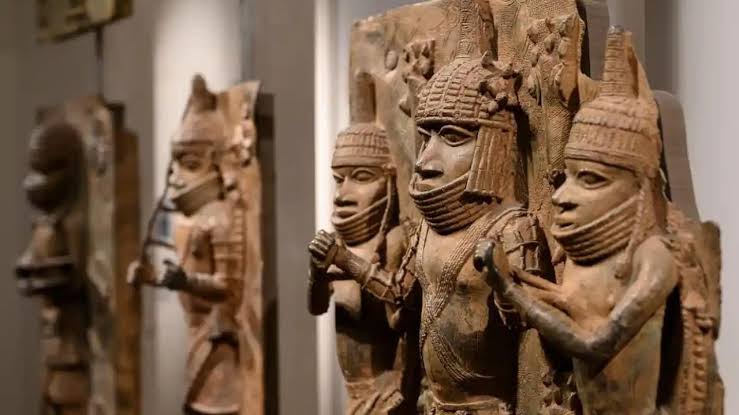
The civilisation gained international attention after the discovery of its terracotta sculptures in 1928 during mining activities in present-day Kaduna State. Subsequent archaeological discoveries revealed that the Nok people possessed advanced artistic skills and were among the earliest communities in sub-Saharan Africa known to have mastered iron technology.
Their terracotta figures characterised by sophisticated human and animal forms, detailed facial features and remarkable craftsmanship challenged outdated narratives that portrayed ancient Africa as lacking advanced technological and artistic traditions.
However, decades of illegal excavation and trafficking have placed many Nok artefacts at risk, with some pieces ending up in foreign collections and private markets around the world.
The new digital preservation initiative seeks to create a permanent record of Nigeria’s heritage while strengthening efforts to recover and protect stolen cultural materials.
Minister of Arts, Culture, Tourism and Creative Economy, Hannatu Musa Musawa, described the project as a significant achievement in the Federal Government’s efforts to preserve Nigeria’s cultural assets.
She said the initiative fulfils part of the agreement signed between Nigeria and the US Embassy in February 2025 to document and preserve Nok terracotta heritage.
Musawa said the technology would ensure that Nigeria’s cultural treasures remain accessible beyond physical museum walls.
“Digital preservation does not replace the physical work of guarding a site or conserving an object. It makes sure that work reaches people who will never visit Kaduna State, and that the record survives even where the objects themselves are at risk,” she said.
The minister added that the government intends to replicate the model across other cultural heritage sites and traditions in Nigeria.
In a significant intervention, the Minister of Defence , General Christopher Musa (Rtd), elevated cultural preservation to the level of national security, arguing that a nation’s history and identity are critical components of its stability.
Musa, who comes from Southern Kaduna, part of the broader Nok cultural landscape, said safeguarding heritage is as important as protecting Nigeria’s territorial integrity.
“Our history, our culture and our shared heritage construct national identity. They build confidence in our people, foster unity across our diversity and cultivate values that hold us together in times of stress,” he said.
He warned that Nigeria’s declining emphasis on history education has created a generation increasingly disconnected from its own heritage.
“If you don’t know your past, your future is lost in history,” Musa said, urging greater investment in museums, historical monuments and cultural education.
He expressed concern that many young Nigerians know more about foreign landmarks than important sites within their own country.
“You go to other countries and you see so many museums. Our kids are growing up and they don’t know all these things. Most of them know places abroad, but home, empty,” he said.
Beyond preservation, the project represents a new frontier in Nigeria’s use of technology to protect national assets.
Through digital documentation, immersive experiences and emerging technologies such as augmented reality and virtual reality, Nigerians at home and abroad will be able to explore the Nok civilisation without physically travelling to archaeological locations.
Musa said the deployment of modern technology was crucial because preserving heritage in the 21st century requires combining traditional conservation methods with innovation.
“Technology now makes it possible to experience the richness of our nation’s history in ways previous generations could hardly have imagined,” he said.
Project Lead of the Wheyham Report Foundation, Barrister Yahaya Maikori, said the initiative goes beyond preserving objects, describing it as a platform for identity, unity and sustainable development.
He disclosed that the foundation would continue archaeological research into the Nok civilisation, expand documentation of certified Nok artefacts globally and advocate the establishment of a dedicated modern Nok Museum to promote cultural tourism and accommodate recovered artefacts.
The project, supported by the US Embassy, National Commission for Museums and Monuments, Yale University and the Ham community, marks a new chapter in Nigeria’s effort to transform its rich but under-promoted heritage into a tool for education, national pride, tourism and economic development.
For a civilisation that once stood as evidence of Africa’s ancient innovation, the digital preservation of Nok now offers a chance for its story to survive—not only in museums, but in the digital world and in the consciousness of future generations.
Michael Olugbode