Nigeria, U.S. Launch New Defence Working Groups to Boost Security Cooperation
With insecurity deepening across parts of the country, Nigeria and the United States have activated new defence collaboration mechanisms aimed at improving intelligence, training, and military readiness. The initiative centres on the inauguration of Defence Institutional Technical Working Groups under a renewed bilateral framework designed to strengthen Nigeria’s military institutions and enhance strategic coordination. The …
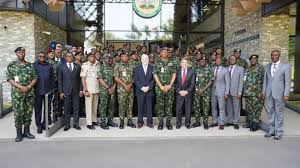
With insecurity deepening across parts of the country, Nigeria and the United States have activated new defence collaboration mechanisms aimed at improving intelligence, training, and military readiness.
The initiative centres on the inauguration of Defence Institutional Technical Working Groups under a renewed bilateral framework designed to strengthen Nigeria’s military institutions and enhance strategic coordination.
The development was confirmed by the Defence Headquarters, which said the partnership would focus on building capacity within the Armed Forces of Nigeria and improving responses to evolving security threats.
As part of the collaboration, the United States is providing support in intelligence sharing, surveillance, and training. Officials on both sides stressed that foreign personnel are operating strictly in advisory roles and are not involved in direct combat operations.
The move comes as insurgent groups, including Boko Haram and the Islamic State West Africa Province (ISWAP), continue to launch attacks on military formations and civilian communities, particularly in the North-east, underscoring the urgency for more effective security strategies.
At the inauguration, representatives from both countries emphasised the importance of long-term institutional development in counterterrorism efforts, noting that sustainable security depends on resilient defence systems and improved planning.
Nigeria’s delegation expressed optimism that the partnership would strengthen operational effectiveness and boost the military’s ability to respond to threats within the country and across the wider region.
Both sides also highlighted the need for accountability, practical outcomes, and sustained cooperation as key to achieving lasting security and regional stability.