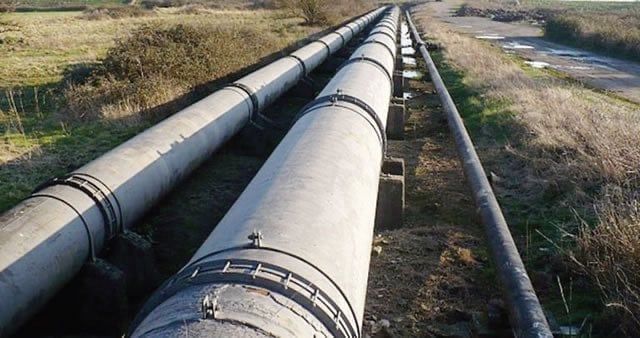
Long-delayed $2.8bn project set for major milestone after years of missed deadlines…..
Nigeria is expected to begin supplying gas to the Federal Capital Territory, Abuja, by July through the long-awaited Ajaokuta–Kaduna–Kano (AKK) gas pipeline, marking a significant step in the country’s efforts to expand domestic gas infrastructure.
The update was disclosed by the Nigerian Upstream Petroleum Regulatory Commission in its in-house publication, with officials indicating that construction on the strategic pipeline is now more than 90 percent complete.
Years of Delays, New Delivery Window
First conceived in 2008, the $2.8 billion AKK pipeline project has faced repeated setbacks, missing several previously announced completion dates including 2023 and the final quarter of 2025.
Despite these delays, authorities now say the project is approaching a critical milestone, with July set as the tentative start date for gas delivery to Abuja.
“We’re hoping that by July, gas will be delivered to Abuja through the AKK gas pipeline,” a spokesperson for the commission said.
Key Energy Corridor for Northern Nigeria
The 614-kilometre pipeline is designed to transport more than 2.2 billion cubic feet of gas per day, linking gas-rich southern production zones to demand centres in the north.
The route passes through Kogi, Niger, and Kaduna states before terminating in Kano, creating a major energy corridor expected to support industries, power plants, and commercial hubs across Northern Nigeria.
Gas supply will largely be drawn from southern fields and channelled through the Obiafu-Obrikom-Oben (OB3) pipeline, which serves as a connecting backbone to the national gas network.
Financing Structure and Technical Challenges
Construction of the AKK pipeline began in 2020 but was slowed by funding constraints and complex engineering challenges, particularly the River Niger crossing, which required advanced horizontal directional drilling techniques.
The project is being financed through a mix of debt and equity funding. A significant portion about 85 percent is backed by the China Export & Credit Insurance Corporation through Chinese lenders, while the remaining 15 percent equity contribution is provided by the Nigerian Gas Company.
Strategic Role in Nigeria’s Energy Transition
The AKK pipeline is a cornerstone of Nigeria’s broader strategy to transition toward gas as a primary energy source.
By improving domestic gas supply, the project is expected to:
- Boost electricity generation capacity
- Reduce reliance on diesel and fuel oil
- Support industrial expansion in Northern Nigeria
- Strengthen the national gas transportation network
Officials say the infrastructure will play a key role in deepening Nigeria’s gas-powered economy and improving energy access across regions.
A History of Repeated Deadline Shifts
The project has faced multiple timeline revisions over the years.
- In 2022, authorities projected completion by Q1 2023
- By 2023, expectations shifted to year-end delivery
- In late 2023, a December inauguration was announced but missed
- In mid-2024, a new target of Q1 2025 was set but also failed
These repeated delays have made the upcoming July target a critical test of execution credibility for one of Nigeria’s most important energy infrastructure projects.
High Stakes for Energy Infrastructure Delivery
With completion now reportedly in its final stages, the AKK pipeline stands as both a symbol of Nigeria’s gas ambitions and a test of its ability to deliver large-scale infrastructure projects on schedule.
If successful, the project could significantly reshape energy distribution in the country and accelerate the shift toward a more gas-driven economy.