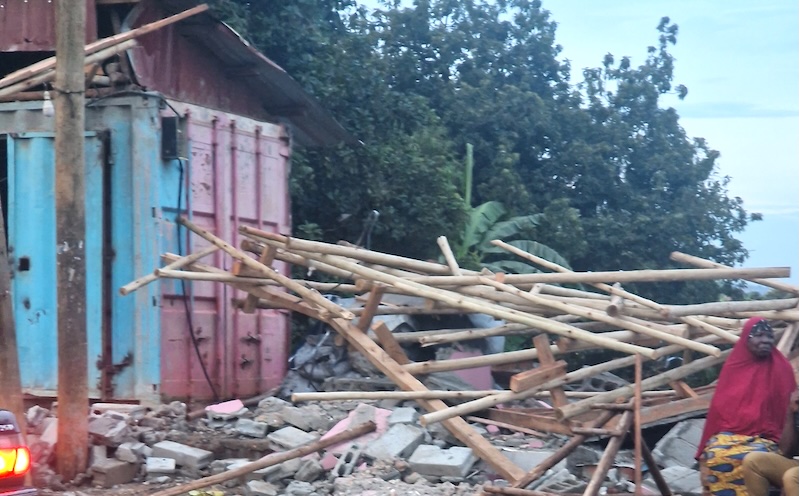
Uganda’s construction sector is entering a new era, one where cutting corners could come at a far higher cost.
With the President’s assent to the Building Control (Amendment) Act, 2026, regulators now have stronger powers to enforce safety standards, including the authority to demolish unsafe structures.
For a country that has witnessed rapid urban growth, often accompanied by weak oversight and, in some cases, fatal building collapses, the changes signal a decisive shift. At the centre of the reforms is a more assertive National Building Review Board (NBRB), which is now better equipped to act when standards are breached.
Engineer Flavia Gutto Bwire, the Board’s Executive Secretary, says the law closes a critical enforcement gap that previously allowed unsafe developments to persist.
“Previously, the Building Committee could only order demolition in writing where deemed necessary; however, it did not possess the power to cause the demolition in the case of errant developers, most importantly for safety reasons,” she explained.
That limitation, she suggested, often left authorities powerless in the face of non-compliant construction, an issue that has grown alongside Uganda’s expanding cities and population. The new law changes that balance.
Building Committees can now not only issue orders but enforce them, including evacuating occupants or demolishing structures deemed unsafe. The NBRB itself can also step in where local authorities fail to act, issuing stop or evacuation orders if safety is at risk. For ordinary Ugandans, the implications are immediate.
Whether constructing a home or a commercial building, compliance is no longer optional or easily delayed. Projects must begin within 12 months of approval and be completed within five years, unless extensions are formally granted.
Failure to meet these timelines, or to follow approved standards, could trigger penalties or even demolition. The reforms also introduce a more structured system of accountability.
Complaints must now first be handled at the local level before escalating to the national board, a move designed to strengthen oversight closer to communities. At the same time, the penalties for violations have been significantly increased.
Negligence, whether during construction or in completed buildings, now carries fines of up to Shs 10 million or 12 years in prison, or both. Building without a permit, continuing construction after expiry, or using prohibited methods now attracts fines calculated per square metre, dramatically raising the cost of non-compliance.
“These changes strengthen compliance and enforcement in the construction sector,” Bwire noted .
Behind the legal language lies a broader goal: safer buildings and more accountable development. Over the years, Uganda’s construction boom has brought economic growth, but also risks—poor supervision, unapproved methods, and, at times, tragic loss of life.
The amended law attempts to address those risks head-on. By tightening oversight, clarifying procedures, and increasing penalties, it sends a clear message to developers, engineers, and homeowners alike. Building, it suggests, is no longer just about putting up structures. It is about meeting standards—and protecting lives.