Israeli Prime Minister Benjamin Netanyahu has rejected a 15-point Gaza peace framework backed by U.S. President Donald Trump, declaring that Israel will not withdraw its forces from the territory until Hamas has been fully and verifiably disarmed.
The rejection marks a significant public disagreement between Netanyahu and Trump, whose governments have maintained a close strategic relationship despite occasional differences over the conduct and future of the Gaza conflict.
Under the U.S.-backed proposal, Hamas would surrender its weapons through a phased disarmament process, while Israel would progressively withdraw its forces from areas of Gaza under its control.
The framework also envisages the transfer of authority to a new Palestinian technocratic administration, supported by an international stabilization mechanism, as part of a broader effort to establish post-war governance and begin Gaza’s reconstruction.
But Netanyahu has drawn a clear line over the sequence of events.
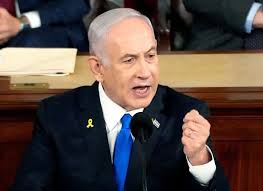
Speaking at a meeting of Israeli government ministers on Sunday, Netanyahu said Israel had rejected the 15-point document and had already communicated its objections to the Trump administration.
His position is that an Israeli military withdrawal cannot precede Hamas’s complete disarmament.
“Israel does not accept the 15-point document,” Netanyahu said, stressing that the Israel Defense Forces would not withdraw until Hamas was disarmed.
The dispute therefore centres not simply on whether Hamas should surrender its weapons, but on when disarmament must take place and when Israeli forces should begin withdrawing.
The proposed U.S. framework seeks to connect the two processes, allowing Israeli withdrawals to proceed in stages as Hamas’s weapons are surrendered and verified.
Reuters reports that the broader arrangement also includes plans for an international stabilization force, a U.S.-backed Palestinian technocratic government and measures aimed at facilitating aid and reconstruction in Gaza.
Netanyahu, however, appears unwilling to accept a timetable that could see Israeli troops leave territory before Israel is satisfied that Hamas no longer possesses the military capability to threaten the country.
That position could prove to be one of the biggest obstacles to Trump’s latest effort to shape a political and security framework for post-war Gaza.
A Rare Public Rift
The disagreement is particularly significant because of the political closeness between Netanyahu and Trump. The two leaders have repeatedly aligned themselves on Israel’s security objectives, while Trump’s administration has sought to present its Gaza initiative as a pathway toward ending the conflict and establishing a new political order in the territory.
The Guardian described Netanyahu’s rejection as a rare public break with Trump, highlighting the growing tension over the conditions under which Israel would reduce its military presence in Gaza.
For Washington, the challenge is now to bridge two competing priorities: Israel’s demand for concrete security guarantees and the U.S. objective of moving Gaza toward a ceasefire, disarmament, new governance and reconstruction.
For Israel, Netanyahu’s message is unequivocal: disarmament must come first; withdrawal comes later.
For the Trump administration, however, the viability of the plan may depend on persuading Israel to accept a phased process in which military withdrawal and Hamas’s disarmament occur as interconnected steps rather than as strictly sequential conditions.
The disagreement leaves the future of the proposal uncertain and underscores the difficulty of transforming a diplomatic framework into an agreement acceptable to all sides.
As negotiations continue, the central question is no longer simply whether Hamas will be required to give up its weapons. It is whether Israel and the United States can agree on who moves first, how disarmament will be verified, and what guarantees will accompany an Israeli withdrawal.
Until that question is resolved, Trump’s Gaza initiative faces a major political and security hurdle from Israel’s own government.