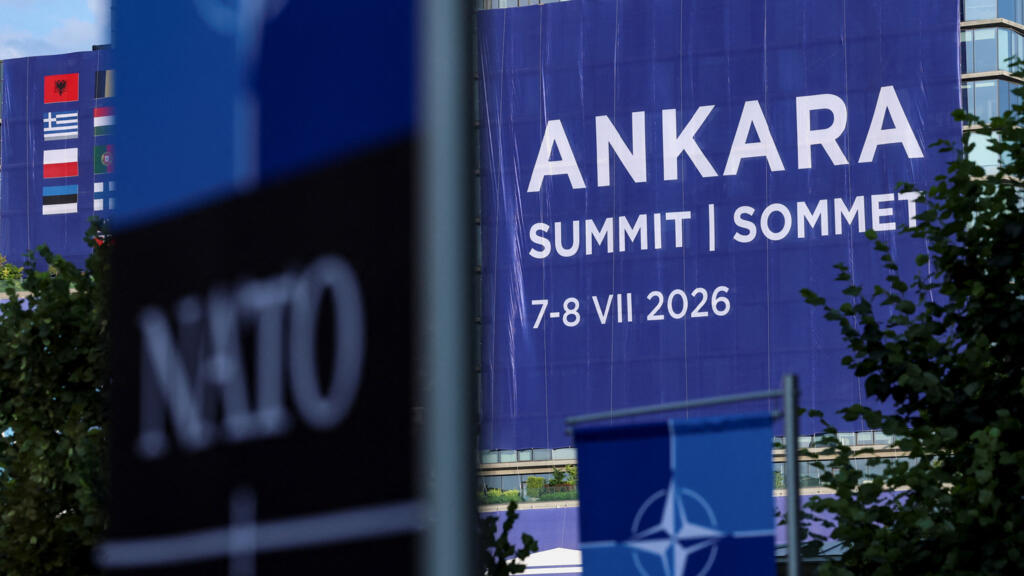
NATO leaders are set to announce arms deals worth tens of billions of dollars in Ankara on Tuesday as European allies seek to demonstrate increased defence spending in response to long-standing demands from US President Donald Trump ahead of a key alliance summit.
The announcements will be made during a NATO defence industry forum before Trump meets Turkish President Recep Tayyip Erdogan and joins other alliance leaders for the NATO summit, which begins with a leaders’ dinner on Tuesday evening.
The planned defence agreements come amid growing security concerns over Russia’s war in Ukraine and renewed pressure from Washington for European allies to shoulder a greater share of NATO’s defence burden.
NATO Secretary General Mark Rutte said European nations had made what he described as “staggering” increases in defence spending, driven both by Russia’s 2022 invasion of Ukraine and persistent calls from Trump for allies to spend more on their own security.
“We are now creating an alliance which is sustainable, where the U.S. knows it is a fair deal,” Rutte told reporters in Ankara on the eve of the summit.
According to Rutte, NATO’s European members and Canada increased defence spending by $90 billion in real terms in 2025 compared with the previous year, taking total expenditure to more than $570 billion—an increase of about 20 per cent within a single year.
The summit is also expected to feature discussions on US-Turkey defence ties. Sources said Trump is likely to inform Turkish President Recep Tayyip Erdoğan that Washington is prepared to allow Turkey to rejoin the F-35 stealth fighter programme.
The move would mark a significant shift in relations after the US imposed sanctions on Turkey and removed it from the programme following Ankara’s purchase of Russia’s S-400 air defence system in 2019.
Trump has intensified criticism of NATO allies in recent months, accusing European governments of failing to provide sufficient support to the United States during its conflict with Iran and suggesting Washington could reconsider its commitment to NATO’s mutual defence obligations.
European officials reject those claims, insisting they fulfilled commitments by allowing US forces to use their military bases and airspace despite not being consulted before the conflict, which they said disrupted European economies and proved deeply unpopular across the continent.
The United States has also begun reducing its military footprint in Europe, withdrawing troops, scaling back forces assigned to NATO defence plans—including an aircraft carrier, refuelling aircraft, fighter jets and drones—and launching a six-month review of its military presence in the region.
European diplomats expect Trump could repeat some of his criticisms during the summit but hope Erdogan and Rutte can leverage their relationships with the US president to ensure productive discussions.
However, officials acknowledge uncertainty remains due to unresolved disagreements over Greenland, Iran and Trump’s often unpredictable relations with several allied leaders, including his recent dispute with Italian Prime Minister Giorgia Meloni.
NATO members are also expected to reaffirm their support for Ukraine and pledge military assistance worth €70 billion ($79.98 billion) for 2026.
The commitment comes as Russia launched another large-scale missile and drone assault on Kyiv and surrounding areas on Monday, killing at least 28 people and highlighting Ukraine’s growing shortage of US-made air defence interceptors.
While NATO has kept details of Tuesday’s defence contracts confidential, several announcements have already emerged.
Dutch Defence Minister Dilan Yeşilgöz said the Netherlands would unveil defence investments exceeding €3 billion, including joint air defence initiatives with Belgium and naval ship partnerships with Britain.
“The Netherlands will announce deals and plans worth more than €3 billion, including partnerships with Belgium on air defence and Britain on naval ships,” Yesilgoz told Reuters.
NATO is also expected to announce plans to replace its ageing fleet of US-built AWACS surveillance aircraft with Saab’s GlobalEye airborne early warning system, according to sources familiar with the discussions.
Separately, Canada announced on Monday that it had selected Germany’s TKMS to build up to 12 submarines for its navy, choosing the German proposal over a competing bid from South Korea.
Boluwatife Enome