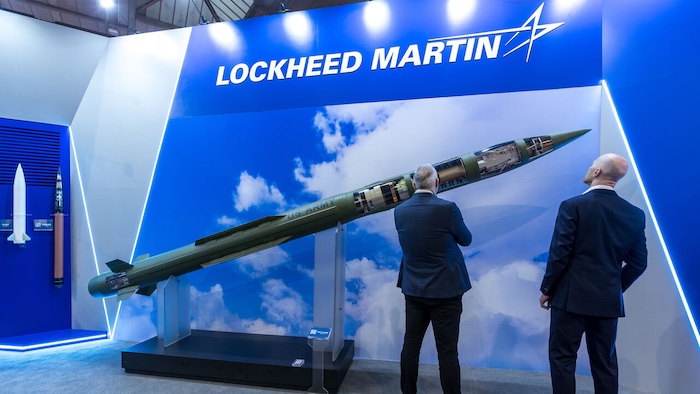
Twelve Nato allies, including the United Kingdom, have announced plans to invest more than £37bn ($50bn) over the next decade in a new long-range missile programme designed to strengthen Europe’s defence capabilities against growing security threats.
The Deep Precision Strike initiative, unveiled by Downing Street ahead of Wednesday’s Nato summit in Ankara, is expected to deliver one of the alliance’s most advanced conventional weapons systems, capable of striking targets up to 300 kilometres away with precision, with the potential to extend its range to about 1,250 miles.
Prime Minister Sir Keir Starmer said the UK-led programme would reinforce Europe’s collective security. “This UK-led initiative will help bring European allies together to keep Nato safe for years to come.”
The announcement comes as Sir Keir attends what is expected to be his final Nato summit as prime minister, where defence spending and Europe’s security remain at the top of the agenda. He is also expected to face pressure from US President Donald Trump over Britain’s lack of a timetable for increasing defence spending to 3.5% of GDP by 2035, a target endorsed by most Nato members last year.
The British government said the new missile programme would improve Nato’s ability to strike high-value military targets and disrupt enemy logistics far behind front lines, strengthening the alliance’s deterrence against potential aggressors.
Foreign Secretary Yvette Cooper said the project reflected the changing global security environment.
“This is about how we make sure we have a stronger Europe within a stronger Nato.”
She added that the capability would significantly enhance the alliance’s military readiness.
“With deep precision strike capability, the UK and our allies will be able to hit high value military targets and the logistical engines that drive armies, deterring any aggressor and strengthening our mutual security.”
The government also said Britain has already committed £300bn under its Defence Investment Plan by 2030, while stressing that the Deep Precision Strike programme is unlikely to become operational until the 2030s.
At the summit, Sir Keir is expected to warn allies that Russia continues to pose the most significant long-term threat to European security. According to Downing Street, Nato fighter jets have intercepted Russian aircraft approaching allied airspace more than 700 times, while Russian military activity around UK waters has risen by 30%.
The prime minister is expected to argue that although Nato does not seek confrontation with Moscow, it must remain prepared to defend every member state against any future aggression.
Cooper also used the announcement to send a message to the Kremlin.
“At Ankara we are sending a clear message to President Putin; Nato is stronger, more European and ready to defend our citizens against the long-term threat posed by him and the Russian state.”
The missile project also reflects lessons learned from the war in Ukraine, where Kyiv has increasingly relied on long-range missiles and drones to strike Russian military infrastructure deep behind the front lines.
Downing Street said Ukraine’s operations had demonstrated the strategic value of long-range precision weapons.
“Ukraine’s Armed Forces have proved that the effective use of long-range systems can have game-changing impacts on the battlefield, giving the Armed Forces the ability to degrade enemy forces far behind the frontline.”
Russia dismissed the latest Nato initiative, saying it would closely monitor developments at the Ankara summit. Kremlin spokesman Dmitry Peskov said no new Western weapons supplied to Ukraine would prevent Moscow from continuing its military campaign until its objectives were achieved. “Settlement of this conflict through political and diplomatic means remains preferable.”
Erizia Rubyjeana