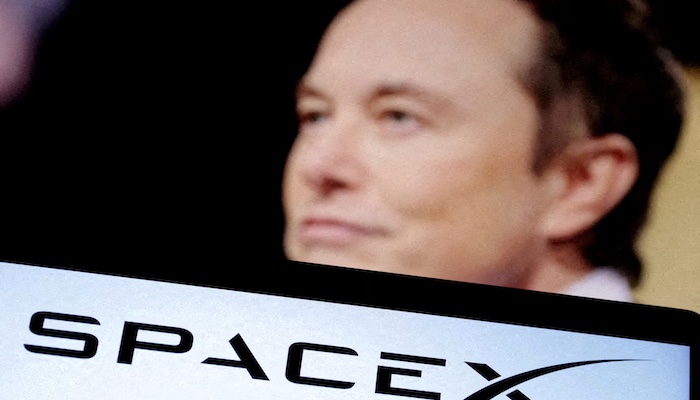
SpaceX publicly set a share price of $135 for its blockbuster initial public offering on Wednesday, in a move that broke with long-standing Wall Street convention and underscored Elon Musk’s unusual approach to capital markets.
The company’s decision to fix a price ahead of the traditional book-building process marked a rare departure from standard IPO practice, where pricing is typically determined after investor demand is assessed.
SpaceX confirmed earlier reporting on the pricing and said it aimed to raise about $75 billion in what would become the largest IPO in history, valuing the company at approximately $1.75 trillion.
The firm is expected to begin its investor roadshow on Thursday, with final pricing scheduled for June 11 and trading on the Nasdaq set to begin the following day.
Market analysts said the early pricing move reflected Musk’s growing influence over investor behaviour and his preference for controlling the structure of major financial events.
On Wall Street, the IPO has already drawn intense interest from major institutions and wealthy individuals, despite concerns over its high valuation and unconventional structure.
SpaceX has also adopted unusual strategies for the listing, including plans to allocate a significant portion of shares to retail investors and encourage broader participation beyond traditional institutional buyers.
The company’s amended filing confirmed its ambition to raise record capital while positioning itself among the world’s most valuable listed firms from the outset.
However, analysts noted that SpaceX’s valuation implied an exceptionally high revenue multiple, with limited public-market comparators for a company spanning aerospace, telecommunications and defence.
The company reported a net loss of $4.94 billion in 2025, even as revenue rose 33% to $18.67 billion, underscoring the scale of its investment-led expansion.
Investor demand has been further fuelled by Musk’s reputation for reshaping industries and maintaining tight control over corporate governance, even in public markets.
Some bankers involved in the process described unusually direct oversight from senior executives in allocating shares, with demand expectations already exceeding supply in key investor segments.
Despite the enthusiasm, some market participants warned that the pricing strategy reflected “posturing” by investors eager to gain early access rather than firm valuation conviction.
Others described the IPO as highly unconventional, noting that nearly every aspect of the deal diverged from established market practice.
Erizia Rubyjeana