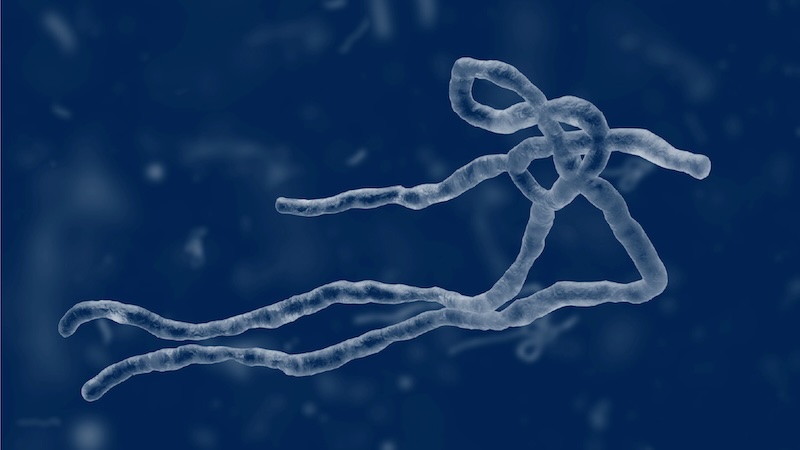
Researchers at Makerere University have identified genetic changes in the Ebola Bundibugyo virus (BDBV) that could reduce the effectiveness of existing diagnostic tests, prompting efforts to develop new test kits and potentially informing future treatments and vaccines.
The findings come as the Bundibugyo strain continues to infect people and claim lives in the neighbouring Democratic Republic of Congo (DRC).
The strain was first identified in Uganda’s Bundibugyo district in 2007, when an outbreak resulted in 149 confirmed cases and 42 deaths. However, scientists say the virus currently circulating differs genetically from the strain first detected nearly two decades ago.
According to Col. Dr Henry Kyobe, a senior research scientist and incident commander at the ministry of Health, a comprehensive genomic analysis has revealed evidence that the virus may be evolving in ways not previously observed.
Unlike the Ebola Zaire and Sudan strains, which researchers say have remained relatively genetically stable since their discovery more than five decades ago, the Bundibugyo strain appears to be undergoing significant genetic changes.
Scientists say the mutations could also indicate an increased ability of the virus to infect animal hosts, raising new questions about its transmission and evolution.
The findings come as researchers intensify efforts to develop vaccines and treatments specifically targeting the Bundibugyo strain. Although there is currently no approved vaccine or treatment for this strain, several clinical trials are underway.
Last week, the University of Oxford announced a Phase I clinical trial to evaluate the safety and immune response of the ChAdOx1 BDBV vaccine in 50 healthy adults aged between 18 and 55 years. At the same time, treatment trials are progressing, with patient enrolment already underway.
Prof Bruce Kirenga, principal of the college of Health Sciences at Makerere University, said the newly identified genetic changes suggest that some existing diagnostic tools, which were designed using the earlier genetic profile of the virus, may no longer be fully effective.
He explained that diagnostic tests are developed based on a pathogen’s genetic sequence and that significant changes in that sequence can affect the ability of tests to accurately detect the virus.
Kirenga said the research team is now using the findings to develop Uganda-made diagnostic kits tailored to the currently circulating strain. He added that the genomic data is also strengthening disease surveillance by helping scientists trace the origin and spread of the ongoing outbreak in the DRC.
While acknowledging that the scientific findings may appear highly technical, Kirenga said they have important implications for improving disease detection, outbreak response and future epidemic preparedness.
Commenting on the findings, Prof Wilber Sabiiti, head of research at the Interdisciplinary Consortium for Epidemic Research (ICER), said ongoing studies indicate that the antiviral drug Remdesivir remains effective against the Bundibugyo strain despite the observed genetic changes.
Remdesivir has previously been used to treat Ebola patients in Uganda. However, Sabiiti cautioned that further research is needed to fully establish the effectiveness of available treatments against the evolving virus.
Meanwhile, Uganda currently has no active cases of Ebola Bundibugyo disease after discharging its last patient last week. The country recorded 20 confirmed cases during the latest outbreak, 15 of them imported from the neighbouring DRC.
As of Monday, the Democratic Republic of Congo had reported 2,344 confirmed Ebola Bundibugyo cases and 930 deaths, making it the largest recorded outbreak of the strain to date.