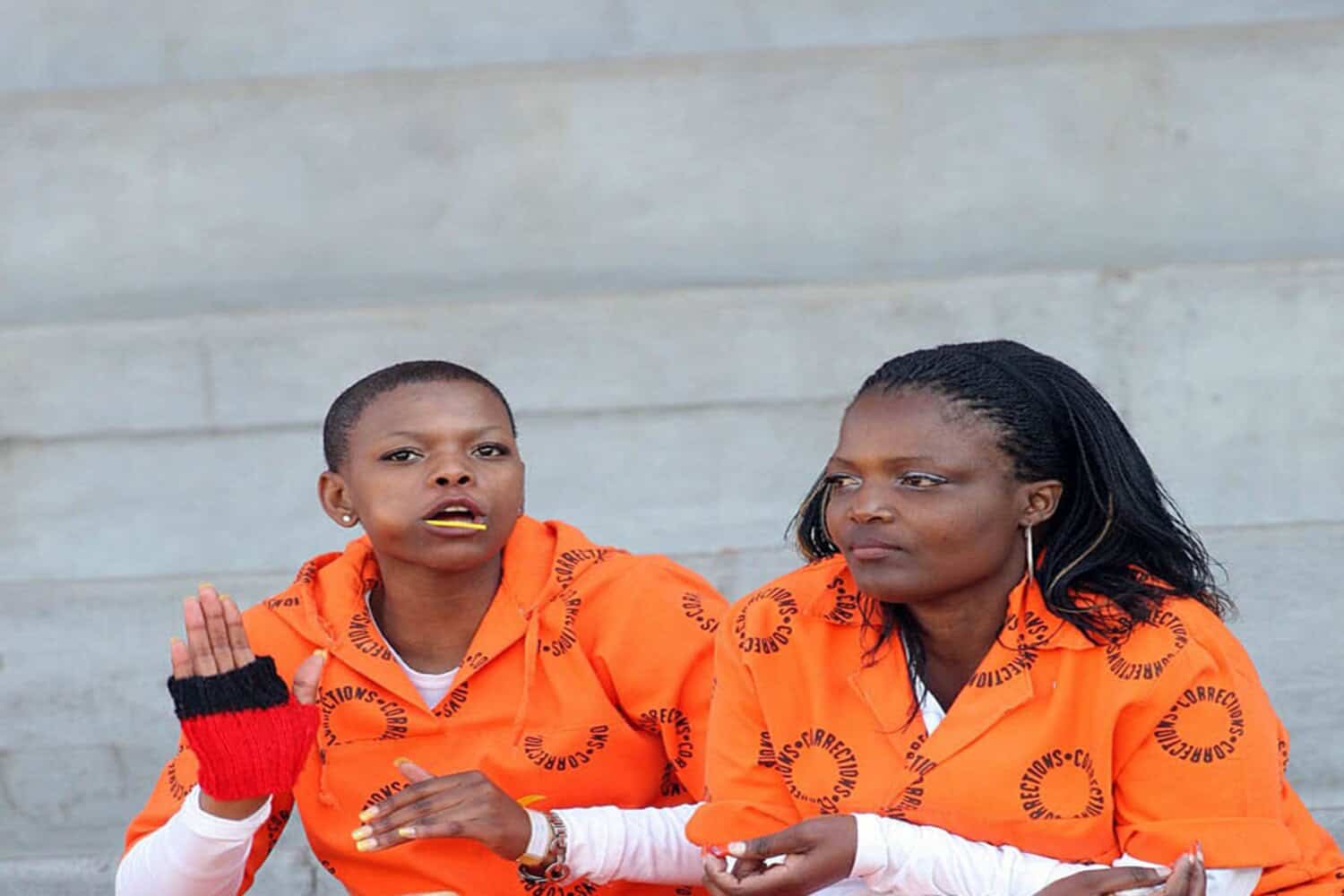
PRETORIA, SOUTH AFRICA- JULY 24: Offenders dancing on July 24, 2014 in Pretoria, South Africa. The Department of Correctional Services (DCS) hosted the 2014 football, rugby and netball championship for offenders at the Tshwane University of Technology's main campus in Pretoria West, South Africa. Six hundred inmates, male and female, from correctional centres across the country competed for the best team and individual players on all three sporting fields. The event forms part of the special programme that the DCS has to not only rehabilitate offenders but end crime, lawlessness and drug abuse. (Photo by Gallo Images / Sowetan / Veli Nhlapo)
Locked alone in a concrete room, incarcerated South African women in solitary confinement scream into silence, battle phantom voices and plot revenge until faith, yoga and scribbled songs become their lifelines.
This harrowing reality emerges from a 2025 Unisa study by Thato Nchoe-Giliana and Cily Tabane, which shows the psychological experiences of *six incarcerated women aged 31 to 45 who spent time isolated in separate cell blocks with minimal contact to others or staff.
South Africa runs 243 correctional centres, but only 22 house women, often sidelining their rehabilitation amid a focus on male facilities.
Generally, involuntary solitary confinement (ISC) strips away movement, social ties, stimulation and access to education, recreation, healthcare and personal items like radios or blankets.
Inconsistent rules and neglect
The women described erratic routines that violated the Correctional Services Act of 1998, which mandates humane treatment.
Officials inconsistently allowed one-hour courtyard exercise, bathing, or medical visits, sometimes forcing bucket washes or long waits.
Ntokozo said that she waited endlessly for officials. “Sometimes they would open for me at around 8, other times they would open for me at around 12 midday. So, it was up to them and I never would call out for them, I would just wait …”
Sphiwe added: “The first few days, getting up was horrible, because I am not going to school mos, I’m not even going to the kitchen to fetch my food.”
Overcrowding worsened this with an imbalanced correctional official-to-offender ratio often seen in South African correctional services..
Currently, more than 168 000 inmates are currently squashed into facilities built for just more than 107 000, with South Africa’s correctional system operating at 58% over capacity.
Distrust and abuse
Distrust poisoned relations with guards with Kganya stating that officials turned against them.
” … was very tough because all of them, the members [correctional officials] were against us, so, we didn’t have anyone to tell our problems to. We didn’t trust them anymore those members [correctional officials] … we just stayed there,” she said.
Chantal endured neglect. claiming that she was completely forgotten about for the first few days while she was in ISC.
“I was so quiet; they didn’t even know there was someone in isolation. They didn’t feed me or nothing for the first few days. They completely forgot about me.”
Some faced taunts or brutality. Innocencia recalled remarks like, “See how curvy you are? I want you to come out holding your pants,” aiming for weight loss.
“Some were beaten up…. And they were bruised and they denied them consultation with the sister [nurse]. Some were on medication, they tell them ‘no, we will bring your medication’. They were not allowed to visit the sister [nurse], ” said Kganya of the cruelty.
A mixed blessing
A few saw upsides at first. Onkarabile welcomed the privacy: “Isolation for me was like ‘Ah! Finally!’ I get to have my own space… shower at my own time.”
Ntokozo agreed, “The nice thing is you find time to do your things alone.”
But the feeling didn’t last long the study reported, expressing that after the high of freedom from the rest of the centre, loneliness creeps in.
Mental health toll
Isolation bred loneliness, frustration, anger, anxiety, fear, rumination, suicidal thoughts and vengeful urges, undermining rehabilitation.
Rebecca reported screamed in distress: “When I see them…it’s like you’re crazy. It’s not nice there.”
“You are thinking negative things about your life,” brooded Sphiwe while Lebo confessed suicidal impulses, “Feeling like killing myself,” she said.
Sipho likened it to caging a dog.
“It’s like [living like] a dog. You can lock up a dog in its house, without seeing anyone, without seeing… what does it do when you eventually open for it? It becomes worse, right? It is like that. You become bitter. You become angry.”
The study highlighted concern whether being detained in ISC does not interfere with the offenders’ rehabilitation process.
Escapism and God
The study also found that these women fought back through creativity, and spirituality.
Kganya wrote to escape. Ntokozo sang, read and wrote songs. Sphiwe practised yoga learned in prison.
Support from nearby women echoed across cells motivating them to push through. Kganya said that she heard one say “What doesn’t kill you makes you stronger… Tomorrow won’t be the same.”
Some turned to faith. Onkarabile prayed and read the Bible “and sometimes I would sing to myself. Christian songs, ya. It helped me, a little bit with that.”
“It’s just me and my God… These walls can’t hear me, my God can,” confided Kganya.
Others suppressed pain via sleep or cleaning. Lebo slept to avoid thoughts: “When I am awake, that is when I think too much.”
Onkarabile imagined freedom until slumber came.
Do something, department of correctional services
The study urged reforms to safeguard women’s mental health and reintegration.
“It was recommended that the correctional officials get training on appropriate treatment of offenders in ISC, as well as training on the effects of their interaction with the offenders might have on the offenders’ wellbeing and/or rehabilitation process,” it said.
*Pseudonyms to protect their identities.