The Minister of Education, Dr. Tunji Alausa, has called on education correspondents across Nigeria to embrace data-driven journalism as a tool for promoting accountability and improving learning outcomes in the country’s education sector.
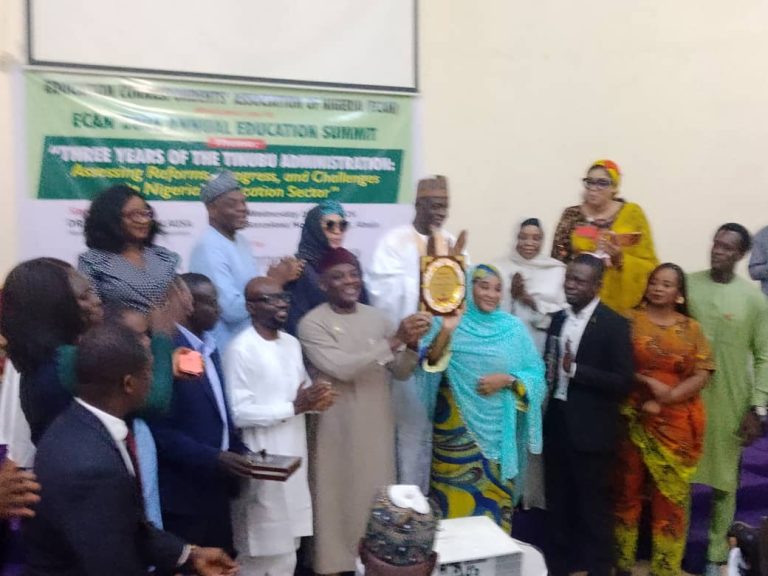
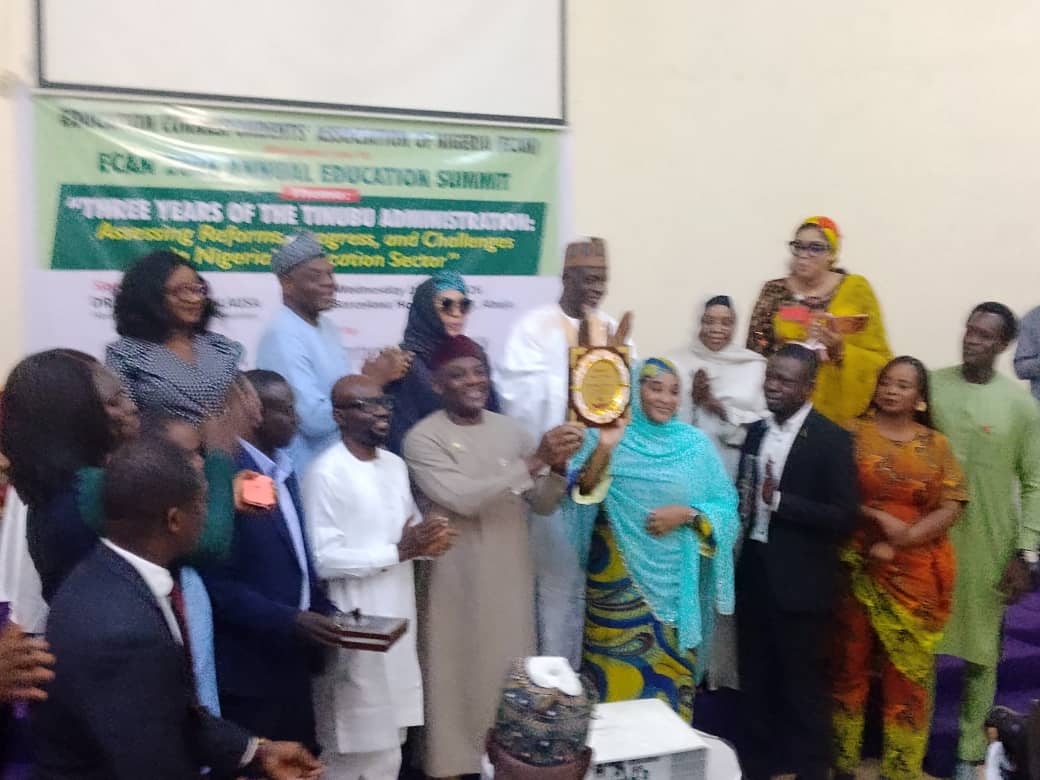
Alausa made the call on Wednesday in Abuja while speaking at the 2026 Annual Education Summit of the Education Correspondents Association of Nigeria (ECAN), themed “Three Years of the Tinubu Administration: Assessing Reforms, Progress, and Challenges in Nigeria’s Education Sector.”
He urged journalists to move beyond routine reporting by using credible education data—particularly from the Nigeria Education Data Infrastructure Management System (NEDIMS)—to scrutinise government policies and hold state governments, local councils and other stakeholders accountable.
“Like President Bola Ahmed Tinubu would say, if you don’t use data, it is like you are flying blind. Without data, you cannot do anything. We want you journalists to go to the website and use those data to challenge governors and local government chairmen,” Alausa said.
According to him, NEDIMS provides school-level information on teacher-to-classroom ratios, student-teacher ratios, classroom availability and other critical indicators that can support evidence-based reporting.
“This is using data for public good, and you are the mouthpiece of the nation,” he added.
The minister commended ECAN for sustaining a platform that promotes informed discussions on education and keeps Nigerians updated on government policies and programmes.
Describing education as the nation’s most critical investment, Alausa said the Tinubu administration had placed the sector at the heart of its Renewed Hope Agenda, leading to reforms aimed at building a globally competitive education system.
He explained that the ministry’s interventions were anchored on six priority areas: Technical and Vocational Education and Training (TVET), Science, Technology, Engineering and Mathematics (STEM), digital transformation, reducing the number of out-of-school children, quality assurance and strengthening education governance.
“If you give me another three hours, it will not be enough for us to talk about the reforms we are undertaking. But I will direct you to the distinct priority areas we have focused on,” he said.
Stability in Tertiary Institutions
Highlighting achievements recorded over the past three years, Alausa said reforms in tertiary education had ensured uninterrupted academic activities across universities, polytechnics and colleges of education.
He attributed the stability to agreements reached with the Academic Staff Union of Universities (ASUU) and other tertiary institution unions.
“For once, in three years, we have not had any stoppage in our tertiary education system. This is a big deal, and I think the President deserves a big hand for that,” he said.
The minister also pointed to improvements in global university rankings, noting that Nigeria now has 24 universities among the world’s top 1,000 institutions, compared to 21 in previous years.
He added that 17 of the ranked institutions are public universities.
“Up to 2025, the top four best universities in Nigeria were all private universities. Today, the top four universities are public universities,” he said.
Access Remains Major Challenge
Despite the progress, Alausa acknowledged that access to education remains a significant challenge.
He revealed that while Nigeria has nearly 25 million pupils in primary schools, only about five million proceed to junior secondary schools.
“That means about 20 million children dropped off from primary school to junior secondary school. Where are those children? That is a big problem,” he said.
According to him, the disparity is partly due to infrastructure gaps, noting that Nigeria has about 90,000 primary schools but only around 16,000 junior secondary schools.
“The ratio is one to eight. That tells you the major problem. The problem is access,” he stated.
On out-of-school children, the minister said targeted government interventions had returned more than one million children to school within the last two years.
However, he noted that previous estimates of out-of-school children were inadequate for effective planning and disclosed that the ministry is collaborating with the National Bureau of Statistics (NBS) to conduct a comprehensive household survey for more accurate data.
Call for Responsible Reporting
Minister of State for Education, Prof. Suwaiba Ahmed, urged journalists to support ongoing reforms through balanced and responsible reporting that highlights both achievements and challenges.
“I encourage you, as members of the media, to support these reforms through your reporting so that the public understands where we are, where we are heading and what we need to do to get there,” she said.
She described education as a key driver of economic growth, poverty reduction, innovation and social cohesion.
Similarly, Executive Secretary of the Universal Basic Education Commission (UBEC), Aisha Garba, reaffirmed the commission’s commitment to ensuring that every Nigerian child has access to quality basic education.
“The most important objective is that no child should be left behind. Regardless of background, location or income level, every child must have access to quality education,” she said.
Media’s Role in Education Reform
Chairman of the Nigeria Union of Journalists (NUJ), FCT Council, Grace Ike, said the media has a critical role in promoting accountability and public awareness as reforms continue in the education sector.
She stressed the need for collaboration among government, parents, school administrators, policymakers and journalists to address persistent challenges affecting education.
Also speaking, the Minister’s Special Adviser on Media and Communication, Ikharo Attah, emphasised the importance of evidence-based journalism.
“Anybody can work on assumption. But when you get facts, observations and evidence, then you know you are talking with tangible information,” he said.
He also urged information officers across education agencies to improve public communication on government reforms and ensure continuity of policies beyond individual administrations.
Earlier, ECAN Chairman, Chux Ukwauta, said the summit was organised to provide an honest assessment of the reforms, achievements and challenges in Nigeria’s education sector under the Tinubu administration.
He noted that while the media had reported significant policy initiatives, it had also continued to highlight issues such as inadequate funding, poor infrastructure, weak learning outcomes, teacher development, research, technology integration and the challenge of millions of out-of-school children.
Ukwauta said the summit was designed to foster constructive engagement among policymakers, development partners, education practitioners and the media in advancing meaningful reforms.
The event concluded with the presentation of awards to the Minister of Education and heads of education agencies for their contributions to ongoing reforms, alongside technical presentations by the Joint Admissions and Matriculation Board (JAMB) and the National Universities Commission (NUC).