Lagos Clarifies HIV Data, Reaffirms Strong Epidemic Control Efforts
The Lagos State Government has reaffirmed its commitment to safeguarding public health and ensuring sustained access to HIV prevention, testing, treatment, and care services across the state. It also dismissed recent media reports suggesting that Lagos recorded the highest number of new HIV infections in Nigeria in 2025, describing the claims as misleading and a …
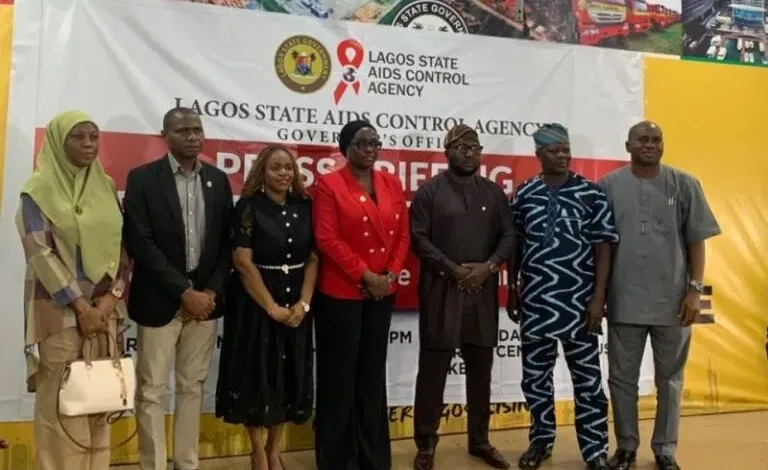
The Lagos State Government has reaffirmed its commitment to safeguarding public health and ensuring sustained access to HIV prevention, testing, treatment, and care services across the state.
It also dismissed recent media reports suggesting that Lagos recorded the highest number of new HIV infections in Nigeria in 2025, describing the claims as misleading and a misinterpretation of health data.
The clarification was given by the Chief Executive Officer of the Lagos State AIDS Control Agency (LSACA), Dr. Folakemi Animashaun, at a press briefing in Alausa, Ikeja.
Dr. Animashaun stressed that the state’s HIV response remains strong, evidence-driven, and on track, noting that the figures being circulated relate to newly diagnosed cases rather than newly contracted infections.
She explained that newly diagnosed HIV-positive cases include individuals who may have been infected years earlier but were only recently tested, as well as people referred from other states or those reached through expanded testing programmes.
According to her, Lagos conducts significantly higher levels of testing due to its population size and role as a major referral hub, which naturally leads to higher detection rates and should not be mistaken for worsening transmission.
Providing programme data, she disclosed that Lagos carried out 504,800 HIV tests in 2025, identifying 11,940 positive cases, while the first quarter of 2026 recorded 179,229 tests with 3,390 positives.
She added that the declining positivity rate—from 2.4 percent to 1.9 percent—reflects improving epidemic control despite expanded testing.
Dr. Animashaun also noted that 147,904 people are currently on antiretroviral treatment in the state, with 97 percent achieving viral suppression, while mother-to-child transmission rates have dropped from 5.1 percent in 2020 to 1.5 percent in 2025.
She further stated that Lagos has begun implementing an HIV Response Acceleration Plan covering expanded testing, improved treatment linkage, community prevention, and the rollout of both oral and injectable PrEP across all local government areas.