Screenshot
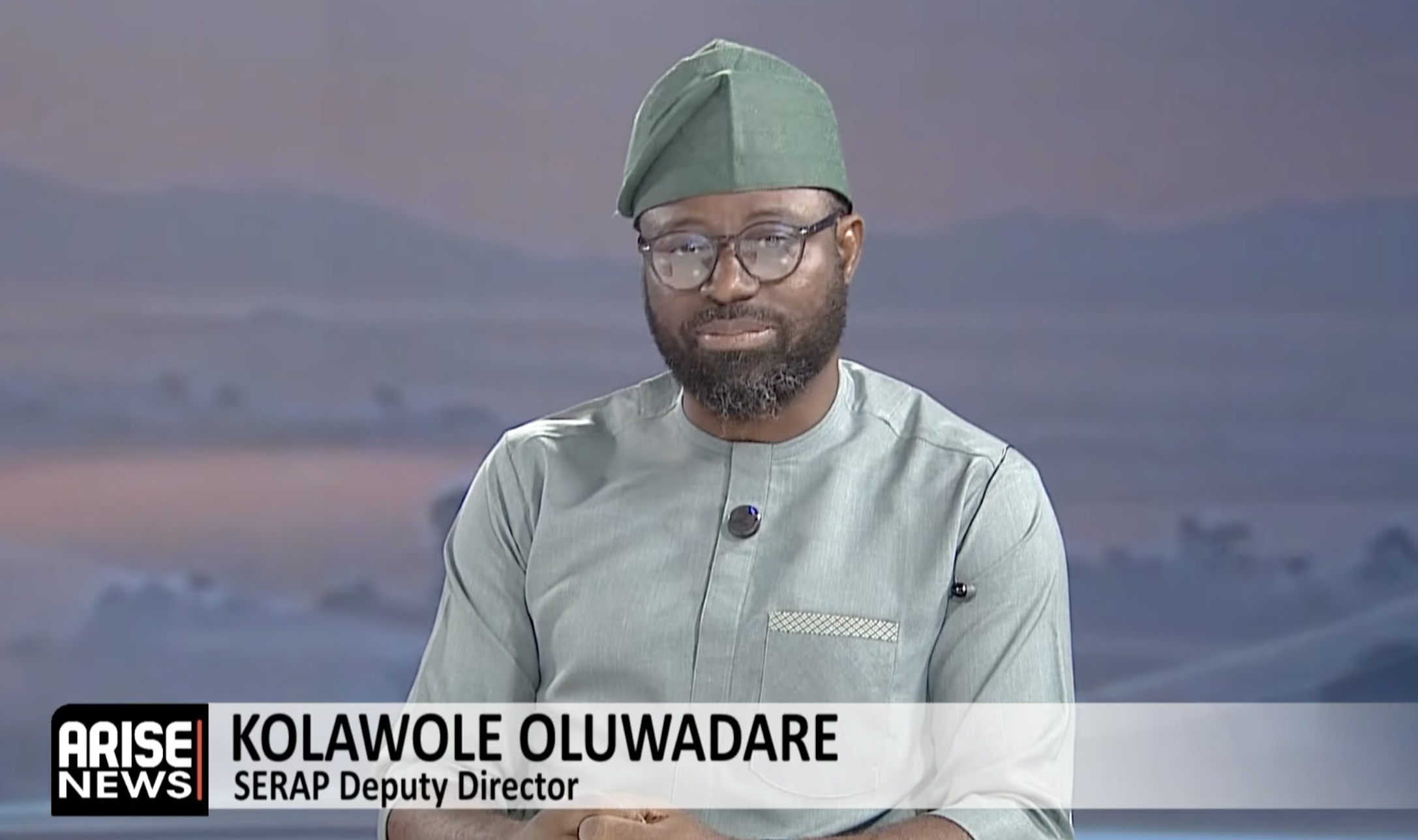
The Deputy Director of SERAP, Kolawole Oluwadare, has said President Bola Tinubu is complicit to the extent that he assented to the 2026 Appropriation Act containing a budgetary allocation for an agency the Presidency has described as non-existent, while stressing that this does not necessarily mean the President was involved in any fraud.
Speaking during an interview with Arise News on Thursday, Oluwadare reacted to the controversy surrounding the allocation of over N1.3 billion to the Presidential Foreign Intervention Promotion Council and the Presidential Economic Advisory Council in the 2026 Appropriation Act. He also addressed SERAP’s Freedom of Information request to the National Assembly seeking records relating to the budget allocation and the legislative process that approved it.
Oluwadare said the explanations issued so far by the Presidency had failed to provide enough facts to clarify how the allocation was made.
“I do not think the Presidency or the President or those who work for him have given Nigerians enough facts to work with as it were.”
He added that the National Assembly had also not provided sufficient information, saying SERAP’s Freedom of Information request would help establish the facts and support investigations by law enforcement agencies.

According to him, the controversy points to a broader institutional failure rather than the actions of a single individual.
“It’s clearly a failure of systems and institutions. Every institution in the process that has failed to detect, check, has failed the Nigerian people.”
Oluwadare argued that the Senate should not leave the matter solely to the Independent Corrupt Practices and Other Related Offences Commission (ICPC), saying the legislature also had a responsibility to examine its own role in the appropriation process.
“I don’t think so. It’s not enough for the Senate to pass the buck to the ICPC, as it were.”
Asked whether the ICPC was the appropriate body to investigate the matter, he said the anti-corruption agency remained the best institution to conduct an objective probe, warning that a presidential panel could be viewed as less independent.
Responding to whether President Tinubu should be considered culpable, Oluwadare said the President became part of the process by signing the appropriation bill into law.
“Yes, to an extent.”
He added: “The President signing on the appropriation bill that becomes an act, makes him also part of the process.”
“But does that mean he’s complicit in the fraud? Not necessarily. But we know that the President assented to a bill that allocated over a billion naira to an institution, which the Presidency is claiming it doesn’t exist. The President is complicit to that extent.”
Oluwadare also expressed concern over what he described as a deeper problem of transparency and accountability within public institutions, saying the current controversy could reflect wider governance issues.
“The rot is far much more deeper than we’ve seen.”
He urged investigators to examine the entire 2026 Appropriation Act to determine whether there were other questionable allocations.
On SERAP’s ultimatum to the National Assembly, Oluwadare said the organisation had requested records of committee proceedings, minutes and other documents relating to the budget process under the Freedom of Information Act, noting that public institutions are required to respond within seven days.
He warned that SERAP would institute legal action if the National Assembly failed to provide the requested information.
“I see no reason why the National Assembly will not respond.”
Ademide Adebayo