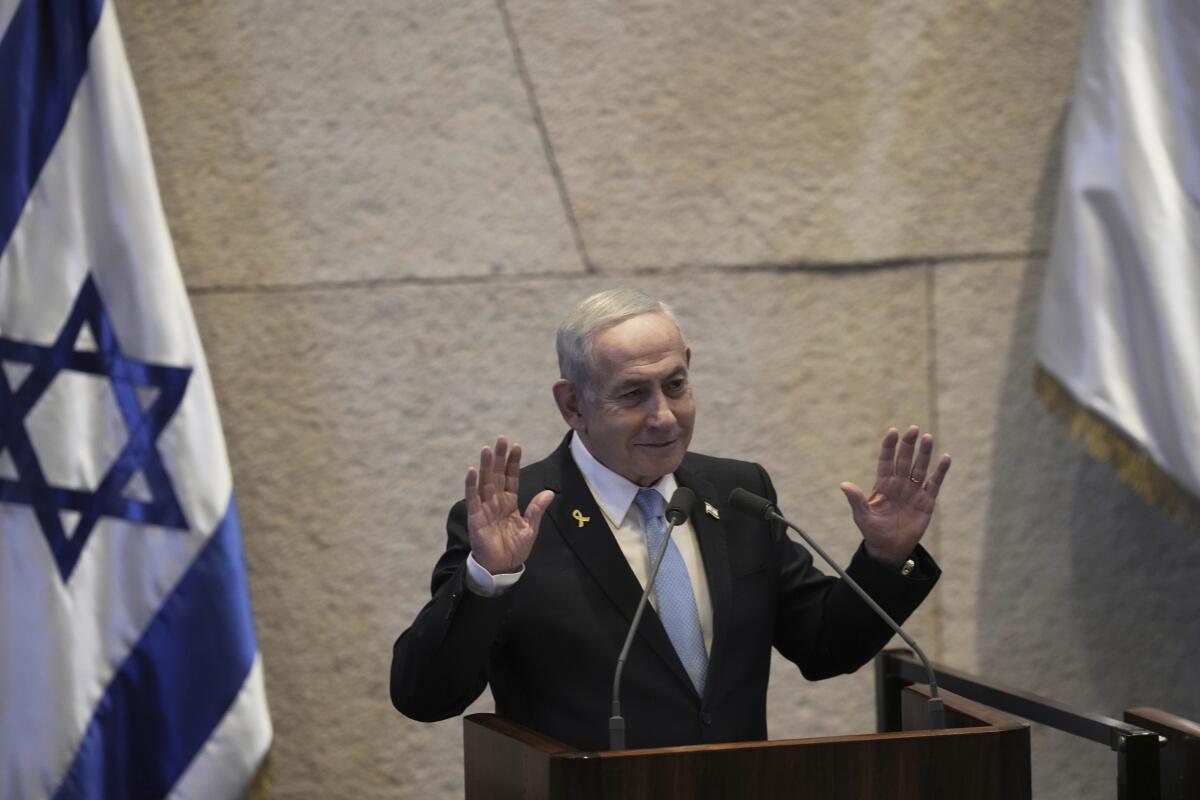
Israel’s parliament, the Knesset, is set to vote on Wednesday on a proposal to dissolve itself, a move that could bring the country’s next general election forward by several weeks and potentially reshape the political landscape, with surveys suggesting Prime Minister Benjamin Netanyahu could face defeat.
No election date has been officially confirmed yet. While Israel is required to hold national elections every four years, early polls are not uncommon. The last election took place in November 2022, with the next vote scheduled no later than October 27.
If lawmakers approve the dissolution, members of parliament will then negotiate and set a new election date. Analysts in Israel expect a possible ballot in early September, although it could still be pushed closer to the October deadline depending on political negotiations.
The push for the vote has been driven in part by an ultra-Orthodox party that has historically supported Netanyahu but recently declared it no longer views him as a reliable partner, instead backing early elections. The group has cited unmet coalition promises, particularly regarding legislation that would exempt its community from mandatory military service.
Opposition parties have also long sought to unseat Netanyahu’s government, although previous attempts to force an election have failed. Even a short advancement of elections is seen as potentially strengthening opposition momentum and limiting the coalition’s ability to pass controversial legislation in the interim.
In an effort to control the process, the governing coalition itself introduced a dissolution bill on May 13.
Should the bill pass its preliminary reading in the Knesset, it will proceed to committee stage where an election date would be agreed upon, before returning for final approval. The final vote requires a majority of at least 61 out of 120 members, and the entire process could move quickly or extend over several weeks.
Since returning to power in 2022 at the head of Israel’s most right-wing government, Netanyahu’s standing was significantly affected by the Hamas attacks of October 7, 2023, which raised questions about his security leadership.
Recent opinion polls have consistently shown his coalition struggling to secure enough seats for a parliamentary majority. Political uncertainty remains, as opposition parties may also struggle to form a stable government, potentially leaving Netanyahu in charge of a caretaker administration.
Israel has experienced similar political deadlocks before, including a series of inconclusive elections that led to five national votes in under four years prior to 2022.
Netanyahu’s main rival is former Prime Minister Naftali Bennett, who has teamed up with centrist opposition leader Yair Lapid under a new political alliance called “Together,” which is currently polling closely with Netanyahu’s Likud party. Another rising figure in the race is former military chief Gadi Eisenkot.
Campaign messaging across major opposition blocs has focused on national unity, recovery after the October 7 attacks, and rebuilding Israel’s economy and international reputation following conflicts in Gaza, Lebanon, and tensions involving Iran.
Netanyahu also continues to face a long running corruption trial, while discussions around a possible plea deal involving President Isaac Herzog have circulated, which could potentially see him exit politics if accepted.
His health has also drawn attention after reports that he was treated for prostate cancer and later fitted with a pacemaker in 2023. Meanwhile, ongoing conflicts with Hamas in Gaza, Hezbollah in Lebanon, and tensions involving Iran continue to shape Israel’s political and security outlook ahead of any potential election.
Goodness Anunobi