Group warns against further rate hikes, urges focus on agriculture and public transport to curb rising prices…..
The Centre for the Promotion of Private Enterprise has raised fresh concerns over Nigeria’s inflation outlook, warning that recent data points to a resurgence of price pressures despite earlier signs of moderation.
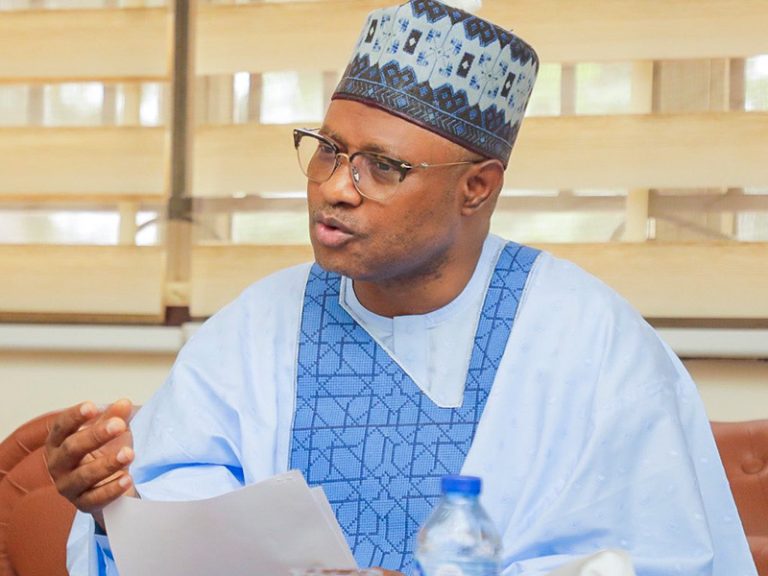
Reacting to the March 2026 Consumer Price Index report released by the National Bureau of Statistics, the Chief Executive Officer of CPPE, Muda Yusuf, said the latest figures highlight the fragility of the country’s disinflation trend.
Headline inflation rose to 15.38 percent in March, while month-on-month inflation surged sharply to 4.18 percent, nearly double the level recorded in February. According to CPPE, the spike reflects renewed cost pressures across key sectors of the economy.
The group attributed the uptick largely to rising energy costs, noting that Nigeria’s heavy reliance on diesel, petrol and gas for power generation, transportation and industrial operations continues to drive production and distribution expenses.
It explained that higher energy prices are quickly transmitted into increased transportation costs, higher food prices and broader cost-push inflation across the economy.
Food and transportation were identified as the most significant contributors to inflation, accounting for an estimated 70 percent of overall price pressures when both direct and indirect effects are considered.
Food inflation stood at 14.31 percent year-on-year, while core inflation rose to 16.21 percent, underscoring persistent underlying price pressures. CPPE noted that these trends have serious implications for household welfare, given that food and transport are essential, non-discretionary expenses.
The group warned that rising costs in these areas are eroding purchasing power, increasing poverty levels and widening inequality, particularly in rural communities where structural challenges in agricultural production and distribution remain unresolved.
CPPE also highlighted structural weaknesses in Nigeria’s transportation system, pointing to the dominance of private operators who often have significant pricing power due to weak regulation and high levels of unionisation.
In such an environment, the group said, increases in fuel prices are rapidly passed on to commuters, amplifying inflationary pressures across the economy.
To address the situation, CPPE urged governments at all levels to prioritise interventions in agriculture and public transportation. It called for improved security in farming communities, better rural infrastructure, increased access to financing and inputs, as well as the adoption of modern farming techniques to boost productivity.
On transportation, the group recommended significant investment in mass transit systems, including bus and rail networks, alongside regulatory measures to curb arbitrary fare increases and improve urban mobility.
On monetary policy, CPPE cautioned against further tightening by the Central Bank, arguing that current inflationary pressures are largely driven by supply-side constraints rather than excess demand.
It warned that higher interest rates could stifle economic growth, constrain investment and worsen conditions for businesses already grappling with high operating costs.
CPPE concluded that while inflation had shown signs of easing on a year-on-year basis, the recent surge in monthly figures signals that underlying structural challenges remain unresolved.
The group stressed that addressing inflation sustainably will require a shift from reliance on monetary tools to targeted reforms in energy, food production and transportation, warning that failure to act could reverse recent gains and deepen the cost-of-living crisis.