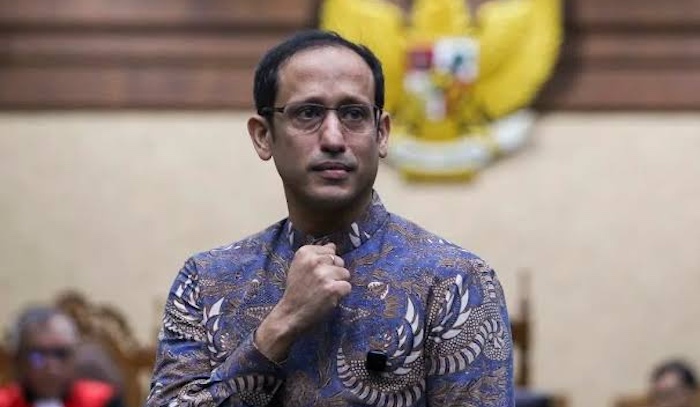
Nadiem Makarim, the former Indonesian education minister and co-founder of ride-hailing and payments giant Gojek, has been sentenced to 10 years in prison after being found guilty of corruption over the procurement of Google Chromebooks for schools under the country’s education digitalisation programme.
An Indonesian corruption court on Tuesday also imposed a fine of 1 billion rupiah (about $55,870) on Makarim and ordered him to pay 809.6 billion rupiah in restitution. The court ruled that he would serve an additional five-year prison term if he failed to repay the amount.
The conviction stems from the procurement of Google Chromebooks under Indonesia’s education digitalisation programme, which ran between 2019 and 2022 while Makarim served as education minister from 2019 to 2024.
Prosecutors had sought a far stiffer punishment, asking the court to sentence Makarim to 18 years in prison, impose a 1 billion rupiah fine and order him to pay 5.6 trillion rupiah in restitution.
Indonesia’s Attorney General designated Makarim as a corruption suspect in September 2025, alleging that he and other officials manipulated the procurement process by directing technical specifications towards Google products.
According to prosecutors, Makarim met representatives of Google Indonesia in February 2020 to discuss Google’s products, including Chromebooks that could be deployed by the education ministry and used by students.
Detailing the alleged agreement reached during the meetings, prosecutors told the court: “In several meetings, it was finally agreed that Google’s products, namely ChromeOS and Chrome Devices Management (CDM), would be used as a procurement project for Information and Communication Technology (ICT) equipment.”
Prosecutors argued that the decision ignored the findings of a 2019 assessment commissioned by Makarim’s predecessor, which concluded that Chromebooks could not be used effectively across many parts of Indonesia, particularly in remote areas with limited infrastructure.
They further alleged that Makarim subsequently issued technical procurement instructions that contained specifications matching only the ChromeOS operating system, effectively ensuring that Chromebooks would qualify under the procurement process.
In separate court submissions, prosecutors also claimed that lower-specification Chromebooks, which should have cost about 3 million rupiah each, were instead purchased for approximately 6 million rupiah per unit.
The case is regarded as one of Indonesia’s highest-profile corruption prosecutions involving a former cabinet minister.
Boluwatife Enome