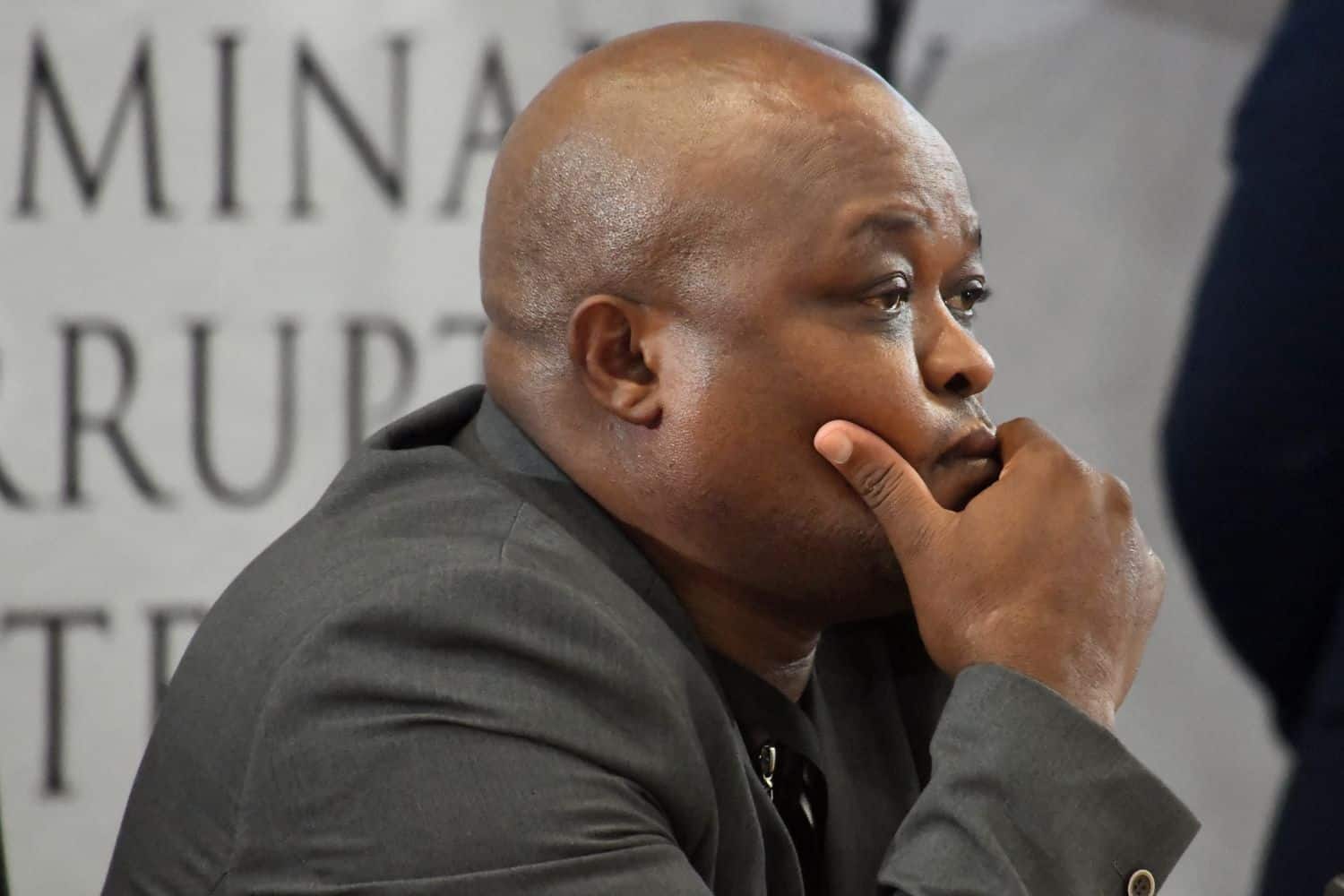
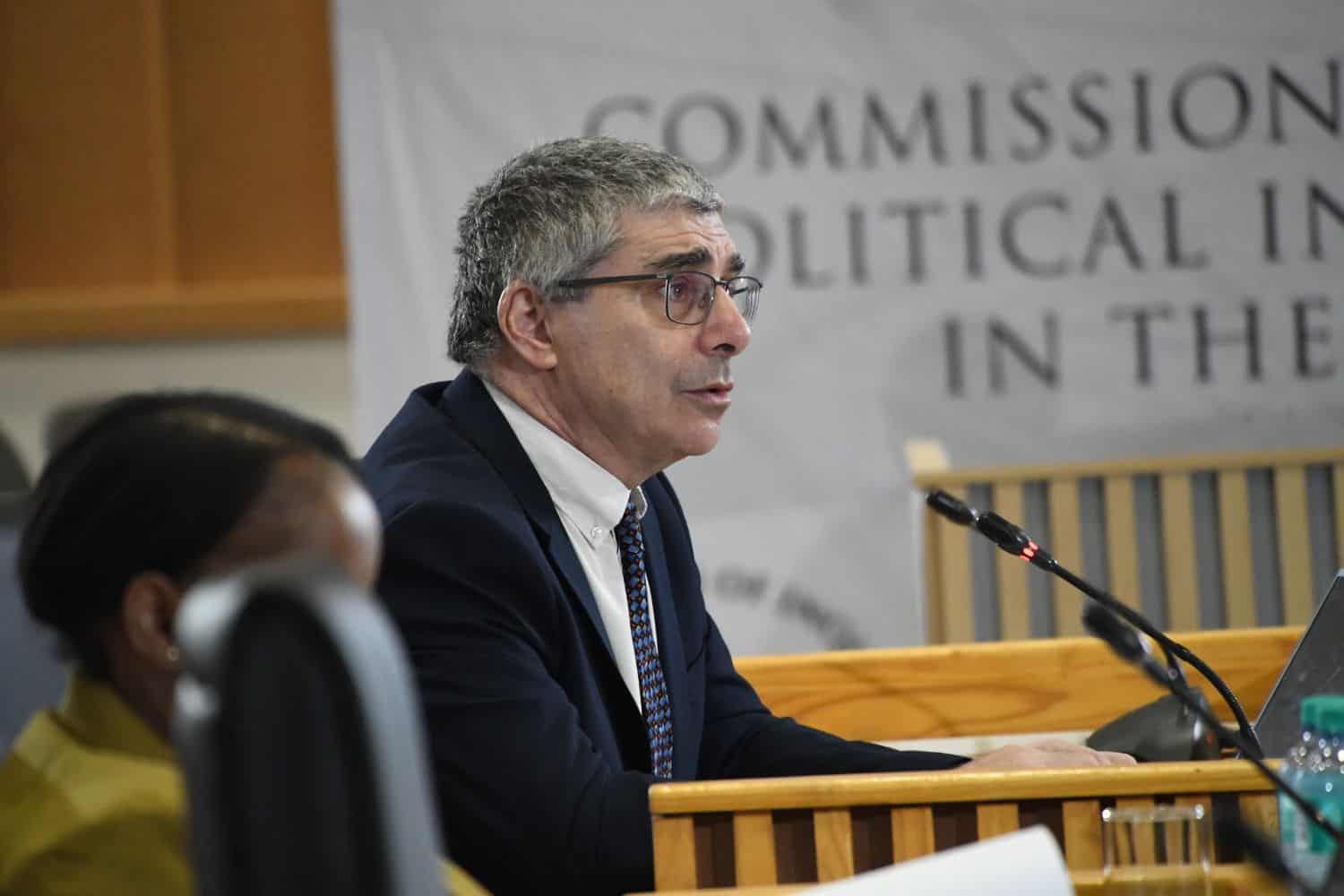
A tense day at the Madlanga commission saw political fixer Oupa Brown Mogotsi fail in his attempt to have chief evidence leader Matthew Chaskalson removed from the inquiry probing alleged political interference and criminal infiltration within law enforcement structures.
On Friday, 15 May 2026, the commission’s chairperson, Mbuyiseli Madlanga, dismissed Mogotsi’s recusal application, which had been filed in late April and had already delayed his testimony.
Mogotsi argued that Chaskalson was biased and lacked impartiality, claiming the evidence leader had pressured him to implicate North West businessman Suliman Carrim.
He further objected to being labelled a “professional liar” by Chaskalson during his testimony in November last year.
Brown Mogotsi returns to Madlanga commission
Returning to the witness stand at the Brigitte Mabandla Justice College in Pretoria, Mogotsi expressed dissatisfaction with how proceedings had unfolded, drawing attention to the alleged unfair treatment of his legal team, which included Advocate Nthabiseng Mohumane.
“She got interrupted 10 times,” he told the commission on Friday.
He also complained about how his credibility had been assessed, saying he had clearly indicated his evidence would require corroboration.
“I was declared a liar,” the self-proclaimed contact agent said.
Mogotsi emphasised that while he accepts the dismissal of his recusal application, he expressed frustration with the manner in which the matter was handled.
“I am very much unhappy with the proceedings.”
Chaskalson attempted to proceed with questioning Mogotsi, but he initially refused to answer.
“I’m not going to incriminate myself,” he said.
“I request to rather invoke my right to remain silent,” Mogotsi added.
Madlanga issues warning
Madlanga warned that refusing to answer could constitute an offence under the commission’s rules.
But Mogotsi maintained his position.
“I have gone through those rules, and as a layman, I may not have a full comprehension as to how they work, perhaps.
“My legal team will talk to that, but I am not going to incriminate myself.”
After consulting his lawyers during a short break, Mogotsi agreed to answer questions, clarifying his earlier stance.
He explained that when he declined to incriminate himself, he did so fully aware of the possible consequences, including the risk of contempt proceedings.
“If I say I do not want to incriminate myself, I am answering.”
Evidence leader Adila Hassim had earlier urged the commission to consider referring Mogotsi for possible criminal charges, including perjury, on the basis that he may have given false testimony under oath.
Intelligence affidavits challenge Mogotsi’s version of events
As the proceedings continued, Chaskalson presented an affidavit from a senior Crime Intelligence official responsible for undercover operations and an agent programme.
The statement confirmed that Mogotsi had never been registered as an undercover agent of the South African Police Service (Saps).
“There are no records that indicate that Mr Mogotsi was ever an agent,” the statement reads.
This contradicted Mogotsi’s earlier claim that he had operated as a Crime Intelligence contact agent since 1999, with two co-handlers, one of whom has since died.
When asked to respond, Mogotsi said: “I will not want to incriminate myself.”
A separate statement from Crime Intelligence’s acting finance head, responsible for the secret service account, known as the slush fund, presented a different classification of Mogotsi’s role.
The document stated that he had been registered as an informant on 9 January 2001 and deregistered on 20 August the same year.
The affidavit also indicated that Mogotsi had two co-handlers and received R1 200 as a recruitment fee.
“According to our reports, there are no other financial transactions relating to the source for the period he was active in our system,” the statement reads.
Mogotsi declined to comment on the contents of this affidavit.