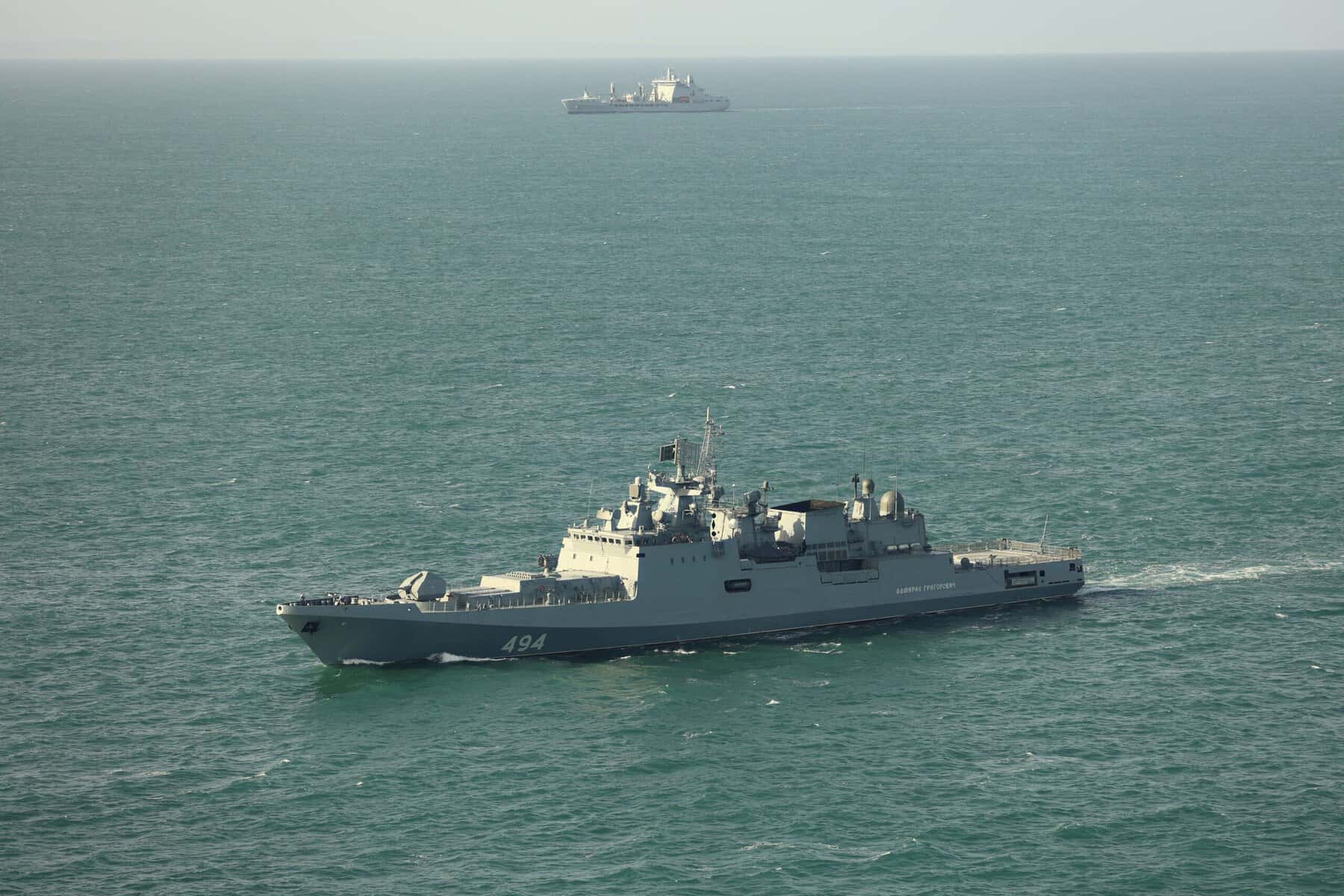
This image release to AFP on April 9, 2026 and taken by Britain's Royal Navy on April 6, 2026 shows RFA Tideforce (background) monitoring the Russian frigate Admiral Grigorovich (foreground) in UK waters at sea. UK Prime Minister Keir Starmer on June 17, 2026 said the Russian warship Admiral Grigorovich's warning shots fired near a yacht in a separate incident in the English Channel were "reckless" but not "sinister". (Photo by Handout / Royal Navy / AFP) / - NO Marketing campaign / -----EDITORS NOTE --- RESTRICTED TO EDITORIAL USE - MANDATORY CREDIT "AFP PHOTO / Royal Navy " - NO MARKETING - NO ADVERTISING CAMPAIGNS - DISTRIBUTED AS A SERVICE TO CLIENTS - NO ARCHIVES
The poor old retired Darby and Joan couple thought they were having a lovely little sail across the English Channel when they found themselves almost starting the Third World War by causing a Russian warship to fire warning shots to keep them away.
The incident, which happened this week, is being downplayed by both London and Moscow, but definitely ratcheted up tensions between the two countries, especially as though it looked like the warning salvo could have been retaliation for the earlier boarding of a suspected Russian “shadow fleet” sanctions-busting oil tanker by British commandos.
The Russian warship had problems with its steering and may have been drifting and feeling especially vulnerable, is one explanation for the jumpy behaviour.
But what is bizarrely fascinating is that, this late into the 21st century, there are still echoes of high-seas derring-do in important commercial maritime choke points.
The English Channel is one and the Strait of Hormuz is another.
Even with the ubiquity of air travel, or adventures into space, humankind is still reliant on the vast majority of the goods it needs to survive being transported by great ships across vast oceans.
Hormuz has shown us what happens when those vital arteries become blocked.