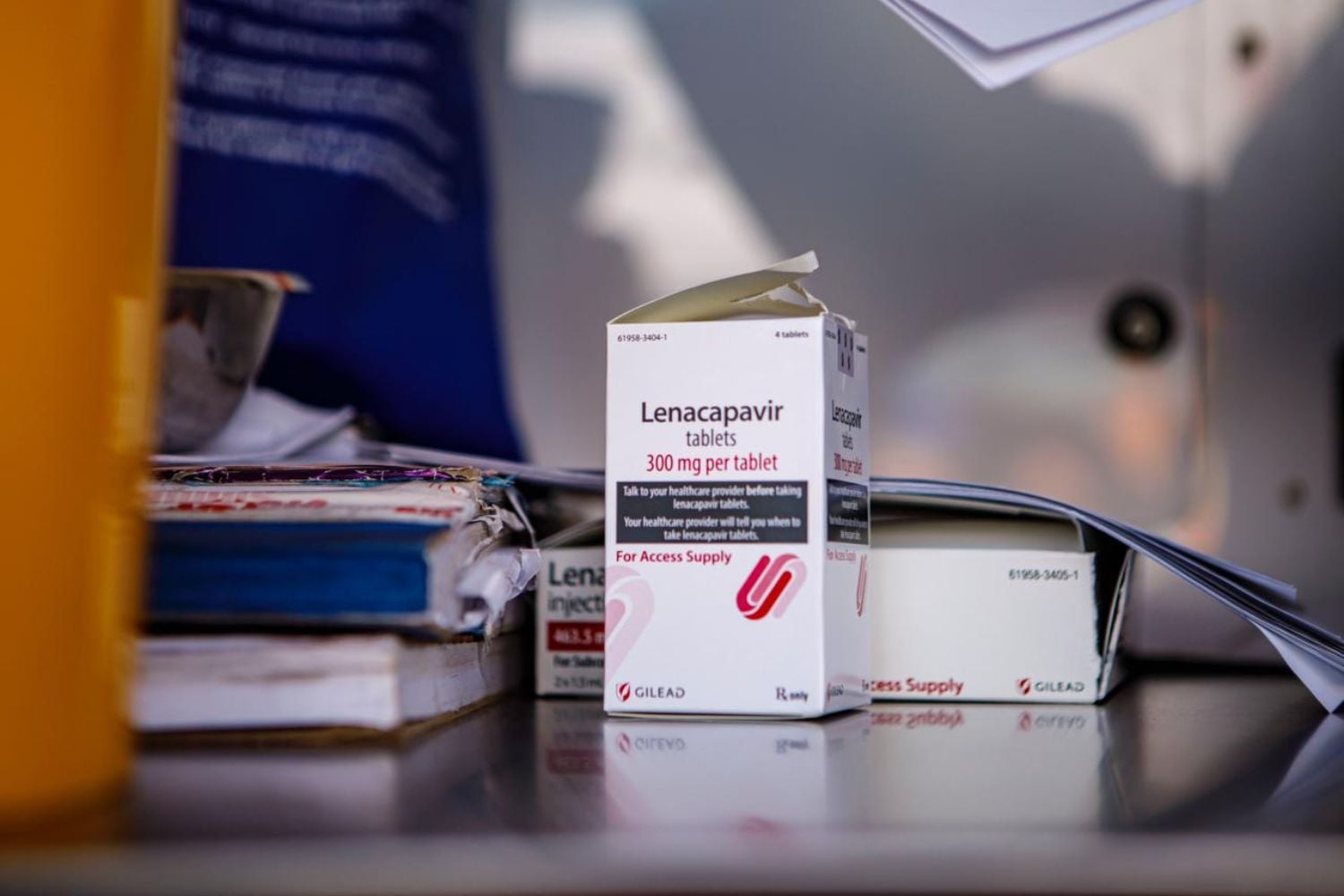
The Gauteng Health Department has begun a phased rollout of Lenacapavir, a twice-yearly HIV prevention injection now available at selected public health facilities across the province.
This comes as South Africa accelerates its push to end AIDS as a public health threat by 2030.
What is Lenacapavir, and how does it work?
Gauteng became one of the first provinces in South Africa to begin offering Lenacapavir to eligible residents on Monday, as part of a nationwide programme launched by President Cyril Ramaphosa.
The long-acting injection, administered once every six months, offers individuals protection against HIV infection.
Gauteng health department spokesperson Steve Mabona confirmed the rollout has officially begun and was at pains to stress that the injection does not replace existing HIV prevention measures.
Instead, it forms part of a comprehensive package of HIV prevention interventions which includes HIV testing, condom use, STI prevention and treatment and voluntary medical male circumcision.
Before accessing the injection, residents are required to test for HIV at their nearest clinic or Community Health Centre to determine whether Lenacapavir is the right option for them.
Who qualifies, and where can you get it?
The first phase of the programme targets populations that remain most at risk of HIV infection.
These include adolescent girls and young women, adolescent boys and young men, key populations such as sex workers, men who have sex with men, transgender persons and people who inject drugs, as well as pregnant and breastfeeding women.
Mabona said 56 079 people in Gauteng are expected to receive the injection by 31 March next year.
He said the department already received its first allocation for 18 809 people.
“Additional stock will be supplied quarterly to ensure continuity of the programme and access to services.
“Phase one of the rollout will prioritise adolescent girls and young women, adolescent boys and young men, key populations including sex workers, transgender persons and people who inject drugs, as well as pregnant and breastfeeding women who remain vulnerable to HIV infection.”
The 133 facilities offering Lenacapavir span five regions across the province.
In the City of Johannesburg, sites include 17 Esselen Street Clinic, Alexandra CHC, Hillbrow CHC and OR Tambo CHC, among others.
In the City of Tshwane, residents can access the injection at facilities including Atteridgeville Clinic, Jubilee Gateway Clinic and Mamelodi West Clinic.
The City of Ekurhuleni’s sites include Boksburg Civic Centre Clinic, Kempton Park Civic Centre Clinic and Tembisa Main Clinic, while Sedibeng and West Rand facilities are also included in the rollout.
Click on or download the document below to see where you can get the HIV prevention injection Lenacapavir:
Why Gauteng was chosen as a key implementation site
The rollout forms part of a broader national initiative led by the National Department of Health, which aims to expand HIV prevention options and accelerate progress towards ending AIDS as a public health threat by 2030.
Speaking at the national launch in Secunda on 5 June, President Ramaphosa placed the moment in its historical context.
“The launch of Lenacapavir marks a turning point in our nation’s fight against HIV. To us, Lenacapavir is not just a medicine or a drug. To us, it represents a major turning point in South Africa’s national story. It represents one of the most significant scientific breakthroughs since the advent of antiretroviral treatment.”
Ramaphosa outlined the scale of the national ambition, saying 360 public health facilities across six provinces and 24 high-burden districts are ready to deliver the intervention.
“By the end of 2027, we aim to reach close to one million people. Over the next three years, we aim to reach three million people. This is not simply a health target. It is a nation-building target.”
Funding and accessibility
The R1.3 billion programme is being funded through a partnership between the South African government, the Global Fund, and the Children’s Investment Fund Foundation.
The investment is intended to ensure that the injection is accessible through the public health system, rather than limited to those who can afford private care.
Ramaphosa underscored the principle behind the funding model. “Scientific breakthroughs only change lives when they are accessible to all. Lifesaving medicines must not be a privilege reserved for a few; they must be available to all who need them.”
Mabona offered the same sentiments. He said the department would be supplementing the rollout with facility activations, community dialogues, media engagements, radio campaigns, peer educator programmes and social media awareness initiatives.
Combination prevention remains critical
Despite the optimism surrounding Lenacapavir, health authorities are clear that it is one tool among many.
The department has consistently reminded the public that condoms, HIV testing, oral PrEP, voluntary medical male circumcision and behavioural interventions remain essential components of a comprehensive prevention strategy.
Mabona reiterated the department’s position that the rollout is not a standalone solution.
He noted that “the rollout forms part of a nationwide initiative led by the National Department of Health, which intends to expand the HIV prevention options and accelerate progress towards ending AIDS as a public health threat by 2030.”
Ramaphosa echoed this, calling on all sectors of society to remain engaged. “Lenacapavir is not a silver bullet. It is one more powerful tool in our arsenal,” he said.

