From Mentorship to Fallout: Toyin Abraham, Abike Shugaa Give Conflicting Accounts
A once-supportive relationship between Nollywood actress Toyin Abraham and influencer Olawuni Oluwapelumi Abike has evolved into a widely discussed public dispute, with both parties offering differing versions of events. In a YouTube video released on Friday, Abike, also known as Pelumi Olawuni—recounted her journey from early struggles to her eventual fallout with the actress. The …
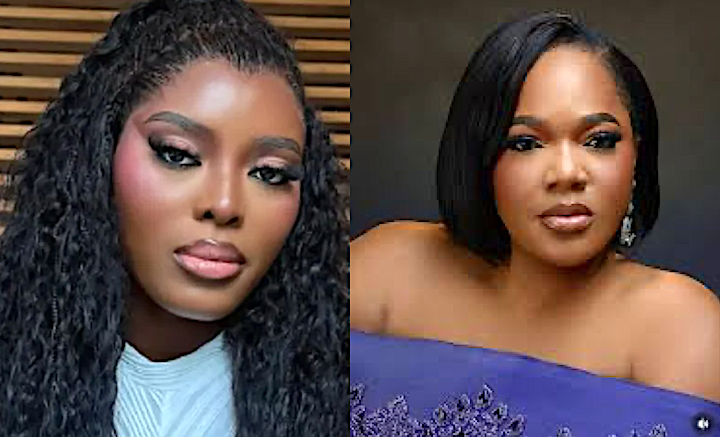
A once-supportive relationship between Nollywood actress Toyin Abraham and influencer Olawuni Oluwapelumi Abike has evolved into a widely discussed public dispute, with both parties offering differing versions of events.
In a YouTube video released on Friday, Abike, also known as Pelumi Olawuni—recounted her journey from early struggles to her eventual fallout with the actress. The video quickly gained traction online, drawing significant engagement.
She explained that she chose to share her story after several years, emphasizing that her experience could only be told from her own perspective.
Abike described her early hustle, which included working as a television presenter, selling thrift clothing, and learning fashion design. She said she gained wider attention after posting about buying a sewing machine on social media—a moment that reportedly brought her into contact with Abraham.
According to her, the actress later offered financial support after seeing the post, although she clarified that she initially acquired the machine on her own.
Their first in-person meeting, she said, took place in March 2021 during an audition connected to Scene One TV, a production platform associated with Funke Akindele. That encounter led to her role in the Yoruba film Ago Alago, which she described as her first major acting opportunity, alongside appearances in projects linked to the platform, including Jenifa’s Diary.
Abike characterized that period as pivotal to her growth, noting that she also collaborated on content creation and promotional campaigns, with logistical support provided during projects.
She disclosed that she was paid N50,000 for her role in Ago Alago, where she spent about two weeks on set. She added that she received another N50,000 for two scenes in Ijakumo, which she claimed were later removed without her prior knowledge. According to her, she only realized this after the film’s release, despite actively promoting it and inviting friends to its premiere.
The influencer further stated that she had begun earning independently through brand collaborations and promotional campaigns, including projects linked to Akindele, citing payments of $600 and $800 for separate engagements.
However, she alleged that tensions began to surface as her social media activities were increasingly scrutinized. She claimed that her interactions with certain colleagues were questioned, suggesting she was becoming entangled in existing industry rivalries.
Abike traced the breakdown of the relationship to the promotion of Malaika, in which she featured in a supporting role and said she was paid N500,000. She noted that she contributed extensively to publicity efforts, including producing over 100 promotional videos.
The situation, she said, escalated after she accepted a promotional package from Akindele for A Tribe Called Judah. Although she claimed to have informed Abraham beforehand, she alleged the decision was viewed as disloyal, leading to strained relations.
She further alleged that the fallout involved accusations, voice notes, and requests to remove certain social media posts, adding that attempts to clarify her position did not resolve the issues.
Abike also mentioned efforts at reconciliation, including outreach through skit maker Kamo State. According to her, she was advised to create a TikTok video to signal that tensions had eased, but she declined, saying she preferred to avoid further public drama.
Responding on X, Abraham refrained from engaging in a detailed back-and-forth. She stated that she viewed Abike as a daughter and had chosen not to escalate the matter publicly.
While maintaining her stance, the actress disputed parts of the influencer’s claims, particularly regarding compensation. She reiterated that Abike was paid N500,000 for Malaika, describing it as a significant amount for an emerging talent.
In a separate statement, Abraham’s management described some of the allegations as misleading, insisting that all professional obligations had been met. The team also maintained that Abike had been informed in advance that her Ijakumo scenes would not appear in the final edit, citing standard post-production decisions.
The disagreement marks a dramatic shift from what began as a supportive relationship that opened doors for the influencer. While Abike says she is reclaiming her narrative, Abraham has signaled a desire to step away from the controversy.