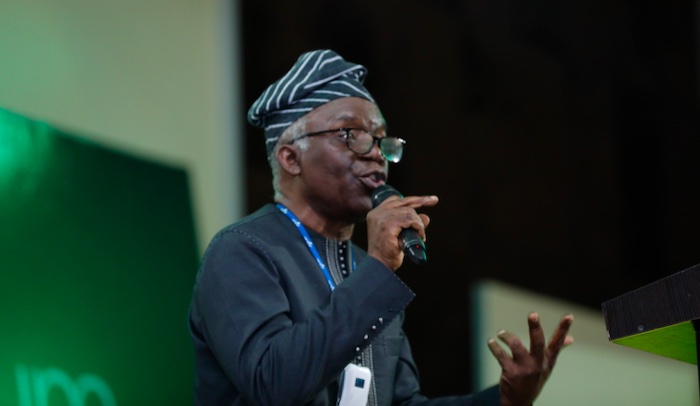
Human rights lawyer and Senior Advocate of Nigeria, Femi Falana, has accused authorities of covering up murder cases involving politically exposed and highly connected individuals in Nigeria.
In a statement issued on behalf of the Alliance on Surviving Covid-19 and Beyond (ASCAB) on Sunday, Falana said murder cases linked to members of the governing class were often deliberately weakened to secure acquittals for suspects.
Falana stated: “In Nigeria, murder cases traceable to members of the ruling class and other highly connected persons are usually covered up.”
He added: “Usually, such cases are deliberately bungled by public prosecutors to pave way for the dubious acquittal of the murderers.”
The senior lawyer called on security agencies and prosecutors to pursue suspects in several high-profile cases, including the 2018 Offa robbery killings in Kwara State, the disappearance and alleged killing of lecturer Abubakar Idris Dadiyata, killings linked to land disputes in Lagos State, and the alleged torture and death of Chief Lukman Ojora Arounfale.
On the Offa robbery case, Falana recalled that 33 persons, including 9 police officers, were killed during coordinated attacks on banks and a police station in Offa on April 5, 2018.
He noted that suspects convicted over the robbery had allegedly linked former Senate President Bukola Saraki and former Kwara governor Abdulfatah Ahmed to the gang.
Falana said: “Having regard to the gravity of the offences and the loss of 33 lives during the robbery operation, all parties should shield their swords and allow the law to take its course.”
He also demanded a fresh investigation into the disappearance of Dadiyata, a lecturer at the Federal University Dutsinma who was abducted from his Kaduna residence in 2019.
Falana alleged that former Kaduna governor Nasir El-Rufai and former Kano governor Abdullahi Ganduje had traded accusations over the incident.
He said former Zamfara government aide Musa Muhammad Kamarawa had alleged that Dadiyata “was killed in his presence in a police cell in Kaduna.”
Falana stated: “The Authorities of the Nigeria Police Force and the State Security Service should, as a matter of urgency, investigate the highly placed politicians and police officers involved in the torture inflicted on Dadayitta and his brutal assassination.”
On killings linked to a land dispute in the Ajiran community of Eti-Osa, Lagos, Falana said suspected land grabber Ahmed Tajudeen Akanbi had been arrested by INTERPOL in Benin Republic and handed over to police authorities in Lagos.
He urged investigators to conclude the case quickly to allow prosecution for “wilfull damage to property, attempted murder and murder.”
Falana also accused the Alaafin of Oyo, Oba Abimbola Akeem Owoade, of ordering palace guards to assault Chief Lukman Ojora Arounfale during a visit to the palace in April 2025.
According to the statement, Arounfale later died after allegedly sustaining injuries from the assault and detention.
Falana said the matter had since been reported to the State Security Service after police allegedly failed to investigate the complaint.
The senior advocate further criticised the handling of the killing of 6 traders during a land dispute at Owode-Onirin in Lagos in August 2025.
He alleged that 4 policemen brought from Nasarawa State were initially freed after legal advice from the Lagos Directorate of Public Prosecutions concluded they acted in self-defence.
Falana, however, said ballistic and post-mortem reports had since been submitted to the Lagos Ministry of Justice.
“The DPP ought to review the legal advice as soon as possible,” he stated.
On the killing of 28-year-old Mene Ogidi in Effurun, Delta State, Falana acknowledged the dismissal and arrest of ASP Nuhu Usman and other officers involved.
He, however, urged authorities to transfer the prosecution from the Office of the Attorney-General of the Federation to the Delta State Ministry of Justice for immediate arraignment.
Falana said: “ASP Nuhu Usman and his team have been dismissed, arrested, and slated for prosecution for the illegal public execution of the deceased.”
Faridah Abdulkadiri