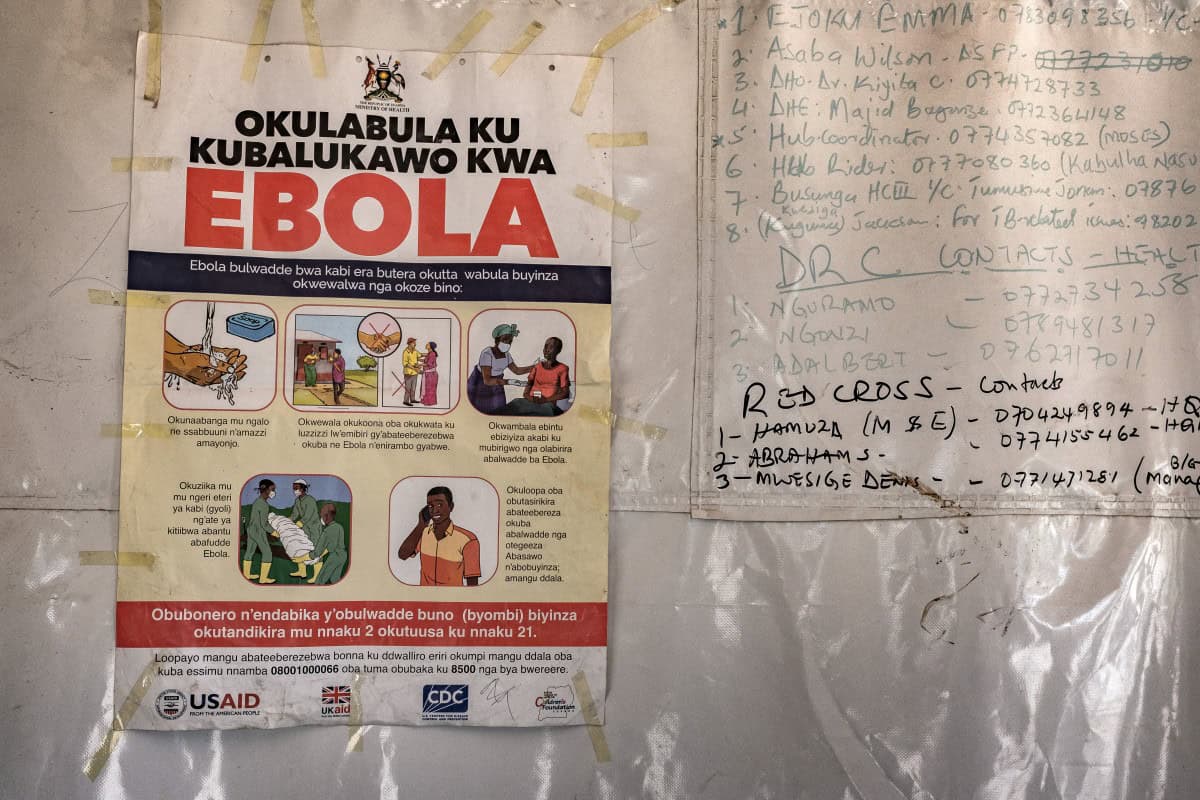
A poster displaying Ebola emergency contact numbers is pinned to a tent at the Busunga border crossing between Uganda and the Democratic Republic of Congo in Bundibugyo, on May 18, 2026. Ugandan officials confirmed that a 59-year-old man from Democratic Republic of Congo had died in Kampala after being admitted earlier in the week. Tests showed the victim in Uganda was infected with the Bundibugyo strain of Ebola, first identified in 2007. The World Health Organization declared an international health emergency on May 17, 2026 over an outbreak of an Ebola strain in the Democratic Republic of Congo that has killed more than 80 and for which there is no vaccine. Fears of further spread grew when a laboratory confirmed a case in the major eastern DRC city of Goma, which is controlled by the Rwanda-backed M23 militia. (Photo by Badru Katumba / AFP)
If it’s not a hantavirus outbreak, it’s Ebola.
While South Africans can breathe a sigh of relief after no new or secondary transmissions of hantavirus were identified following the outbreak on the cruise ship, MV Hondius, which departed from Argentina in early April.
No local hantavirus transmission found
Infected passengers were evacuated or transited to SA hospitals for emergency care.
Department of health spokesperson Foster Mohale said the British patient admitted to a hospital in Sandton is showing signs of recovery.
The Western Cape high-risk contact tested negative and was discharged.
“There is no secondary transmission identified in SA, meaning no local transmission,” Mohale said.
Mohale added that one additional suspected case linked to the ship was reported in the Western Cape within the past 24 hours and is currently under investigation.
SA discharges Western Cape contact
According to the latest data captured by Kimberly Panozzo from the University of Toledo, 173 people are suspected to have been exposed to hantavirus, with eight cases confirmed and three deaths.
Meanwhile, another deadly disease outbreak, this time of Ebola, has been reported in Africa.
Over the weekend, World Health Organisation director-general Dr Tedros Adhanom Ghebreyesus determined that Ebola, caused by Bundibugyo ebolavirus in the Democratic Republic of the Congo and Uganda constitutes a public health emergency of international concern, despite the event not meeting the criteria of a pandemic emergency yet.
“As of 16 May, eight laboratory-confirmed cases, 246 suspected cases and 80 suspected deaths have been reported in Ituri province of the Democratic Republic of the Congo across at least three health zones, including Bunia, Rwampara and Mongbwalu,” he said.
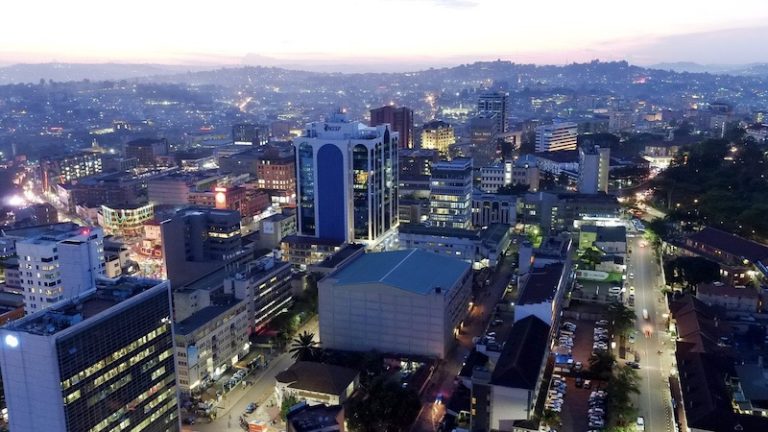
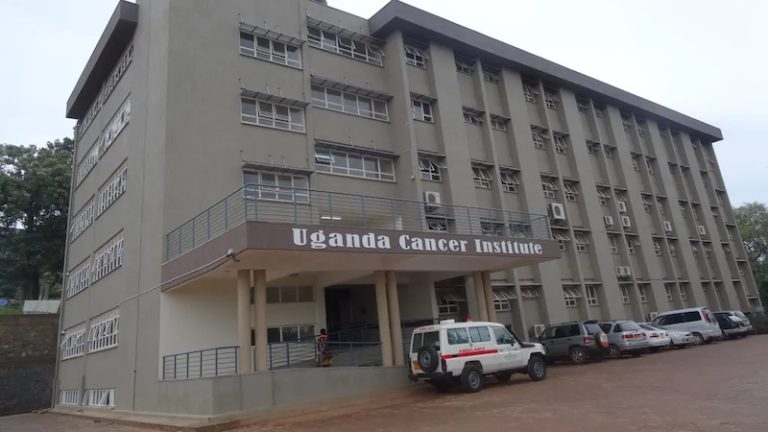
“In addition, two laboratory confirmed cases, including one death with no apparent link to each other, have been reported in Kampala, Uganda, within 24 hours of each other, on 15 and 16 May, of two individuals travelling from the Democratic Republic of the Congo,” he added.
WHO declares Ebola public health emergency in DRC and Uganda.
Ghebreyesus said neighbouring countries sharing land borders with the Democratic Republic of the Congo are at high risk for further spread due to population mobility, trade, travel linkages and ongoing epidemiological uncertainty.
“The event requires international coordination and cooperation to understand the extent of the outbreak, to coordinate surveillance, prevention and response efforts, to scale up and strengthen operations and ensure the ability to implement control measures,” he added.
Ghebreyesus said an emergency committee will be formed as soon as possible.
It will advise on the proposed temporary recommendations regarding the Ebola disease outbreak in the Democratic Republic of the Congo and Uganda.