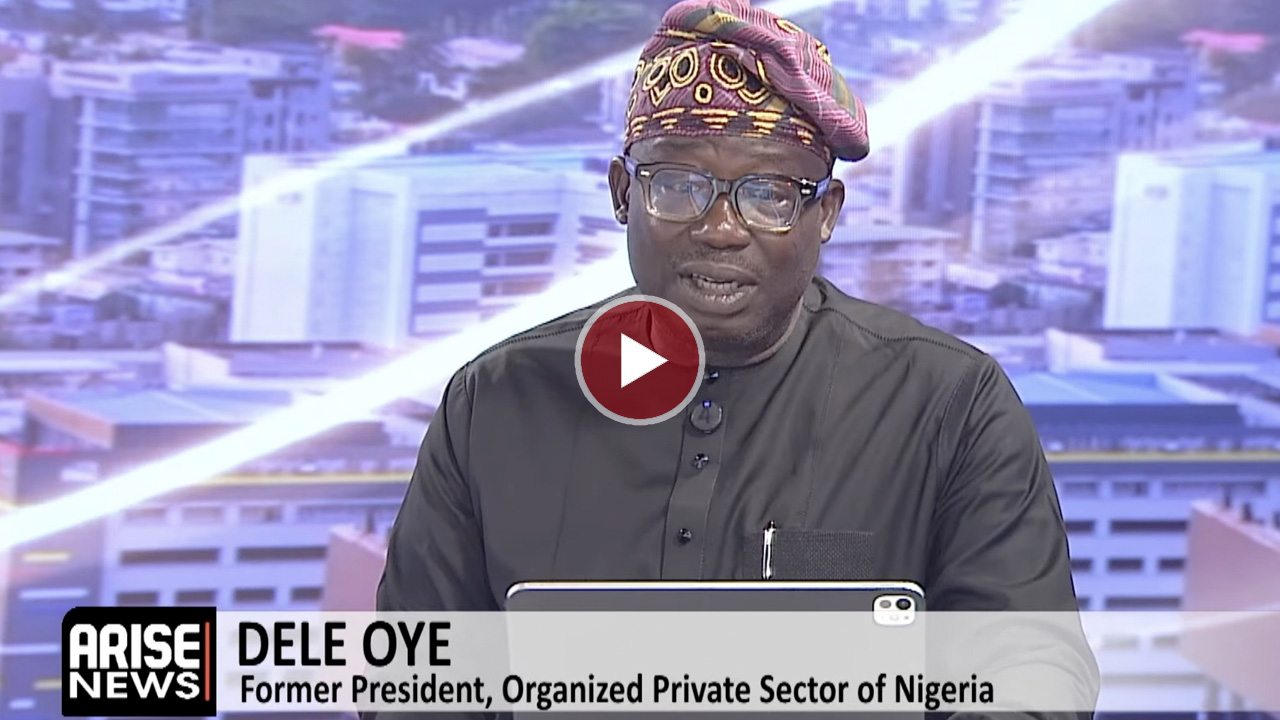
Dele Oye criticises selected Chinese firms, alleging they lack technical and financial capacity to manage NNPC refinery rehabilitation.
Former President of the Organised Private Sector of Nigeria, Dele Oye, has raised serious concerns over the Federal Government’s refinery rehabilitation programme, questioning the competence of selected contractors, the transparency of the process, and the handling of previous refinery agreements.
Speaking in an interview with ARISE NEWS on Thursday, Oye questioned the credibility of the companies involved in the latest Memorandum of Understanding (MoU) linked to the Port Harcourt refinery rehabilitation, warning that Nigeria risks repeating costly mistakes if due diligence and accountability are not prioritised.
Oye expressed doubt over the selection process and alleged lack of technical competence among the firms, while also calling for a full review of previous refinery rehabilitation contracts before proceeding with new agreements.
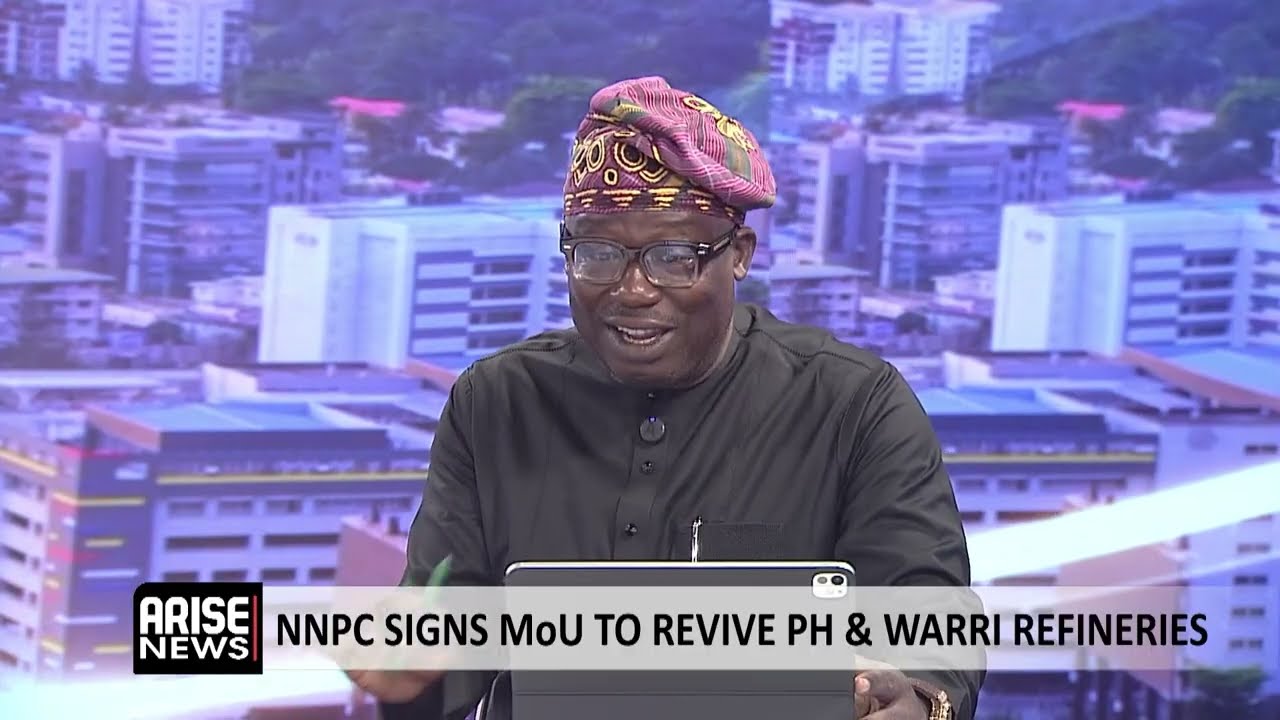
He said:“NNPC said they had technically rehabilitated the Port Harcourt refinery and it was working.
“Then we’ve been having a lot of back and forth. First they said the refinery will be shut down for some 30-day maintenance, then the refineries will be sold, then they came back that they will not sell again, and now it is only a memorandum of understanding.”
“With two Chinese companies that are not even backed by the Chinese government. If you don’t have a G2G arrangement with the Chinese, you will have problems. So I raised issues about the opaqueness, and I hope this is not another ‘job for the boys’ deal being promoted to create a small empire.”
“I said the Nigerian president, President Bola Ahmed Tinubu, should look into this and cancel that arrangement. Some people say it is a limited liability company, but what we know is that NNPCL is owned by MOFI and the Ministry of Petroleum Resources.
“Until they allow people to buy shares, you cannot say it is just a public company. It is still controlled by the Nigerian government.”
On the technical capability of the companies involved, Oye dismissed their qualifications, insisting they lack refinery experience and global credibility.
“We’ve done due diligence on the two companies. Compared to Technip and Saipem, who are internationally acclaimed engineering companies that have done several turnaround projects, these two companies are nothing close.”
“The first company, Saigen Chemica, is not an engineering company. They are into downstream chemicals. They have never run or rehabilitated a refinery.
“They are a public company listed in Hong Kong, but their fundamentals show they are already running low on cash and going through short borrowings. They don’t have technical or financial capacity.”
“The second company, Zhejiang Infosur, is just a real estate company. They are into industrial parks. There is no evidence anywhere in the world that they have built or operated a refinery.”
He further compared them with previous contractors involved in Nigeria’s refinery projects:
“Technip and Saipem are global EPC companies with extensive refinery experience. Zhejiang has none. One is into fine chemicals, the other into industrial park management. They have no track record in refinery operations anywhere in the world.”
Oye also warned that Nigeria has failed to address unresolved issues from past refinery rehabilitation projects, including financial accountability and arbitration disputes.
“We have not resolved the past. Have we determined the current contracts of the two existing contractors? What value did Nigeria get for the money collected? NNPCL is silent on that. They are also silent on other refinery projects where money was approved and collected.”
He questioned the rationale behind entering new agreements without concluding investigations into previous ones.
“There are allegations of criminal infractions and ongoing investigations. On what basis are you entering into a new marriage? That is the fundamental issue.”
While acknowledging improvements in NNPCL’s reporting and operations under its current leadership, Oye maintained that the refinery deals in question remain flawed.
“To be fair, NNPCL has improved in remittances and transparency under the current leadership. There is more confidence compared to before. But this is a mistake.”
“What we are saying is that these two companies have nothing to offer Nigeria. They lack technical experience, they lack engineering capacity, and they have never operated a refinery of this scale anywhere in the world.”
He concluded with a strong recommendation against proceeding with the arrangement:
“My recommendation is that you do not go ahead. These companies have no capacity technically or financially. They have no experience whatsoever in refinery operations.”
Boluwatife Enome