Billionaire warns Hormuz tensions are driving unprecedented volatility, pushing fuel and fertiliser costs to dangerous levels…..
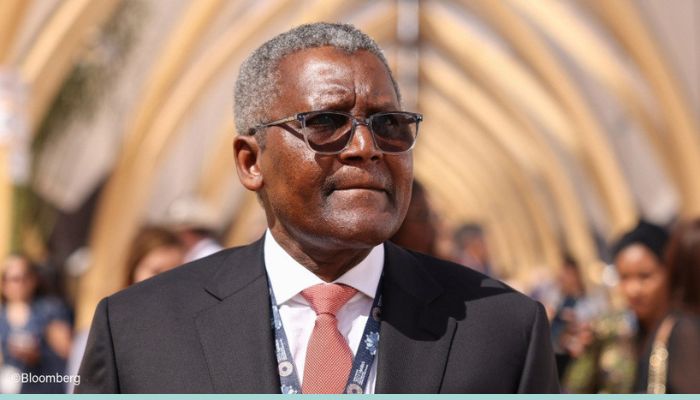
Africa’s richest man, Aliko Dangote, has issued a stark warning over the economic fallout of rising global oil prices, cautioning that the impact could cripple airlines and trigger a fresh wave of food inflation across the continent.
Speaking during an interview with Semafor World Economy in Washington, D.C., Dangote pointed to escalating tensions around the Strait of Hormuz as a major driver of instability in global energy markets.
The vital shipping corridor, responsible for transporting a significant share of the world’s crude has been disrupted amid the ongoing conflict involving Iran, the United States, and Israel, sending oil prices into sharp and unpredictable swings.
Dangote described the volatility as unlike anything he has seen before. “Between morning and night, you see oil moving up and down $100. I’ve never seen it like that never,” he said.
The consequences, he warned, are already being felt in Africa’s aviation sector. According to him, soaring jet fuel prices could push many airlines to the brink.
“The majority of African airlines won’t be able to survive the current spike in fuel costs,” Dangote said, noting that some Nigerian carriers are already considering suspending operations if prices remain elevated.
But the impact goes far beyond aviation. Dangote highlighted a sharp increase in fertiliser prices, an essential input for agriculture as another major concern.
“Two months ago, fertiliser was about $400. Today, it is $850,” he said, underscoring the speed and scale of the surge.
With planting season underway in many parts of Africa, the rising cost of fertiliser could significantly reduce farm output or force governments to step in with subsidies. Either outcome, he suggested, points to higher food prices in the near term, adding pressure on households already grappling with inflation.
Dangote stressed that while a potential diplomatic breakthrough between the United States and Iran could help stabilise oil markets, any relief would take time to materialise.
Even under the most optimistic scenario, he said, supply chain disruptions would delay a return to normal conditions. “It will take another two to three months before we go back to normal,” he noted.
His concerns echo broader warnings from global energy leaders. Fatih Birol, head of the International Energy Agency, recently cautioned that Europe could face severe jet fuel shortages within weeks as supply chains remain under strain.
As geopolitical tensions continue to rattle oil markets, Dangote’s warning underscores a growing reality: for many African economies, the ripple effects of distant conflicts are hitting closer to home through higher transport costs, rising food prices, and mounting pressure on critical industries.