The Dangote Group says it has achieved first oil from its upstream petroleum assets and is preparing to commence marketable crude production within the coming weeks, marking a significant step toward integrating its oil operations.
Speaking in an interview with Platts, a division of S&P Global Energy, Devakumar Edwin, Vice-President of the Dangote Group, said early testing has begun on crude extracted from the company’s Niger Delta oil licences.
He said the company has already started standard well testing and expects the process to be completed within weeks.
“We have opened a well and begun standard testing, which should be completed in the next three to four weeks maximum,” Edwin said.
“After that point, oil can start to be pumped in larger volumes, and the company can begin work on drilling new wells.”
The development signals the company’s entry into upstream crude production at a time when it is also seeking to strengthen supply reliability for its refining operations.
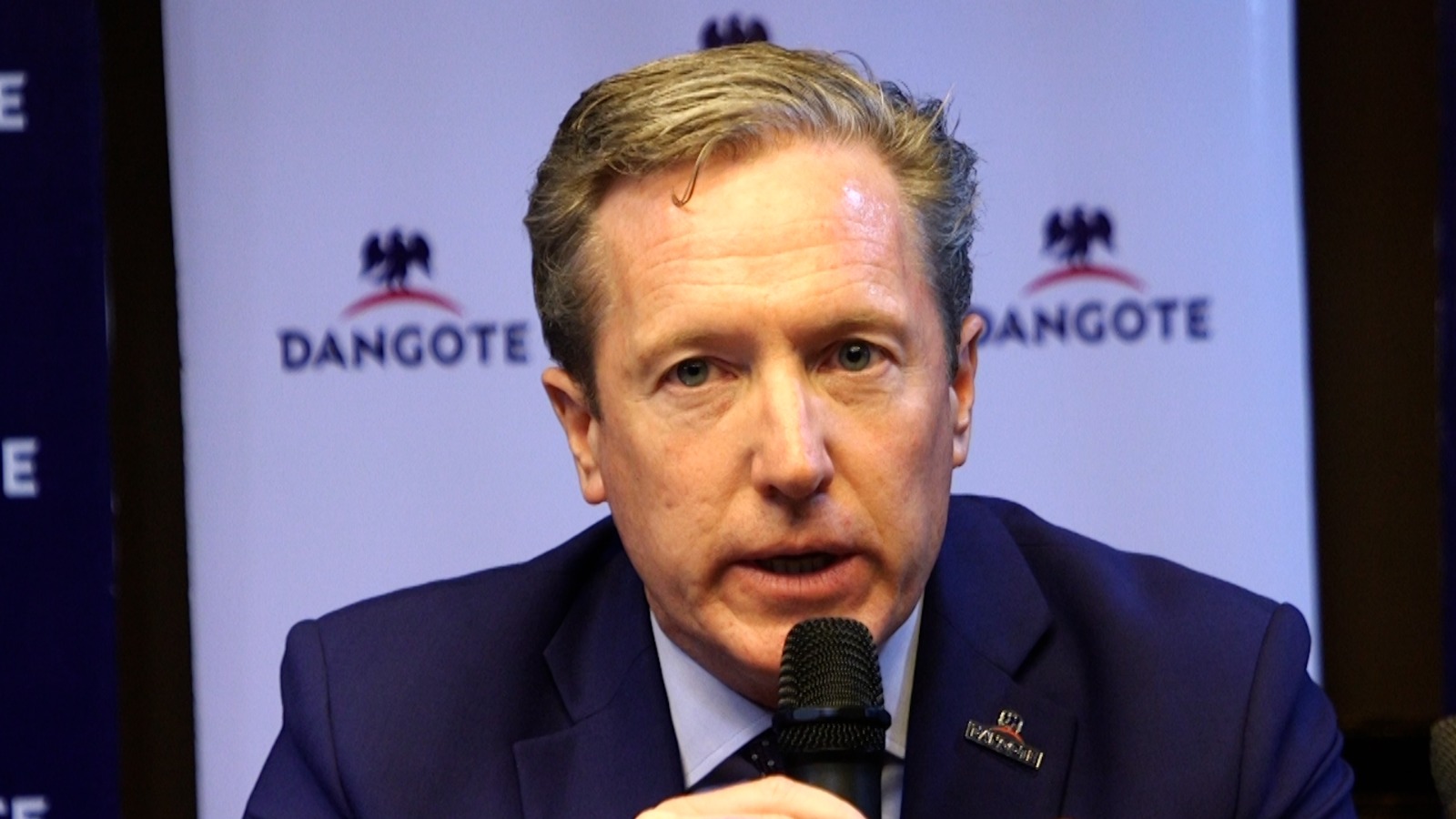
David Bird, Chief Executive Officer of the Dangote Refinery, said the upstream assets are expected to improve crude availability and stability for the refinery.
He also noted that the company is working to establish its own shipping capacity to reduce logistics costs and enhance supply security.
“Alongside its upstream interests, the company is seeking to establish its own shipping presence to help reduce logistics costs and improve the reliability of its crude sourcing,” Bird said.
“Combined with WAEP’s indigenous production, Dangote-owned vessels could offer the refinery a fully integrated and attractive source of stable crude supply.”
Bird added that crude deliveries would be evaluated on commercial terms, while emphasising that the company’s upstream expansion would not necessarily translate into direct internal transfers without market considerations.
“Dangote has interests in upstream, we will continue to grow that, but that doesn’t necessarily mean that it won’t be arms length at every phase,” he said.
The Dangote Group did not immediately receive responses from the Nigerian Upstream Petroleum Regulatory Commission (NUPRC) or the Dangote Refinery when contacted for comment.
The move into crude production is expected to help address supply gaps that have occasionally affected operations at the refinery since it began operations.
In April, the Nigerian National Petroleum Company (NNPC) Limited announced it would allocate seven crude cargoes to the Dangote Refinery in May, up from five cargoes in previous months, as part of efforts to stabilise feedstock supply.
Boluwatife Enome