Africa’s richest businessman says Mombasa is emerging as the preferred location as regional fuel demand and geopolitical tensions reshape energy markets….
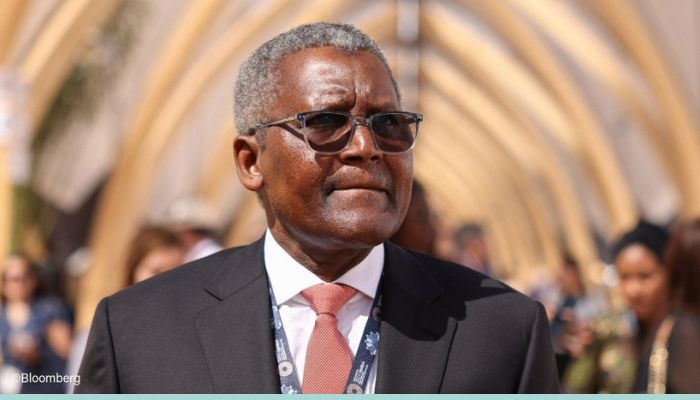
Nigerian billionaire industrialist Aliko Dangote has revealed plans to establish a massive oil refinery in Kenya, signaling a major expansion of his energy empire beyond Nigeria and potentially reshaping East Africa’s petroleum market.
Dangote disclosed that he is now leaning towards the Kenyan coastal city of Mombasa as the preferred site for the proposed 650,000-barrel-per-day refinery project, estimated to cost between $15 billion and $17 billion.
Speaking in an interview with the Financial Times, the businessman said Mombasa’s deeper and more developed port infrastructure gives Kenya a strategic advantage over Tanzania’s port city of Tanga, which had earlier been considered for the project.
“I’m leaning more towards Mombasa because Mombasa has a much larger, deeper port,” Dangote said.
The proposed refinery is expected to process crude oil from Uganda and serve the broader East African market, where fuel demand has continued to rise alongside economic growth and industrial expansion.
The latest development comes weeks after Tanzanian President Samia Suluhu Hassan publicly expressed frustration over reports that the refinery project could shift away from Tanzania despite earlier discussions involving her government.
According to Dangote, Kenya’s stronger domestic market also played a key role in his thinking.
“Kenyans consume more. It’s a bigger economy,” he said, adding that the refinery would not necessarily need to sit directly on the pipeline route transporting crude from Uganda to Tanzania’s coastline.
Instead, he explained, crude could be delivered by sea, making Mombasa commercially attractive for large-scale refining operations.
Dangote also made it clear that the future of the investment now largely depends on Kenyan President William Ruto and the incentives his administration is willing to provide.
“The ball is in the hands of President Ruto,” Dangote stated. “Whatever President Ruto says is what I’ll do.”
However, the billionaire businessman stressed that for the refinery project to move forward, Kenya would need to provide land, facilitate regional financing support, and introduce protective measures against cheap imported fuel products flooding African markets.
According to him, no major refinery can survive without some level of market protection.
“There is no refinery in the world that can survive without that protection,” he said, citing concerns over low-cost fuel imports from countries such as Russia and India.
Dangote added that construction could begin as early as this year if negotiations are concluded quickly, although he noted that Tanzania could still host the refinery if issues surrounding the earlier proposal are resolved.
The proposed East African expansion comes as Dangote’s Lagos refinery continues to strengthen its influence across Africa’s energy landscape.
Built over more than a decade, the refinery regarded as the world’s largest single-train facility with a capacity of 650,000 barrels per day has become increasingly important at a time when global fuel supply chains are under pressure.
The refinery’s growing importance has become even more visible amid tensions affecting the Strait of Hormuz, a critical global oil transit corridor disrupted by the escalating Iran conflict.
While several African countries have struggled with fuel shortages and rationing, Nigeria has largely avoided major supply disruptions, thanks in part to increased local refining capacity from Dangote’s facility.
The refinery has also emerged as a major supplier of aviation fuel, with reports indicating that it has redirected jet fuel cargoes to European airlines battling supply shortages.
Dangote’s business operations have also expanded aggressively into fertiliser exports, with the company now producing around three million tonnes of urea annually for African markets.
According to a senior company executive quoted in the report, rising geopolitical tensions and disruptions in global energy flows have significantly boosted profit margins for both fertiliser and refined petroleum products.
Dangote himself acknowledged the improving market conditions.
“You can see all the other oil companies, their profitability has doubled. So you don’t expect us to do less,” he said.
President Ruto has repeatedly praised Dangote’s refinery project, describing it as proof that Africans can independently execute world-class industrial projects without relying heavily on foreign investors.
“Nigeria has been a producer of oil for all the years that we know,” Ruto said. “Yet, when you went to Nigeria, there were queues of people looking for fuel in petrol stations… until one African stepped forward and built a refinery.”
Dangote also revealed that plans are already underway to more than double the capacity of the Lagos refinery to 1.4 million barrels per day within the next 30 months.
If completed, the expansion would place the refinery among the largest refining operations globally, rivaling facilities owned by Reliance Industries, controlled by Indian billionaire Mukesh Ambani.
“We’ll be price movers in the market,” Dangote said, insisting that Africa must take greater responsibility for financing and developing its own industrial future.
“If we don’t, who else will?”